Rivero O, Selten M M, Sich S, Popp S, Bacmeister L, Amendola E, Negwer M, Schubert D, Proft F, Kiser D, Schmitt A G, Gross C, Kolk S M, Strekalova T, van den Hove D, Resink T J, Nadif Kasri N, Lesch K P
ADHD Clinical Research Unit, Division of Molecular Psychiatry, Department of Psychiatry, Psychosomatics and Psychotherapy, Center of Mental Health, University of Würzburg, Würzburg, Germany.
Department of Cognitive Neuroscience, Donders Institute for Brain, Cognition, and Behaviour, Radboud University Medical Center, Nijmegen, the Netherlands.
Transl Psychiatry. 2015 Oct 13;5(10):e655. doi: 10.1038/tp.2015.152.
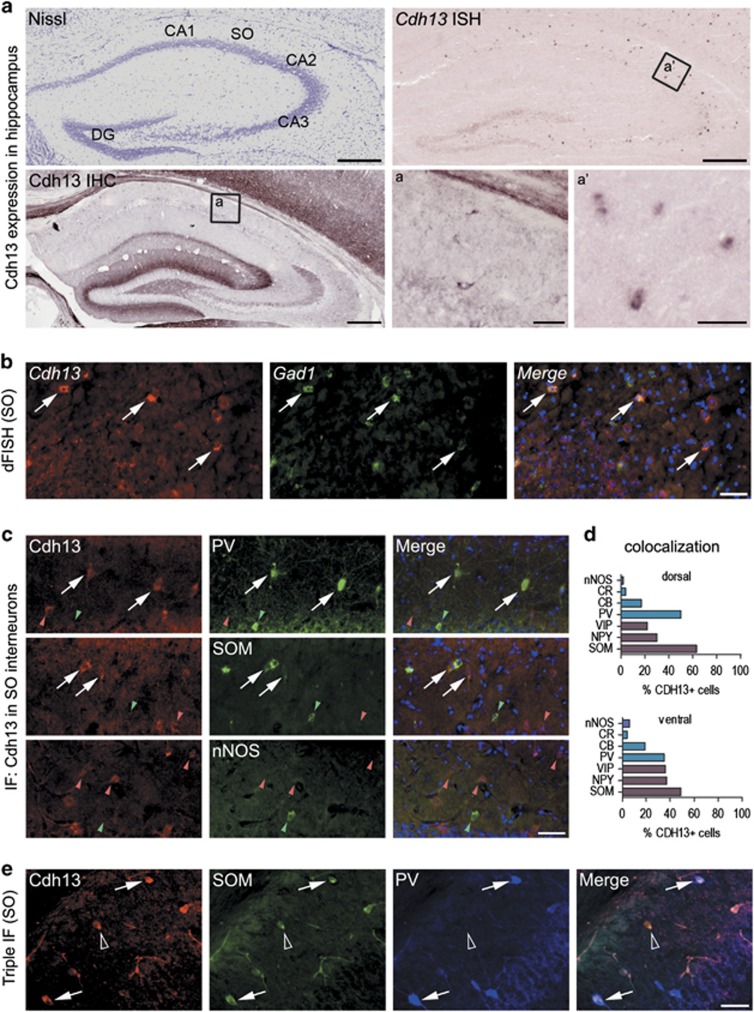
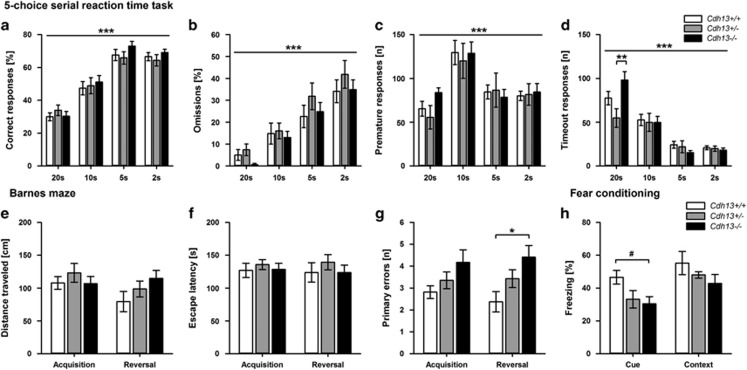
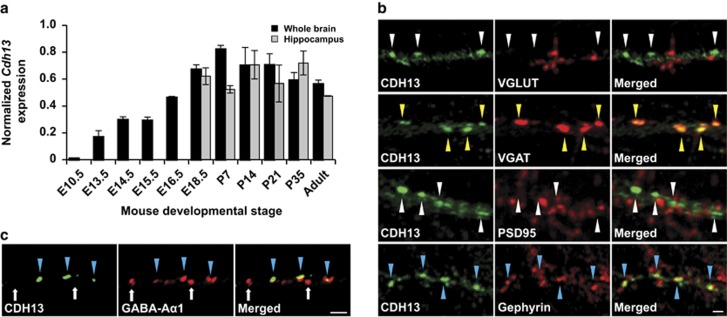
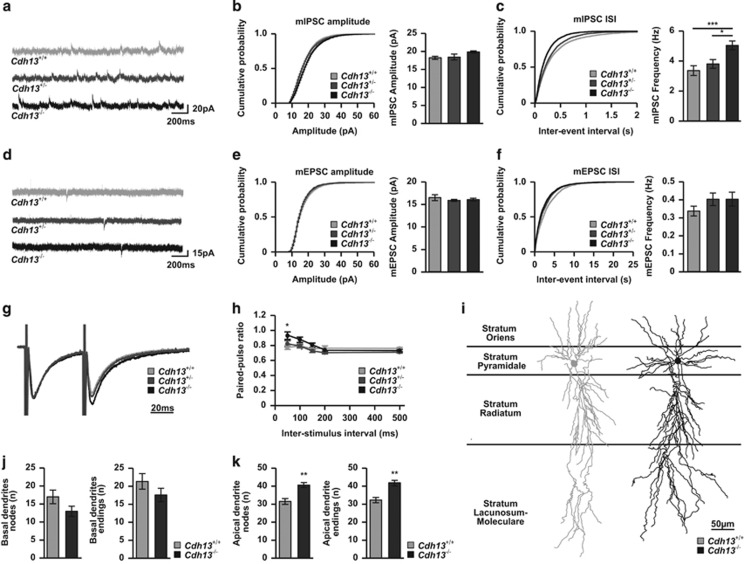
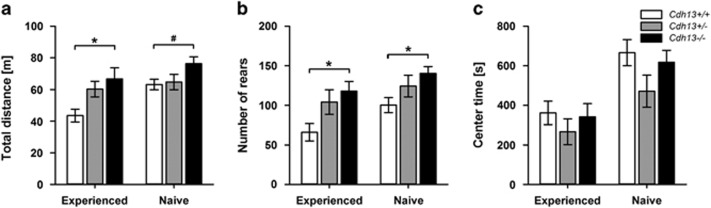
Cadherin-13 (CDH13), a unique glycosylphosphatidylinositol-anchored member of the cadherin family of cell adhesion molecules, has been identified as a risk gene for attention-deficit/hyperactivity disorder (ADHD) and various comorbid neurodevelopmental and psychiatric conditions, including depression, substance abuse, autism spectrum disorder and violent behavior, while the mechanism whereby CDH13 dysfunction influences pathogenesis of neuropsychiatric disorders remains elusive. Here we explored the potential role of CDH13 in the inhibitory modulation of brain activity by investigating synaptic function of GABAergic interneurons. Cellular and subcellular distribution of CDH13 was analyzed in the murine hippocampus and a mouse model with a targeted inactivation of Cdh13 was generated to evaluate how CDH13 modulates synaptic activity of hippocampal interneurons and behavioral domains related to psychopathologic (endo)phenotypes. We show that CDH13 expression in the cornu ammonis (CA) region of the hippocampus is confined to distinct classes of interneurons. Specifically, CDH13 is expressed by numerous parvalbumin and somatostatin-expressing interneurons located in the stratum oriens, where it localizes to both the soma and the presynaptic compartment. Cdh13(-/-) mice show an increase in basal inhibitory, but not excitatory, synaptic transmission in CA1 pyramidal neurons. Associated with these alterations in hippocampal function, Cdh13(-/-) mice display deficits in learning and memory. Taken together, our results indicate that CDH13 is a negative regulator of inhibitory synapses in the hippocampus, and provide insights into how CDH13 dysfunction may contribute to the excitatory/inhibitory imbalance observed in neurodevelopmental disorders, such as ADHD and autism.
钙黏蛋白-13(CDH13)是细胞黏附分子钙黏蛋白家族中独特的糖基磷脂酰肌醇锚定成员,已被确定为注意力缺陷多动障碍(ADHD)以及包括抑郁症、药物滥用、自闭症谱系障碍和暴力行为在内的各种共病神经发育和精神疾病的风险基因,而CDH13功能障碍影响神经精神疾病发病机制的具体机制仍不清楚。在此,我们通过研究γ-氨基丁酸(GABA)能中间神经元的突触功能,探讨了CDH13在大脑活动抑制调节中的潜在作用。分析了CDH13在小鼠海马中的细胞和亚细胞分布,并构建了Cdh13靶向失活的小鼠模型,以评估CDH13如何调节海马中间神经元的突触活动以及与精神病理(内)表型相关的行为领域。我们发现,海马角(CA)区域的CDH13表达局限于不同类型的中间神经元。具体而言,CDH13由位于海马下托的许多表达小白蛋白和生长抑素的中间神经元表达,它定位于这些神经元的胞体和突触前区室。Cdh13基因敲除(-/-)小鼠CA1锥体神经元的基础抑制性突触传递增加,但兴奋性突触传递未增加。与海马功能的这些改变相关,Cdh13基因敲除(-/-)小鼠在学习和记忆方面表现出缺陷。综上所述,我们的结果表明,CDH13是海马中抑制性突触的负调节因子,并为CDH13功能障碍如何导致在ADHD和自闭症等神经发育障碍中观察到的兴奋/抑制失衡提供了见解。