Bisaro Brigitte, Mandili Giorgia, Poli Alice, Piolatto Andrea, Papa Valentina, Novelli Francesco, Cenacchi Giovanna, Forni Marco, Zanini Cristina
EuroClone S.p.A Research Laboratory, Molecular Biotechnology Centre (MBC), University of Turin, Turin, Italy.
Centre for Experimental and Clinical Studies CERMS, Azienda Universitaria Ospedaliera Città della Salute e della Scienza Città di Torino, Turin, Italy.
Mol Cell Ther. 2015 Oct 13;3:8. doi: 10.1186/s40591-015-0045-3. eCollection 2015.
Medulloblastoma (MB) is the most common malignant childhood brain tumor with the propensity to disseminate at an early stage, and is associated with high morbidity. New treatment strategies are needed to improve cure rates and to reduce life-long cognitive and functional deficits associated with current therapies. Extracellular Vesicles (EVs) are important players in cell-to-cell communication in health and diseases. A clearer understanding of cell-to-cell communication in tumors can be achieved by studying EV secretion in medullospheres. This can reveal subtle modifications induced by the passage from adherent to non-adherent growth, as spheres may account for the adaptation of tumor cells to the mutated environment.
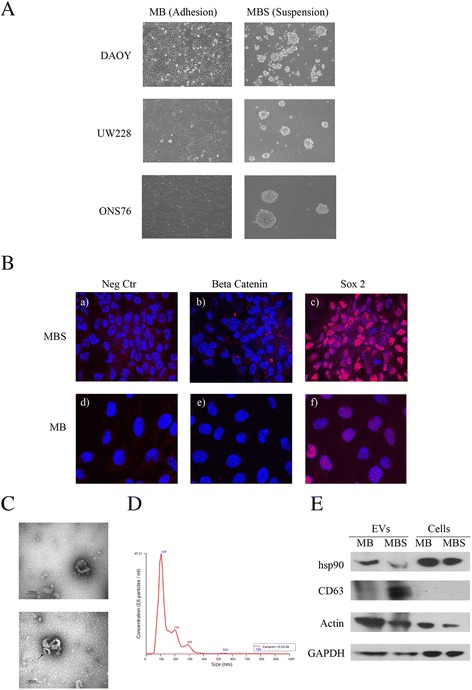
Formation of medullospheres from MB cell lines stabilized in adherent conditions was obtained through culture conditioning based on low attachment flasks and specialized medium. EVs collected by ultracentrifugation, in adherent conditions and as spheres, were subjected to electron microscopy, NanoSight measurements and proteomics.
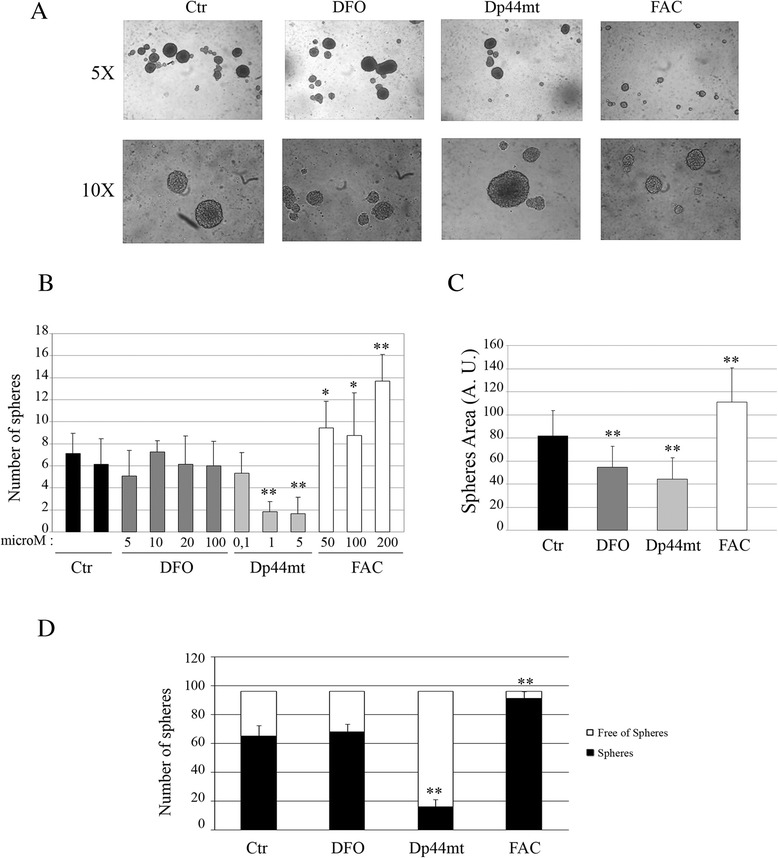
Interestingly, iron carrier proteins were only found in EVs shed by CSC-enriched tumor cell population of spheres. We used iron chelators when culturing MB cell lines as spheres. Iron chelators induced a decrease in number/size of spheres and in stem cell populations able to initiate in vitro spheres formation.
This work suggests a not yet identified role of iron metabolism in MB progression and invasion and opens the possibility to use chelators as adjuvants in anti-tumoral chemotherapy.
髓母细胞瘤(MB)是儿童最常见的恶性脑肿瘤,易于早期播散,且发病率高。需要新的治疗策略来提高治愈率,并减少与当前治疗相关的终身认知和功能缺陷。细胞外囊泡(EVs)在健康和疾病的细胞间通讯中起着重要作用。通过研究髓母细胞瘤球状体中的EV分泌,可以更清楚地了解肿瘤中的细胞间通讯。这可以揭示从贴壁生长到非贴壁生长过程中诱导的细微变化,因为球状体可能解释了肿瘤细胞对突变环境的适应。
通过基于低附着烧瓶和特殊培养基的培养条件,从贴壁条件下稳定的MB细胞系形成髓母细胞瘤球状体。通过超速离心收集贴壁条件下和作为球状体的EV,并进行电子显微镜、纳米颗粒跟踪分析测量和蛋白质组学分析。
有趣的是,铁载体蛋白仅在富含癌干细胞的球状体肿瘤细胞群体释放的EV中发现。我们在将MB细胞系培养成球状体时使用了铁螯合剂。铁螯合剂导致球状体数量/大小以及能够启动体外球状体形成的干细胞群体减少。
这项工作表明铁代谢在MB进展和侵袭中存在尚未明确的作用,并为使用螯合剂作为抗肿瘤化疗的佐剂开辟了可能性。