Liller Corinna Brit, Neuhaus René, von Korff Maria, Koornneef Maarten, van Esse Wilma
Department Plant Breeding and Genetics, Max Planck Institute for Plant Breeding Research, Carl-von-Linné-Weg 10, 50829, Köln, Germany.
Institute for Plant Genetics, Heinrich-Heine-Universität Düsseldorf, Universitätsstr. 1, 40225, Düsseldorf, Germany; Cluster of Excellence in Plant Sciences (CEPLAS), Heinrich-Heine-Universität Düsseldorf, Universitätsstr. 1, 40255, Düsseldorf, Germany.
PLoS One. 2015 Oct 14;10(10):e0140246. doi: 10.1371/journal.pone.0140246. eCollection 2015.
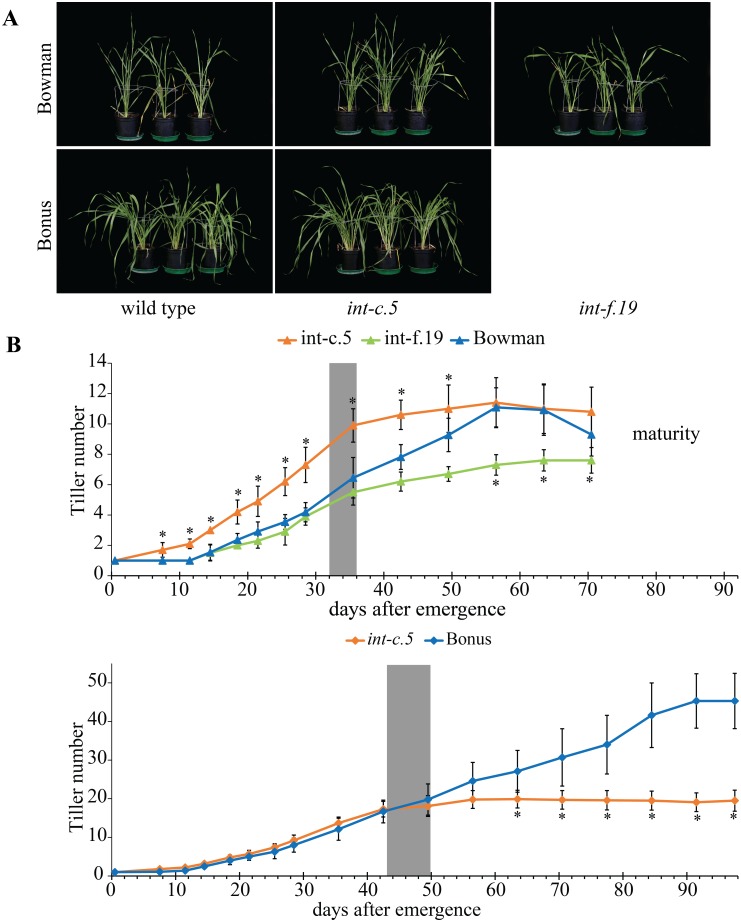
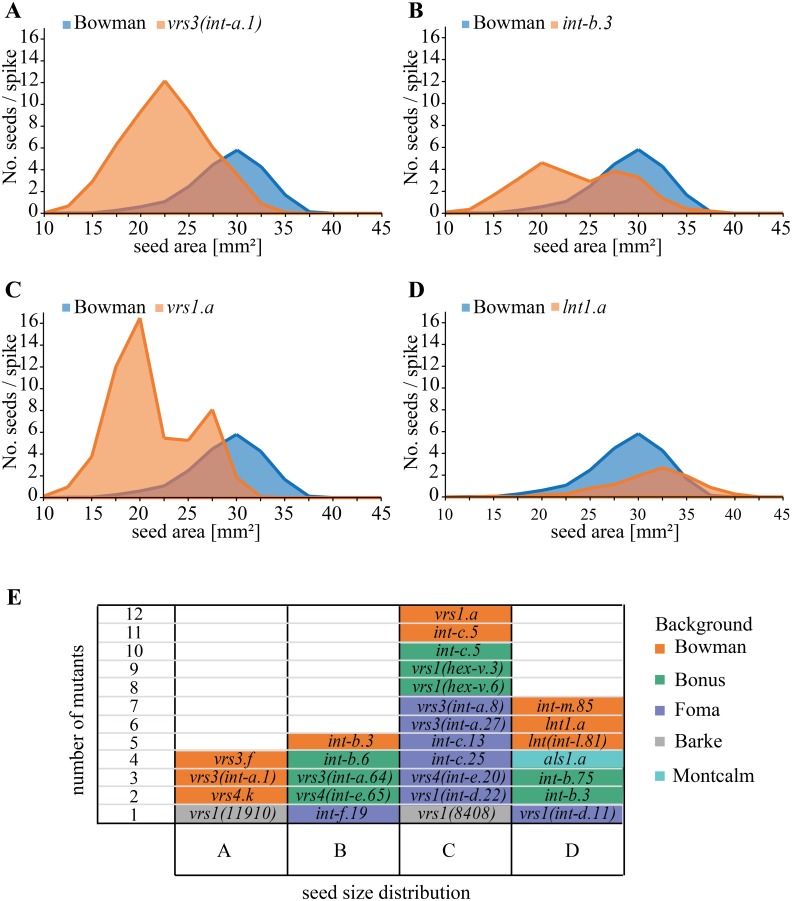
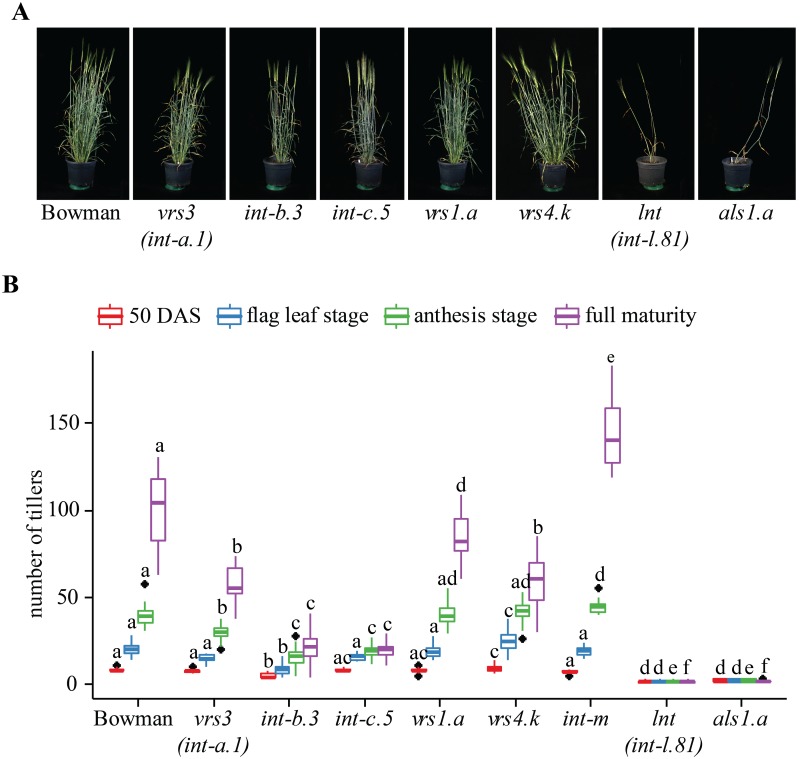
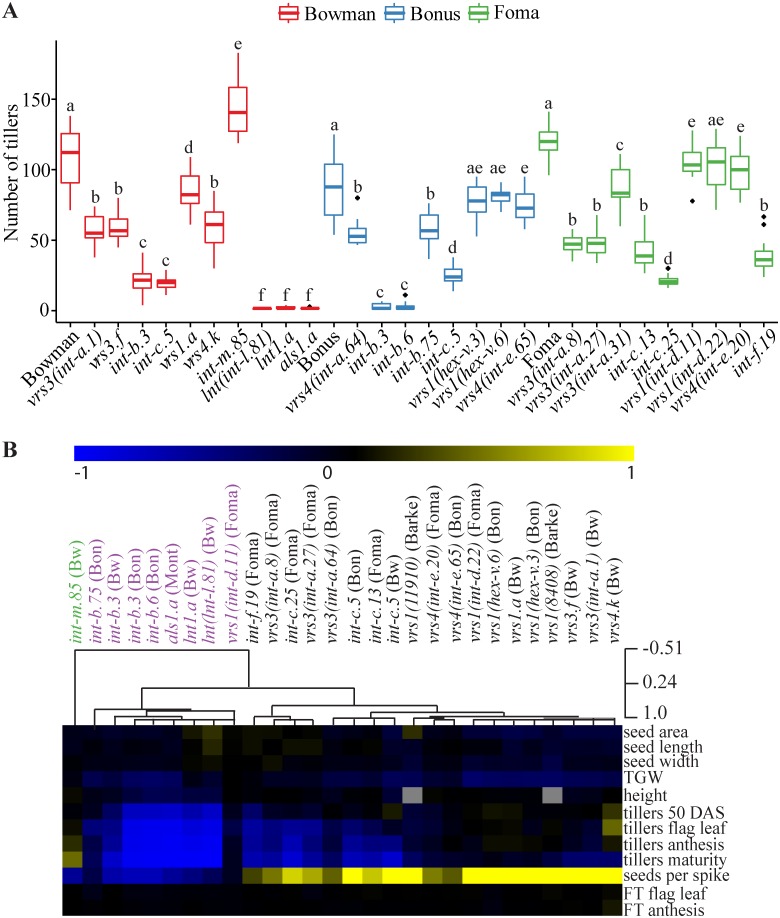
Cereal crop yield is determined by different yield components such as seed weight, seed number per spike and the tiller number and spikes. Negative correlations between these traits are often attributed to resource limitation. However, recent evidence suggests that the same genes or regulatory modules can regulate both inflorescence branching and tillering. It is therefore important to explore the role of genetic correlations between different yield components in small grain cereals. In this work, we studied pleiotropic effects of row type genes on seed size, seed number per spike, thousand grain weight, and tillering in barley to better understand the genetic correlations between individual yield components. Allelic mutants of nine different row type loci (36 mutants), in the original spring barley varieties Barke, Bonus and Foma and introgressed in the spring barley cultivar Bowman, were phenotyped under greenhouse and outdoor conditions. We identified two main mutant groups characterized by their relationships between seed and tillering parameters. The first group comprises all mutants with an increased number of seeds and significant change in tiller number at early development (group 1a) or reduced tillering only at full maturity (group 1b). Mutants in the second group are characterized by a reduction in seeds per spike and tiller number, thus exhibiting positive correlations between seed and tiller number. Reduced tillering at full maturity (group 1b) is likely due to resource limitations. In contrast, altered tillering at early development (groups 1a and 2) suggests that the same genes or regulatory modules affect inflorescence and shoot branching. Understanding the genetic bases of the trade-offs between these traits is important for the genetic manipulation of individual yield components.
谷类作物产量由不同的产量构成因素决定,如种子重量、每穗种子数以及分蘖数和穗数。这些性状之间的负相关通常归因于资源限制。然而,最近的证据表明,相同的基因或调控模块可以同时调节花序分枝和分蘖。因此,探索小粒谷类作物中不同产量构成因素之间遗传相关性的作用非常重要。在这项研究中,我们研究了行型基因对大麦种子大小、每穗种子数、千粒重和分蘖的多效性影响,以更好地理解各个产量构成因素之间的遗传相关性。在温室和室外条件下,对原始春大麦品种Barke、Bonus和Foma中九个不同行型位点的等位基因突变体(36个突变体)进行了表型分析,这些突变体已导入春大麦品种Bowman中。我们确定了两个主要的突变体组,其特征在于种子与分蘖参数之间的关系。第一组包括所有种子数量增加且在早期发育时分蘖数有显著变化的突变体(1a组)或仅在完全成熟时分蘖减少的突变体(1b组)。第二组突变体的特征是每穗种子数和分蘖数减少,因此种子数与分蘖数之间呈现正相关。完全成熟时分蘖减少(1b组)可能是由于资源限制。相比之下,早期发育时分蘖的改变(1a组和2组)表明相同的基因或调控模块影响花序和茎枝分枝。了解这些性状之间权衡的遗传基础对于单个产量构成因素的遗传操作非常重要。