Brown Neil A, Urban Martin, Hammond-Kosack Kim E
Department of Plant Biology and Crop Science, Rothamsted Research, Harpenden, Herts AL5 2JQ, UK.
Department of Plant Biology and Crop Science, Rothamsted Research, Harpenden, Herts AL5 2JQ, UK
FEMS Microbiol Rev. 2016 Jan;40(1):19-40. doi: 10.1093/femsre/fuv042. Epub 2015 Oct 13.
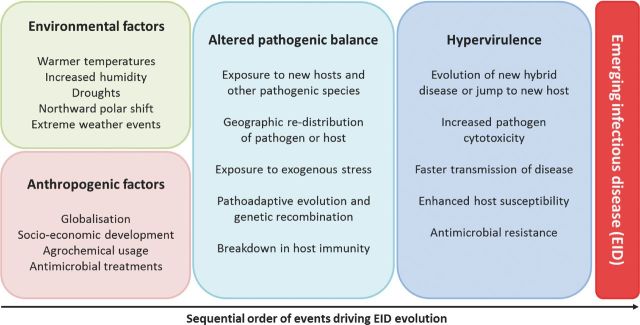
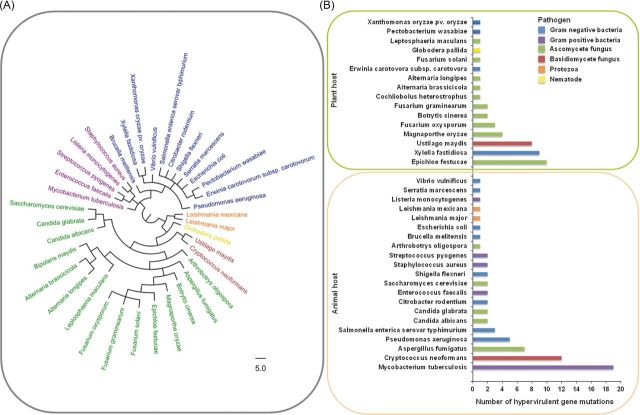
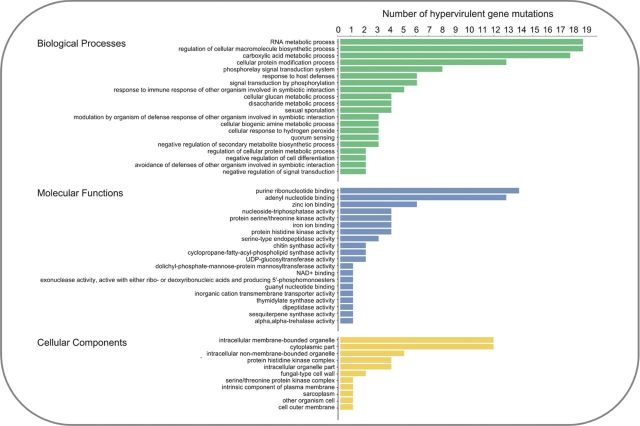
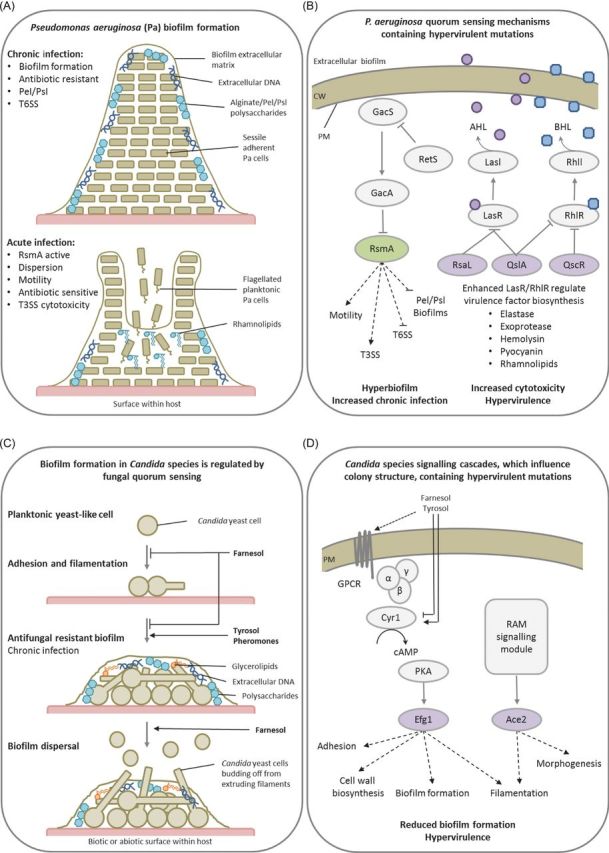
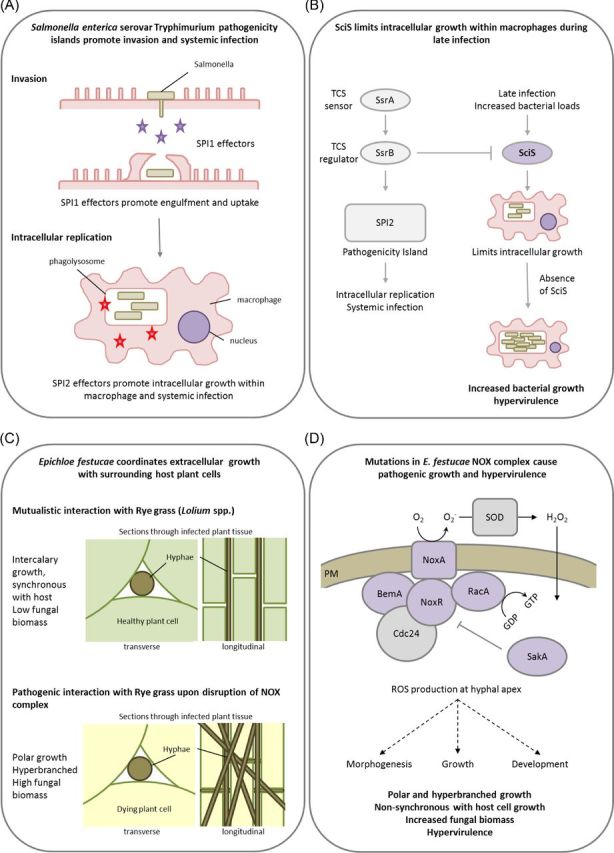
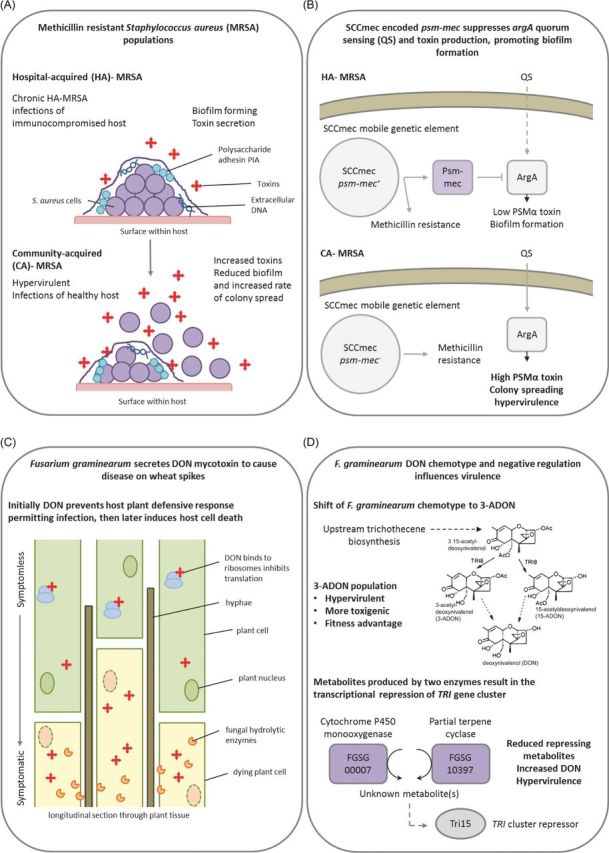
Modern society and global ecosystems are increasingly under threat from pathogens, which cause a plethora of human, animal, invertebrate and plant diseases. Of increasing concern is the trans-kingdom tendency for increased pathogen virulence that is beginning to emerge in natural, clinical and agricultural settings. The study of pathogenicity has revealed multiple examples of convergently evolved virulence mechanisms. Originally described as rare, but increasingly common, are interactions where a single gene deletion in a pathogenic species causes hypervirulence. This review utilised the pathogen-host interaction database (www.PHI-base.org) to identify 112 hypervirulent mutations from 37 pathogen species, and subsequently interrogates the trans-kingdom, conserved, molecular, biochemical and cellular themes that cause hypervirulence. This study investigates 22 animal and 15 plant pathogens including 17 bacterial and 17 fungal species. Finally, the evolutionary significance and trans-kingdom requirement for negative regulators of hypervirulence and the implication of pathogen hypervirulence and emerging infectious diseases on society are discussed.
现代社会和全球生态系统日益受到病原体的威胁,病原体可引发众多人类、动物、无脊椎动物和植物疾病。越来越令人担忧的是,在自然、临床和农业环境中开始出现的病原体毒力增强的跨界趋势。对致病性的研究揭示了多个趋同进化的毒力机制实例。最初被描述为罕见但越来越常见的情况是,致病物种中的单个基因缺失会导致超毒力的相互作用。本综述利用病原体-宿主相互作用数据库(www.PHI-base.org),从37种病原体物种中鉴定出112个超毒力突变,随后探究导致超毒力的跨界、保守、分子、生化和细胞主题。本研究调查了22种动物病原体和15种植物病原体,包括17种细菌和17种真菌。最后,讨论了超毒力负调控因子的进化意义和跨界需求,以及病原体超毒力和新发传染病对社会的影响。