Brunke Sascha, Seider Katja, Fischer Daniel, Jacobsen Ilse D, Kasper Lydia, Jablonowski Nadja, Wartenberg Anja, Bader Oliver, Enache-Angoulvant Adela, Schaller Martin, d'Enfert Christophe, Hube Bernhard
Integrated Research and Treatment Center, Sepsis und Sepsisfolgen, Center for Sepsis Control and Care (CSCC), Universitätsklinikum Jena, Jena, Germany; Department of Microbial Pathogenicity Mechanisms, Leibniz Institute for Natural Product Research and Infection Biology - Hans Knoell Institute Jena (HKI), Jena, Germany.
Department of Microbial Pathogenicity Mechanisms, Leibniz Institute for Natural Product Research and Infection Biology - Hans Knoell Institute Jena (HKI), Jena, Germany.
PLoS Pathog. 2014 Oct 30;10(10):e1004478. doi: 10.1371/journal.ppat.1004478. eCollection 2014 Oct.
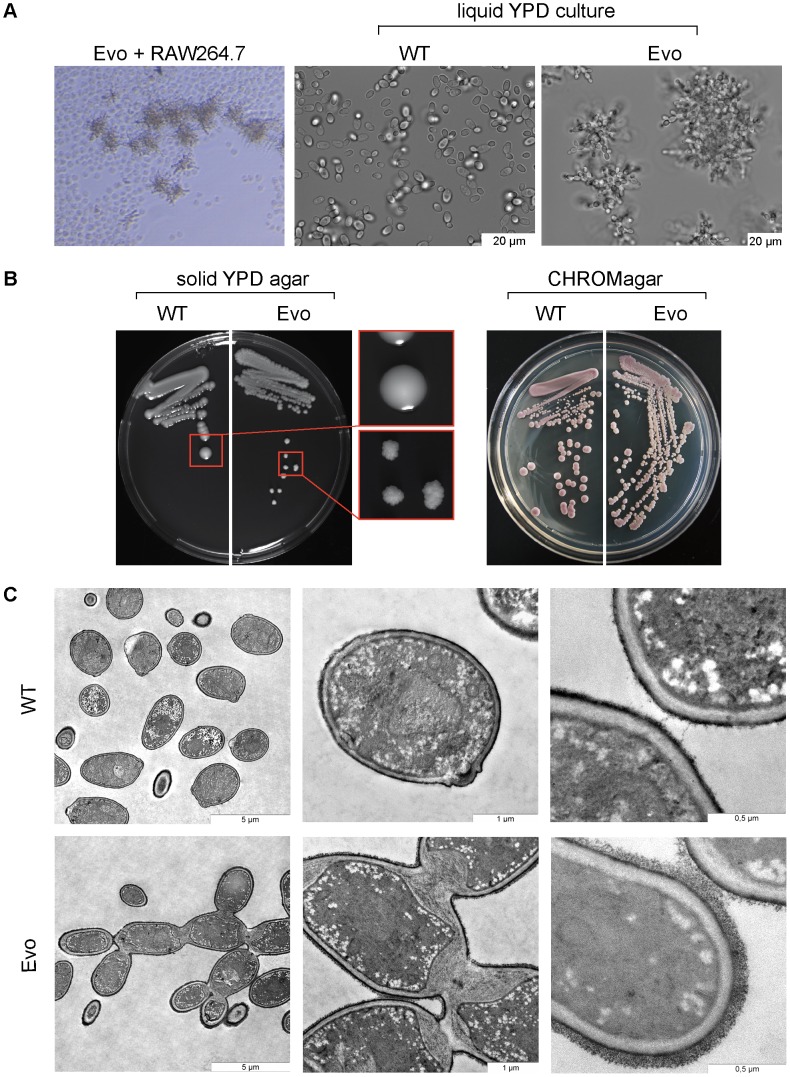
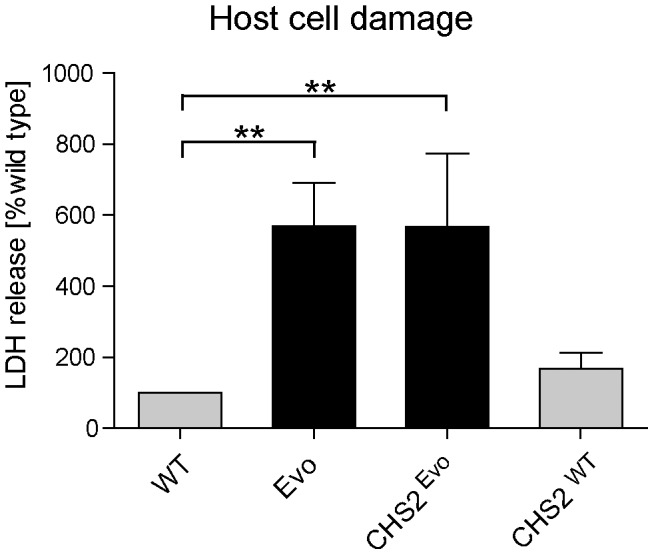
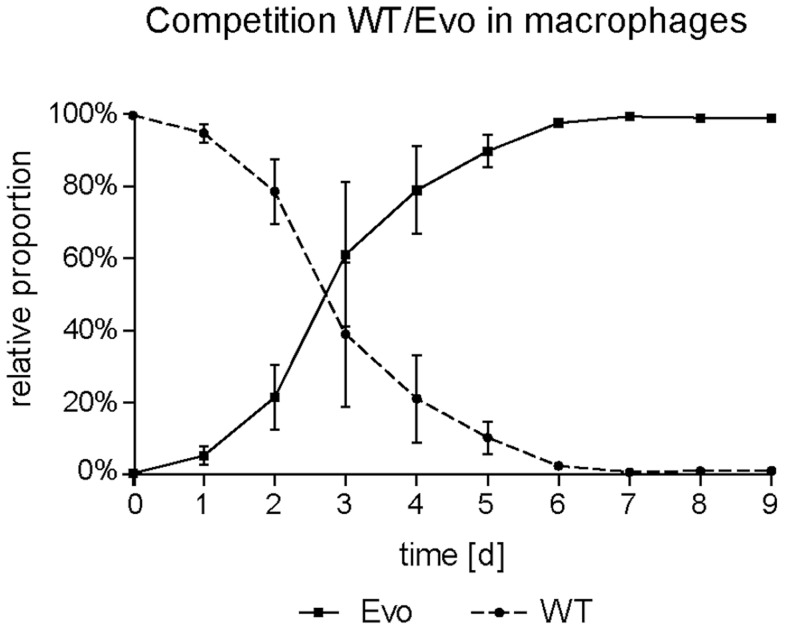
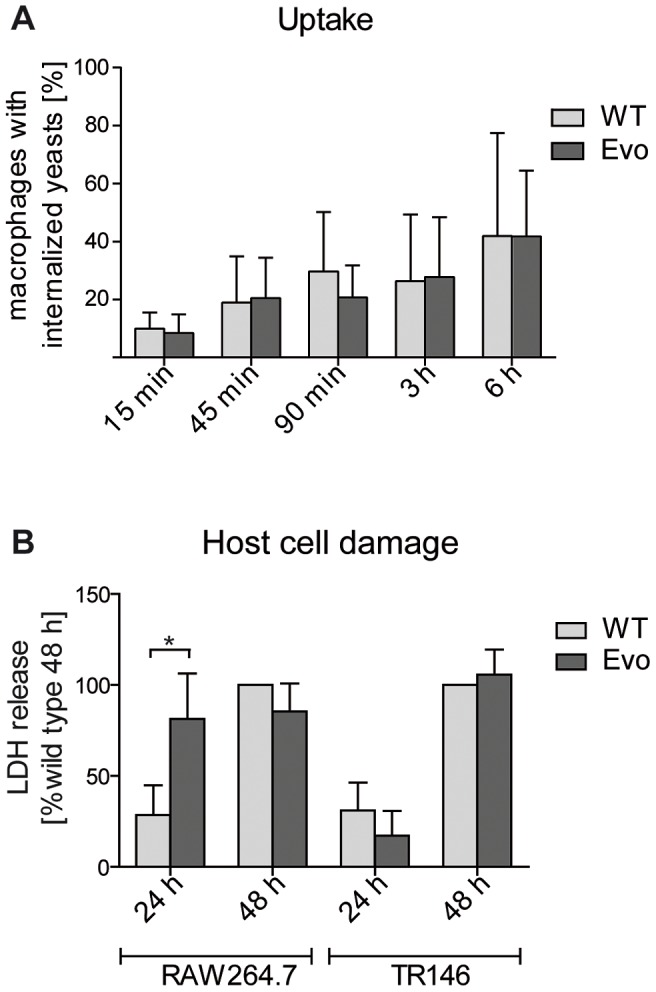
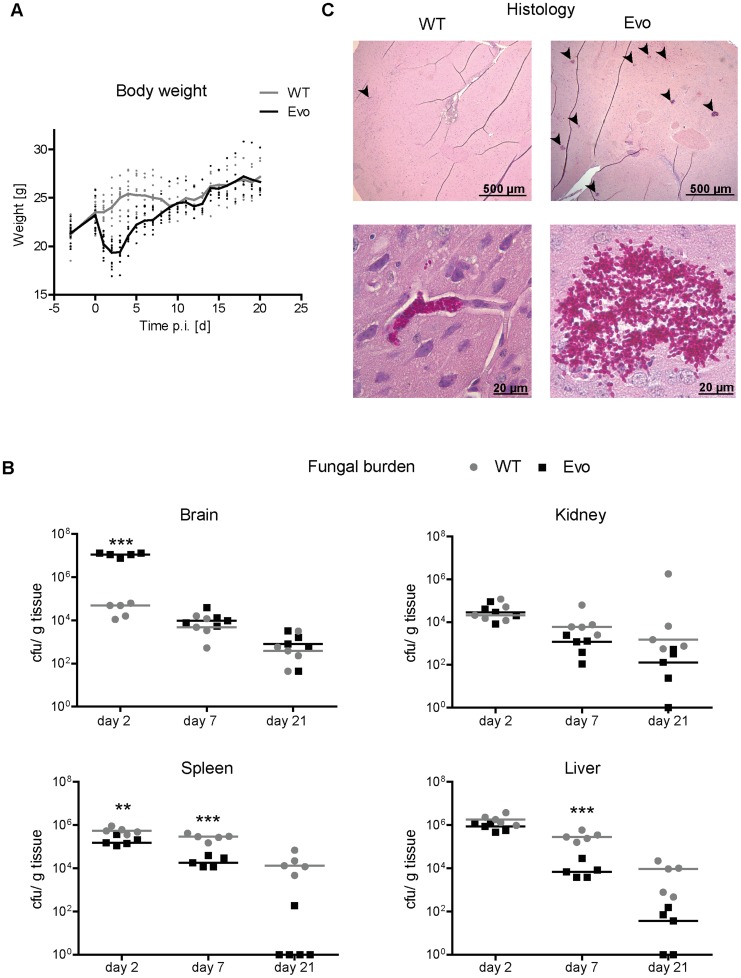
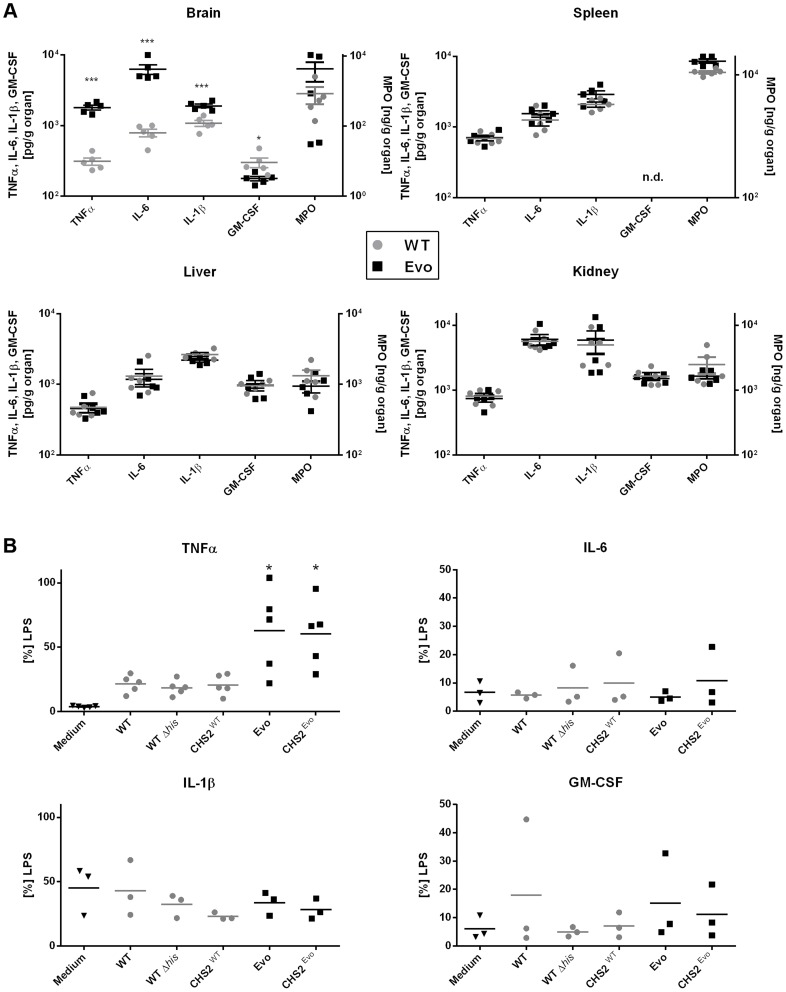
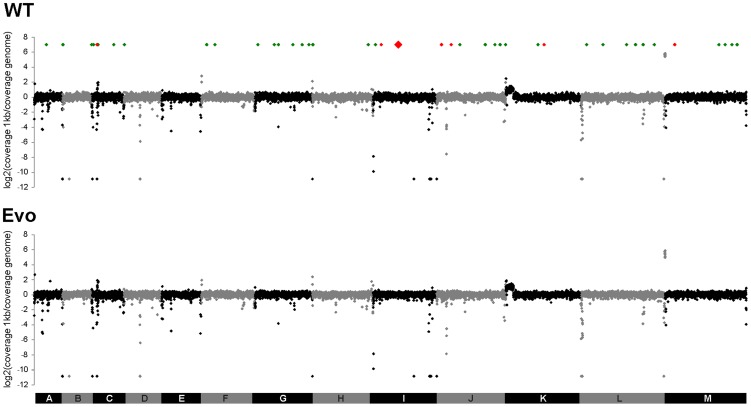
Candida glabrata is one of the most common causes of candidemia, a life-threatening, systemic fungal infection, and is surpassed in frequency only by Candida albicans. Major factors contributing to the success of this opportunistic pathogen include its ability to readily acquire resistance to antifungals and to colonize and adapt to many different niches in the human body. Here we addressed the flexibility and adaptability of C. glabrata during interaction with macrophages with a serial passage approach. Continuous co-incubation of C. glabrata with a murine macrophage cell line for over six months resulted in a striking alteration in fungal morphology: The growth form changed from typical spherical yeasts to pseudohyphae-like structures - a phenotype which was stable over several generations without any selective pressure. Transmission electron microscopy and FACS analyses showed that the filamentous-like morphology was accompanied by changes in cell wall architecture. This altered growth form permitted faster escape from macrophages and increased damage of macrophages. In addition, the evolved strain (Evo) showed transiently increased virulence in a systemic mouse infection model, which correlated with increased organ-specific fungal burden and inflammatory response (TNFα and IL-6) in the brain. Similarly, the Evo mutant significantly increased TNFα production in the brain on day 2, which is mirrored in macrophages confronted with the Evo mutant, but not with the parental wild type. Whole genome sequencing of the Evo strain, genetic analyses, targeted gene disruption and a reverse microevolution experiment revealed a single nucleotide exchange in the chitin synthase-encoding CHS2 gene as the sole basis for this phenotypic alteration. A targeted CHS2 mutant with the same SNP showed similar phenotypes as the Evo strain under all experimental conditions tested. These results indicate that microevolutionary processes in host-simulative conditions can elicit adaptations of C. glabrata to distinct host niches and even lead to hypervirulent strains.
光滑念珠菌是念珠菌血症(一种危及生命的全身性真菌感染)最常见的病因之一,其感染频率仅次于白色念珠菌。这种机会性病原体成功的主要因素包括其易于获得抗真菌药物耐药性以及在人体许多不同生态位定殖和适应的能力。在这里,我们采用连续传代方法研究了光滑念珠菌与巨噬细胞相互作用过程中的灵活性和适应性。将光滑念珠菌与小鼠巨噬细胞系连续共培养六个多月导致真菌形态发生显著改变:生长形式从典型的球形酵母变为假菌丝样结构——这种表型在没有任何选择压力的情况下经过几代仍保持稳定。透射电子显微镜和流式细胞术分析表明,丝状样形态伴随着细胞壁结构的变化。这种改变的生长形式使真菌能够更快地从巨噬细胞中逃逸,并增加对巨噬细胞的损伤。此外,进化菌株(Evo)在系统性小鼠感染模型中表现出短暂增加的毒力,这与大脑中器官特异性真菌负荷增加和炎症反应(TNFα和IL-6)相关。同样,Evo突变体在第2天显著增加了大脑中TNFα的产生,这在与Evo突变体接触的巨噬细胞中也有体现,但与亲本野生型接触的巨噬细胞中则没有。对Evo菌株进行全基因组测序、遗传分析、靶向基因破坏和反向微进化实验,结果显示几丁质合酶编码基因CHS2中的单个核苷酸交换是这种表型改变的唯一基础。在所有测试的实验条件下,具有相同单核苷酸多态性的靶向CHS2突变体表现出与Evo菌株相似的表型。这些结果表明,在宿主模拟条件下的微进化过程可以使光滑念珠菌适应不同的宿主生态位,甚至导致高毒力菌株的产生。