Farshid Amir Abbas, Tamaddonfard Esmaeal
Division of Pathology, Department of Pathobiology, Faculty of Veterinary Medicine, Urmia University, Urmia, Iran.
Division of Physiology, Department of Basic Sciences, Faculty of Veterinary Medicine, Urmia University, Urmia, Iran.
Avicenna J Phytomed. 2015 Sep-Oct;5(5):469-78.
Crocin and safranal, the major constituents of saffron, exert neuroprotective effects. In the present study, we investigated the effects of crocin and safranal (alone or in combination with insulin) on peripheral neuropathy in diabetic rats.
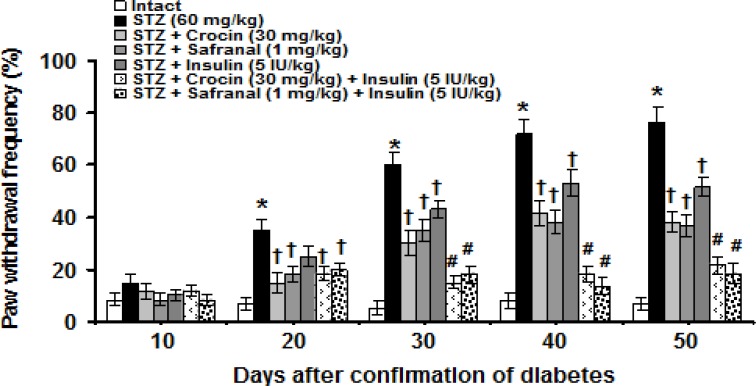
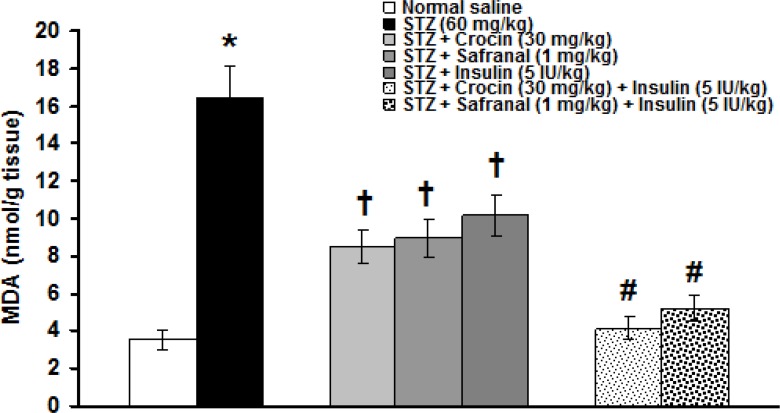
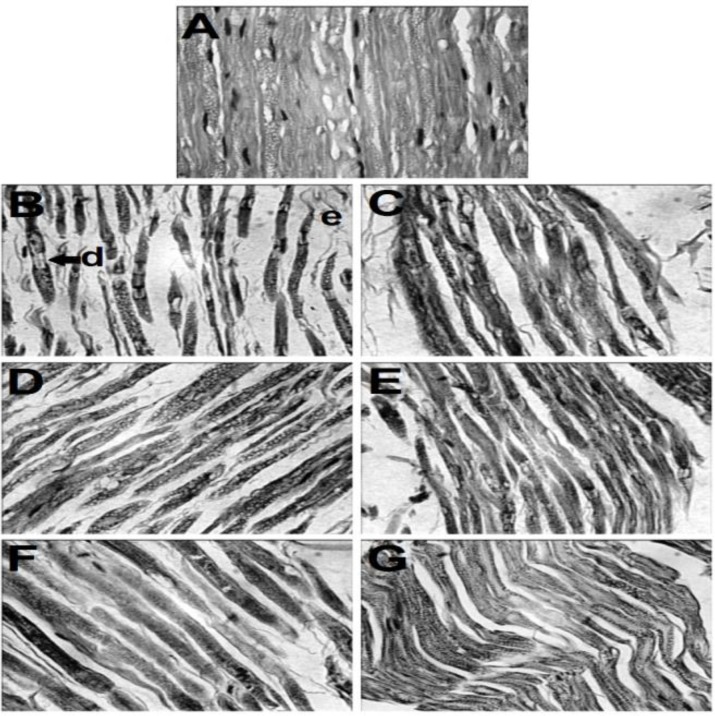
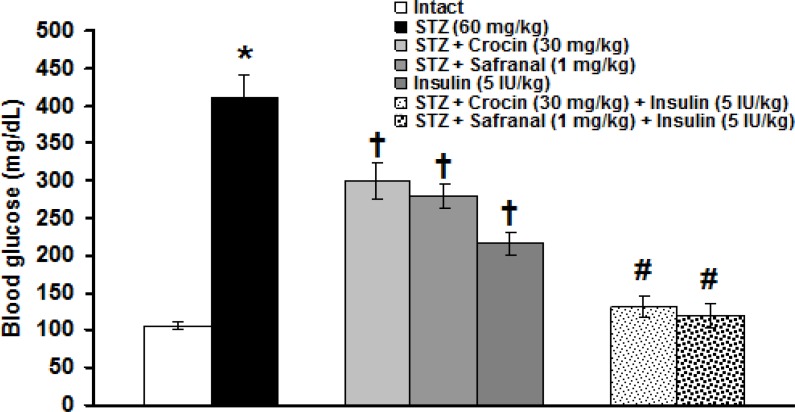
Diabetes was induced by intraperitoneal (i.p.) injection of 60 mg/kg of streptozotocin (STZ) and confirmed by blood glucose level higher than 250 mg/dl. After confirmation of diabetes, crocin (30 mg/kg, i.p.), safranal (1 mg/kg, i.p.) (alone or in combination with insulin) and insulin (5 IU/kg, s.c.) were administered for eight weeks. Neuropathic pain was evaluated using acetone drop test. Histopathological changes of sciatic nerve were evaluated using light microscope. Blood glucose levels and sciatic nerve malondialdehyde (MDA) contents were also measured.
STZ caused cold allodynia, edema and degenerative changes of sciatic nerve, hyperglycemia and an elevation of sciatic nerve MDA levels. Crocin, safranal and insulin improved STZ-induced behavioral, histopathological and biochemical changes. Combined treatments produced more documented improving effects.
The results of the present study showed neuroprotective effects of crocin, safranal and insulin in a rat model of diabetic neuropathy. In addition, crocin and safranal enhanced the neuroprotective effect of insulin. The neuroprotective effects of theses chemical compounds could be associated with their anti-hyperglycemic and antioxidant properties.
藏红花的主要成分西红花苷和藏红花醛具有神经保护作用。在本研究中,我们研究了西红花苷和藏红花醛(单独或与胰岛素联合使用)对糖尿病大鼠周围神经病变的影响。
通过腹腔注射60mg/kg链脲佐菌素(STZ)诱导糖尿病,并通过血糖水平高于250mg/dl进行确认。糖尿病确诊后,给予西红花苷(30mg/kg,腹腔注射)、藏红花醛(1mg/kg,腹腔注射)(单独或与胰岛素联合使用)和胰岛素(5IU/kg,皮下注射),持续八周。使用丙酮滴注试验评估神经病理性疼痛。使用光学显微镜评估坐骨神经的组织病理学变化。还测量了血糖水平和坐骨神经丙二醛(MDA)含量。
STZ导致冷觉异常、水肿和坐骨神经退行性变化、高血糖以及坐骨神经MDA水平升高。西红花苷、藏红花醛和胰岛素改善了STZ诱导的行为、组织病理学和生化变化。联合治疗产生了更多有记录的改善效果。
本研究结果表明,西红花苷、藏红花醛和胰岛素在糖尿病神经病变大鼠模型中具有神经保护作用。此外,西红花苷和藏红花醛增强了胰岛素的神经保护作用。这些化合物的神经保护作用可能与其抗高血糖和抗氧化特性有关。