Gutierrez Juan B, Galinski Mary R, Cantrell Stephen, Voit Eberhard O
Department of Mathematics, Institute of Bioinformatics, University of Georgia, Athens, GA 30602, USA .
Emory University School of Medicine, Division of Infectious Diseases, Emory Vaccine Center, Yerkes National Primate Research Center, Emory University, 954 Gatewood Rd, Atlanta, GA 30329, USA .
Math Biosci. 2015 Dec;270(Pt B):143-55. doi: 10.1016/j.mbs.2015.10.002. Epub 2015 Oct 16.
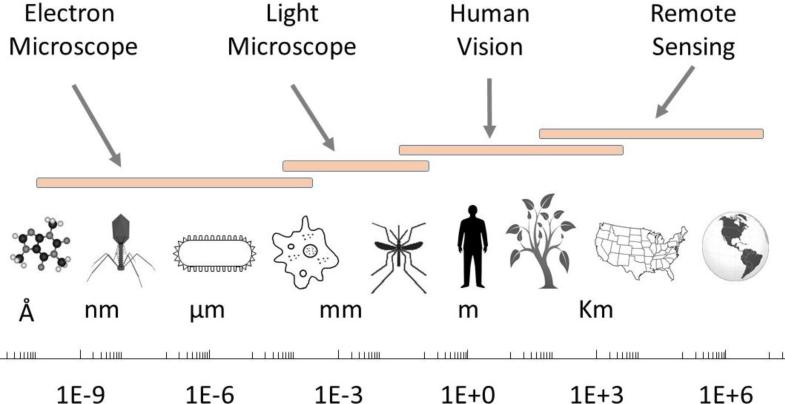
Since their earliest days, humans have been struggling with infectious diseases. Caused by viruses, bacteria, protozoa, or even higher organisms like worms, these diseases depend critically on numerous intricate interactions between parasites and hosts, and while we have learned much about these interactions, many details are still obscure. It is evident that the combined host-parasite dynamics constitutes a complex system that involves components and processes at multiple scales of time, space, and biological organization. At one end of this hierarchy we know of individual molecules that play crucial roles for the survival of a parasite or for the response and survival of its host. At the other end, one realizes that the spread of infectious diseases by far exceeds specific locales and, due to today's easy travel of hosts carrying a multitude of organisms, can quickly reach global proportions. The community of mathematical modelers has been addressing specific aspects of infectious diseases for a long time. Most of these efforts have focused on one or two select scales of a multi-level disease and used quite different computational approaches. This restriction to a molecular, physiological, or epidemiological level was prudent, as it has produced solid pillars of a foundation from which it might eventually be possible to launch comprehensive, multi-scale modeling efforts that make full use of the recent advances in biology and, in particular, the various high-throughput methodologies accompanying the emerging -omics revolution. This special issue contains contributions from biologists and modelers, most of whom presented and discussed their work at the workshop From within Host Dynamics to the Epidemiology of Infectious Disease, which was held at the Mathematical Biosciences Institute at Ohio State University in April 2014. These contributions highlight some of the forays into a deeper understanding of the dynamics between parasites and their hosts, and the consequences of this dynamics for the spread and treatment of infectious diseases.
从最早的时候起,人类就一直在与传染病作斗争。这些疾病由病毒、细菌、原生动物,甚至像蠕虫这样的高等生物引起,严重依赖于寄生虫与宿主之间众多复杂的相互作用。虽然我们已经对这些相互作用有了很多了解,但许多细节仍然模糊不清。很明显,宿主 - 寄生虫的综合动态构成了一个复杂的系统,该系统涉及时间、空间和生物组织等多个尺度的组成部分和过程。在这个层次结构的一端,我们知道单个分子对寄生虫的生存或其宿主的反应及生存起着关键作用。在另一端,人们意识到传染病的传播远远超出了特定区域,并且由于如今携带多种生物体的宿主易于旅行,传染病能够迅速蔓延至全球范围。长期以来,数学建模群体一直在研究传染病的特定方面。这些努力大多集中在多层次疾病的一两个选定尺度上,并采用了截然不同的计算方法。对分子、生理或流行病学层面的这种限制是审慎的,因为它奠定了坚实的基础支柱,最终有可能在此基础上开展全面的多尺度建模工作,充分利用生物学领域的最新进展,特别是伴随新兴的“组学”革命出现的各种高通量方法。本期特刊收录了生物学家和建模人员的文章,他们中的大多数人在2014年4月于俄亥俄州立大学数学生物科学研究所举办的“从宿主动态到传染病流行病学”研讨会上展示并讨论了自己的工作。这些文章突出了在更深入理解寄生虫与其宿主之间动态关系方面的一些探索,以及这种动态关系对传染病传播和治疗的影响。