Karukurichi Kannan R, Fei Xiang, Swyka Robert A, Broussy Sylvain, Shen Weijun, Dey Sangeeta, Roy Sandip K, Berkowitz David B
Department of Chemistry, University of Nebraska, Lincoln, NE 68588-0304, USA.
Sci Adv. 2015 Jul;1(6). doi: 10.1126/sciadv.1500066. Epub 2015 Jul 10.
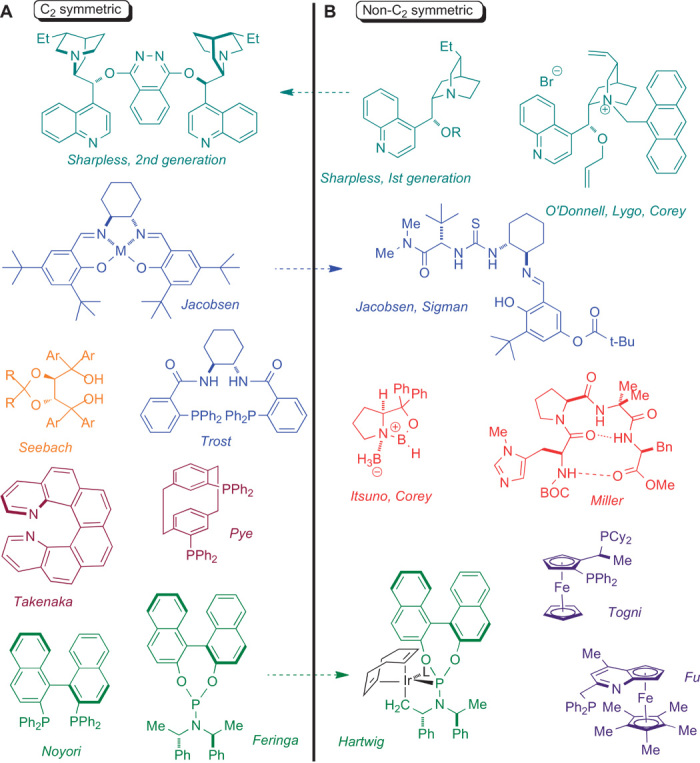
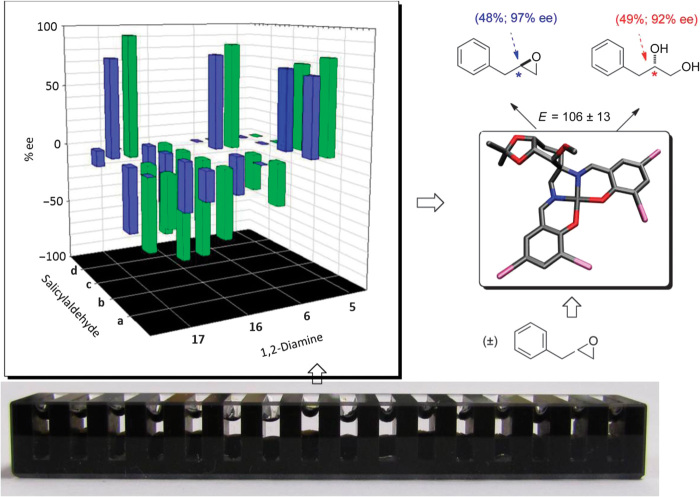
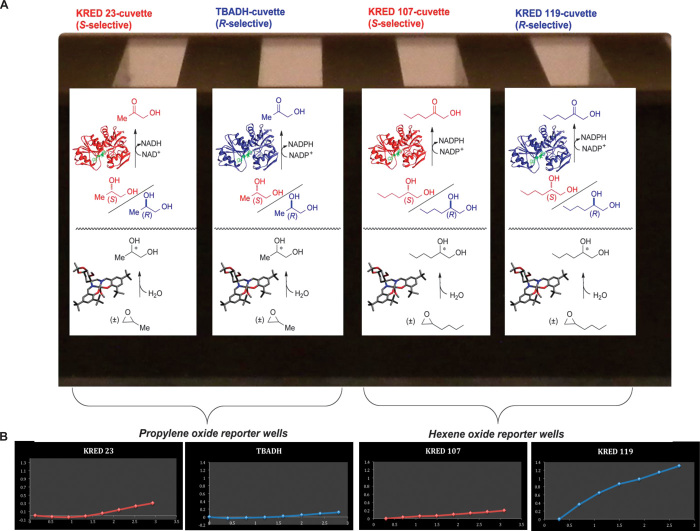
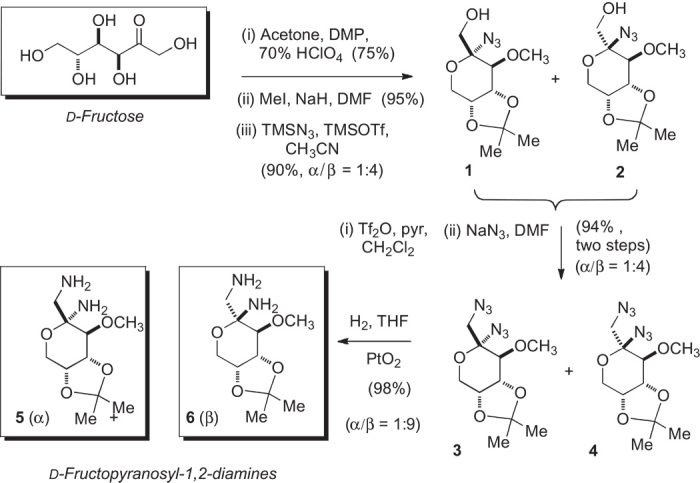
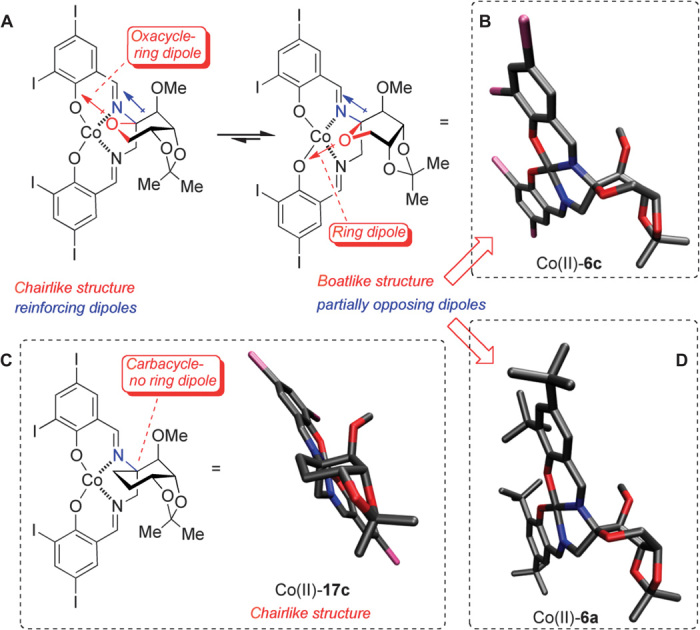
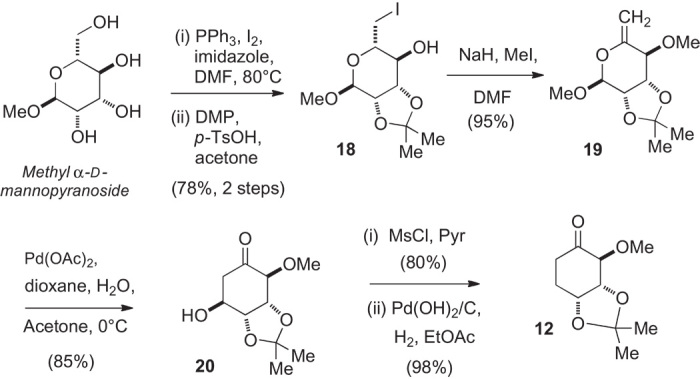
This study introduces new methods of screening for and tuning chiral space and in so doing identifies a promising set of chiral ligands for asymmetric synthesis. The carbafructopyranosyl-1,2-diamine(s) and salens constructed therefrom are particularly compelling. It is shown that by removing the native anomeric effect in this ligand family, one can tune chiral ligand shape and improve chiral bias. This concept is demonstrated by a combination of (i) x-ray crystallographic structure determination, (ii) assessment of catalytic performance, and (iii) consideration of the anomeric effect and its underlying dipolar basis. The title ligands were identified by a new mini version of the in situ enzymatic screening (ISES) procedure through which catalyst-ligand combinations are screened in parallel, and information on relative rate and enantioselectivity is obtained in real time, without the need to quench reactions or draw aliquots. Mini-ISES brings the technique into the nanomole regime (200 to 350 nmol catalyst/20 μml organic volume) commensurate with emerging trends in reaction development/process chemistry. The best-performing β-d-carbafructopyranosyl-1,2-diamine-derived salen ligand discovered here outperforms the best known organometallic and enzymatic catalysts for the hydrolytic kinetic resolution of 3-phenylpropylene oxide, one of several substrates examined for which the ligand is "matched." This ligand scaffold defines a new swath of chiral space, and anomeric effect tunability defines a new concept in shaping that chiral space. Both this ligand set and the anomeric shape-tuning concept are expected to find broad application, given the value of chiral 1,2-diamines and salens constructed from these in asymmetric catalysis.
本研究介绍了筛选和调节手性空间的新方法,并借此鉴定出一组用于不对称合成的、颇具潜力的手性配体。由碳果糖吡喃糖基-1,2-二胺构建的碳果糖吡喃糖基-1,2-二胺和萨伦配体尤其引人注目。研究表明,通过消除该配体家族中的天然端基异构效应,可以调节手性配体的形状并提高手性偏向。这一概念通过以下三者的结合得以证明:(i)X射线晶体学结构测定,(ii)催化性能评估,以及(iii)对端基异构效应及其潜在偶极基础的考量。通过原位酶筛选(ISES)程序的一个新的微型版本鉴定出了标题配体,通过该程序可以并行筛选催化剂-配体组合,并实时获得有关相对速率和对映选择性的信息,而无需淬灭反应或抽取等分试样。微型ISES将该技术带入了纳摩尔量级(200至350 nmol催化剂/20 μml有机体积),这与反应开发/过程化学的新趋势相适应。在此发现的性能最佳的β-d-碳果糖吡喃糖基-1,2-二胺衍生的萨伦配体,在3-苯基环氧丙烷的水解动力学拆分反应中,优于最知名的有机金属和酶催化剂,3-苯基环氧丙烷是所研究的几种底物之一,对于该底物,该配体是“匹配的”。这种配体支架定义了一片新的手性空间,而端基异构效应的可调性定义了塑造该手性空间的一个新概念。鉴于由这些手性1,2-二胺构建的手性1,2-二胺和萨伦配体在不对称催化中的价值,预计这组配体和端基异构形状调节概念都将得到广泛应用。