Yaron J R, Gangaraju S, Rao M Y, Kong X, Zhang L, Su F, Tian Y, Glenn H L, Meldrum D R
Center for Biosignatures Discovery Automation, The Biodesign Institute, Arizona State University, Tempe, 85287 AZ, USA.
Biological Design Graduate Program, School of Biological and Health Systems Engineering, Ira A. Fulton Schools of Engineering, Arizona State University, Tempe, 85287 AZ, USA.
Cell Death Dis. 2015 Oct 29;6(10):e1954. doi: 10.1038/cddis.2015.277.
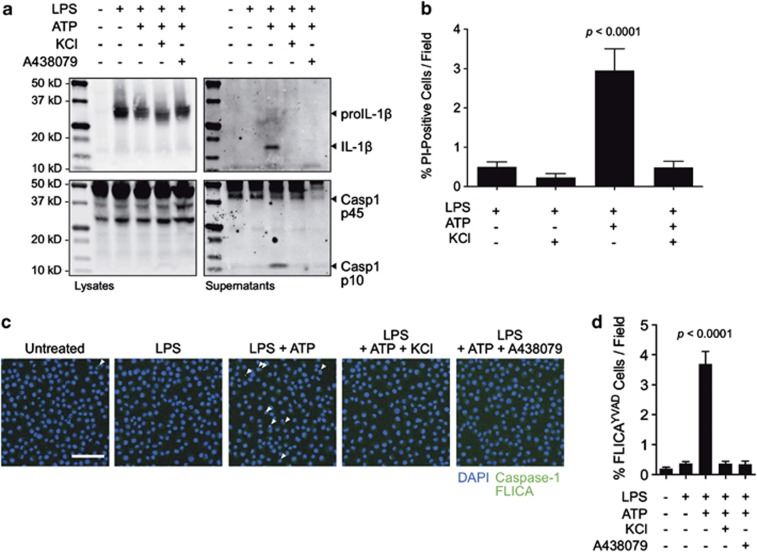
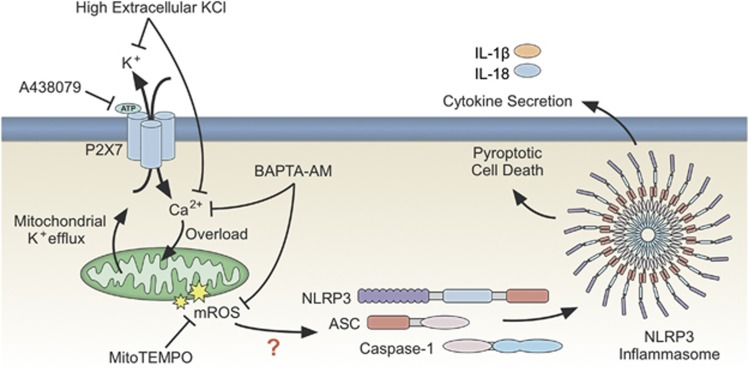
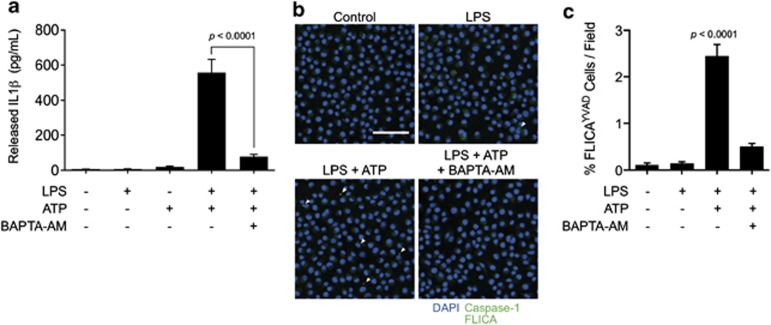
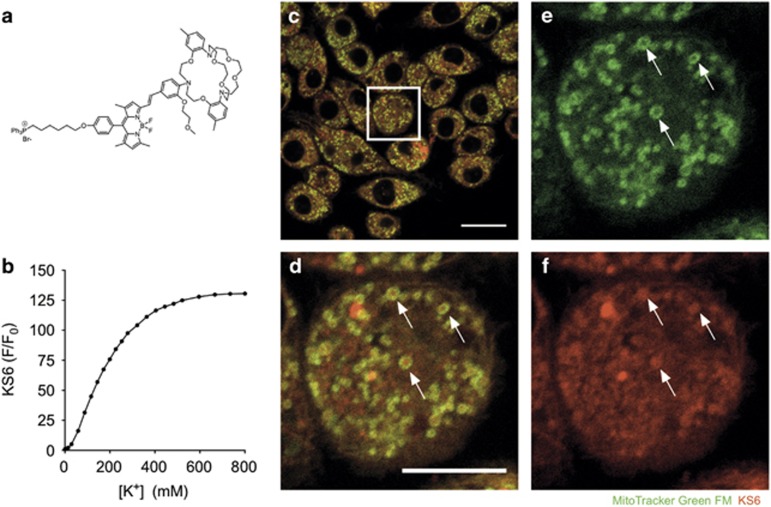
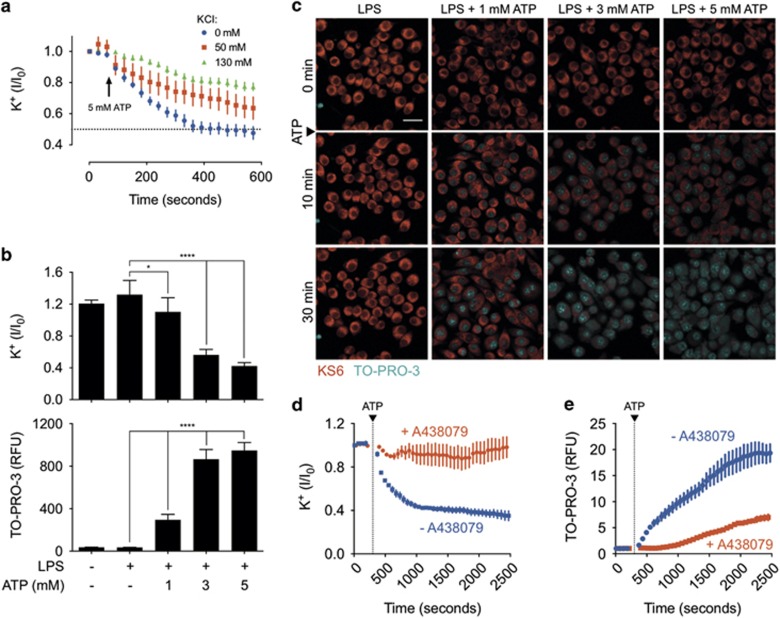
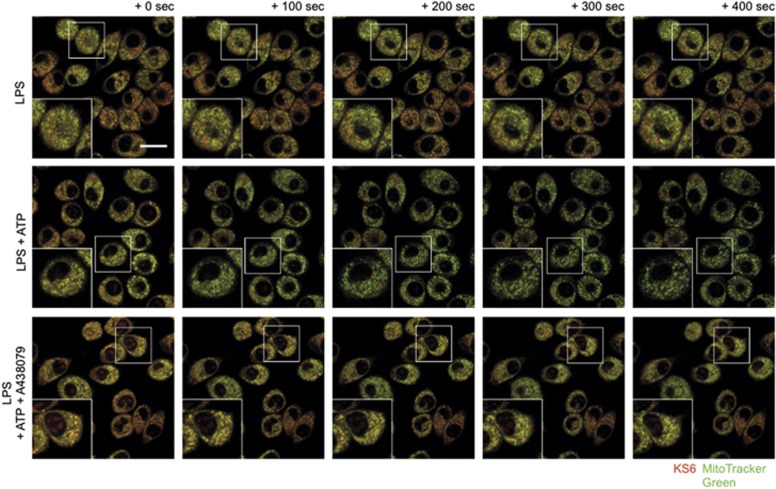
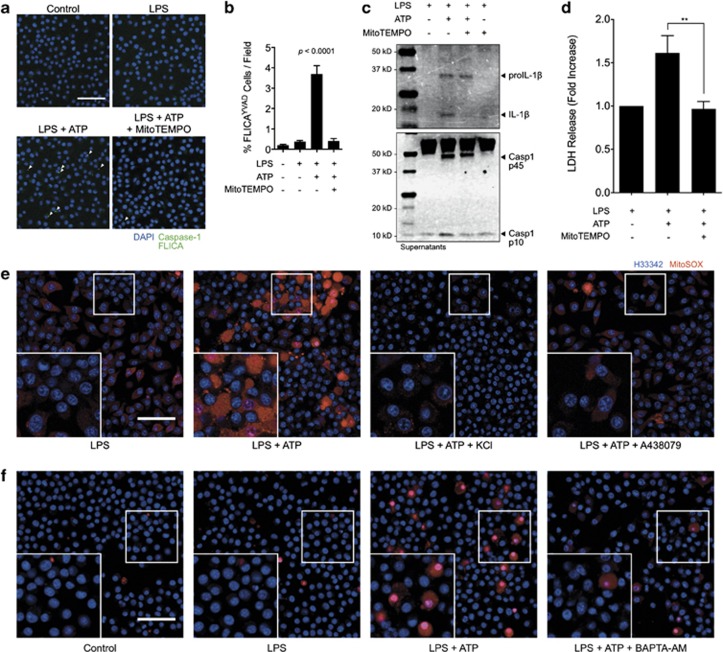
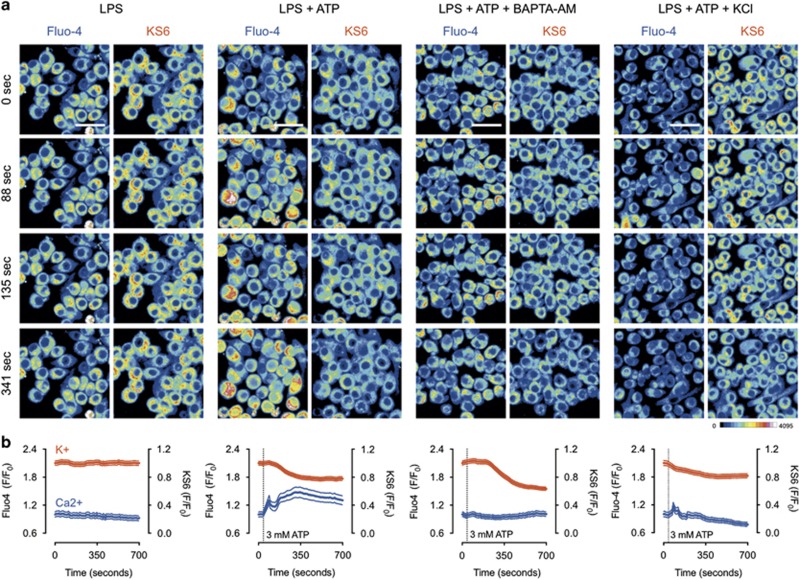
P2X7 purinergic receptor engagement with extracellular ATP induces transmembrane potassium and calcium flux resulting in assembly of the NLRP3 inflammasome in LPS-primed macrophages. The role of potassium and calcium in inflammasome regulation is not well understood, largely due to limitations in existing methods for interrogating potassium in real time. The use of KS6, a novel sensor for selective and sensitive dynamic visualization of intracellular potassium flux in live cells, multiplexed with the intracellular calcium sensor Fluo-4, revealed a coordinated relationship between potassium and calcium. Interestingly, the mitochondrial potassium pool was mobilized in a P2X7 signaling, and ATP dose-dependent manner, suggesting a role for mitochondrial sensing of cytosolic ion perturbation. Through treatment with extracellular potassium we found that potassium efflux was necessary to permit sustained calcium entry, but not transient calcium flux from intracellular stores. Further, intracellular calcium chelation with BAPTA-AM indicated that P2X7-induced potassium depletion was independent of calcium mobilization. This evidence suggests that both potassium efflux and calcium influx are necessary for mitochondrial reactive oxygen generation upstream of NLRP3 inflammasome assembly and pyroptotic cell death. We propose a model wherein potassium efflux is necessary for calcium influx, resulting in mitochondrial reactive oxygen generation to trigger the NLRP3 inflammasome.
P2X7嘌呤能受体与细胞外ATP结合会诱导跨膜钾离子和钙离子通量,导致脂多糖预处理的巨噬细胞中NLRP3炎性小体的组装。钾离子和钙离子在炎性小体调节中的作用尚未完全明确,这主要是由于现有实时检测钾离子方法存在局限性。使用KS6(一种用于在活细胞中选择性和灵敏地动态可视化细胞内钾离子通量的新型传感器)与细胞内钙离子传感器Fluo-4联用,揭示了钾离子和钙离子之间的协同关系。有趣的是,线粒体钾离子池以P2X7信号传导和ATP剂量依赖性方式被动员,这表明线粒体对胞质离子扰动的感知作用。通过细胞外钾离子处理,我们发现钾离子外流是持续钙离子内流所必需的,但不是细胞内储存的瞬时钙离子通量所必需的。此外,用BAPTA-AM进行细胞内钙离子螯合表明,P2X7诱导的钾离子耗竭与钙离子动员无关。这一证据表明,钾离子外流和钙离子内流对于NLRP3炎性小体组装和焦亡性细胞死亡上游的线粒体活性氧生成都是必需的。我们提出了一个模型,其中钾离子外流是钙离子内流所必需的,导致线粒体活性氧生成以触发NLRP3炎性小体。