Johansson Mia K V, Johanson Gunnar, Öberg Mattias
a Unit of Work Environment Toxicology , Karolinska Institutet, Institute of Environmental Medicine , Stockholm , Sweden and.
b Swedish Toxicology Sciences Research Center , Södertälje , Sweden.
Crit Rev Toxicol. 2016;46(3):241-60. doi: 10.3109/10408444.2015.1092498. Epub 2015 Oct 29.
Asthmatic individuals constitute a large sub-population that is often considered particularly susceptible to the deleterious effects of inhalation of airborne chemicals. However, for most such chemicals information on asthmatics is lacking and inter-individual assessment factors (AFs) of 3-25 have been proposed for use in the derivation of health-based guideline values.
To evaluate available information in attempt to determine whether a general difference in airway response during short-term exposure between healthy and asthmatic individuals can be identified, and whether current AFs for inter-individual variability provide sufficient protection for asthmatics.
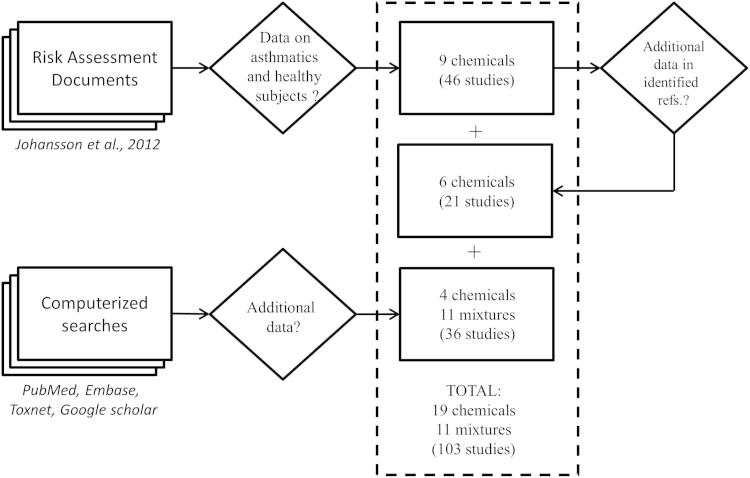
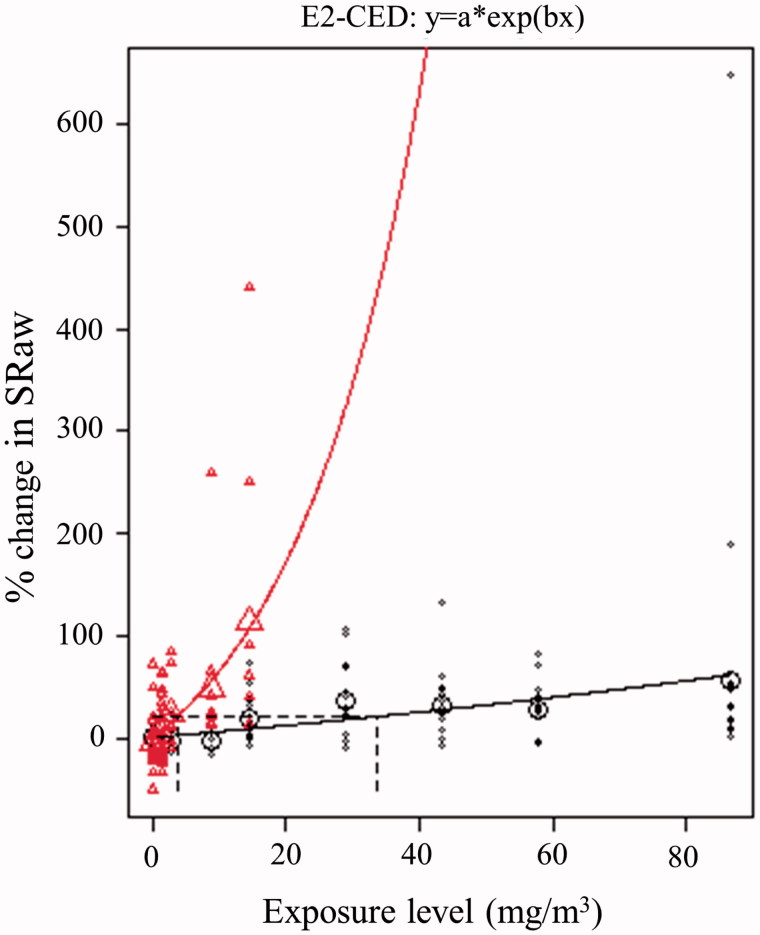
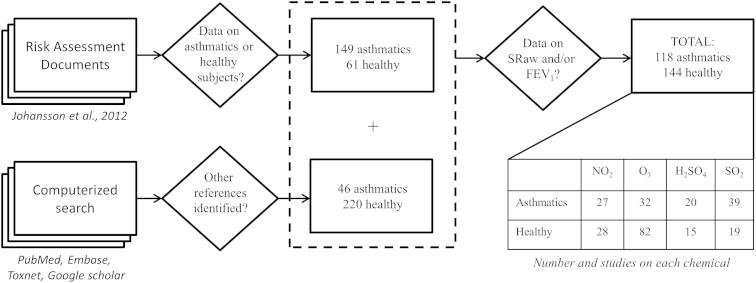
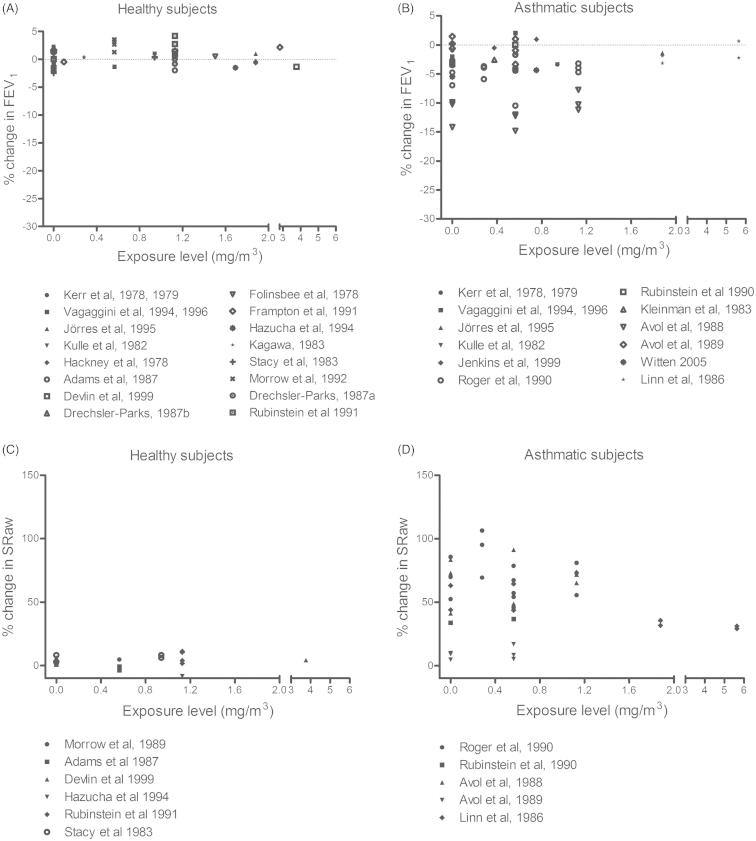
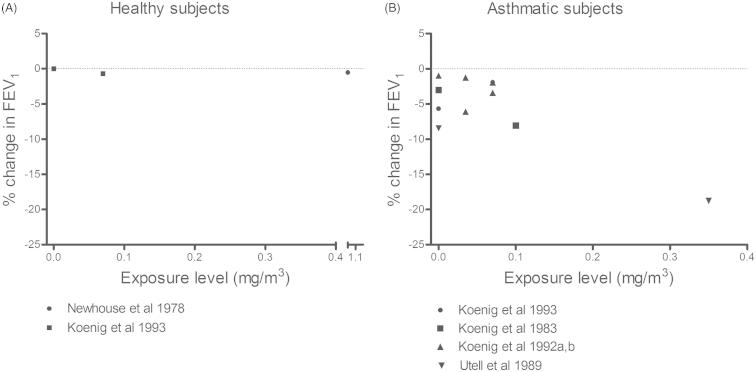
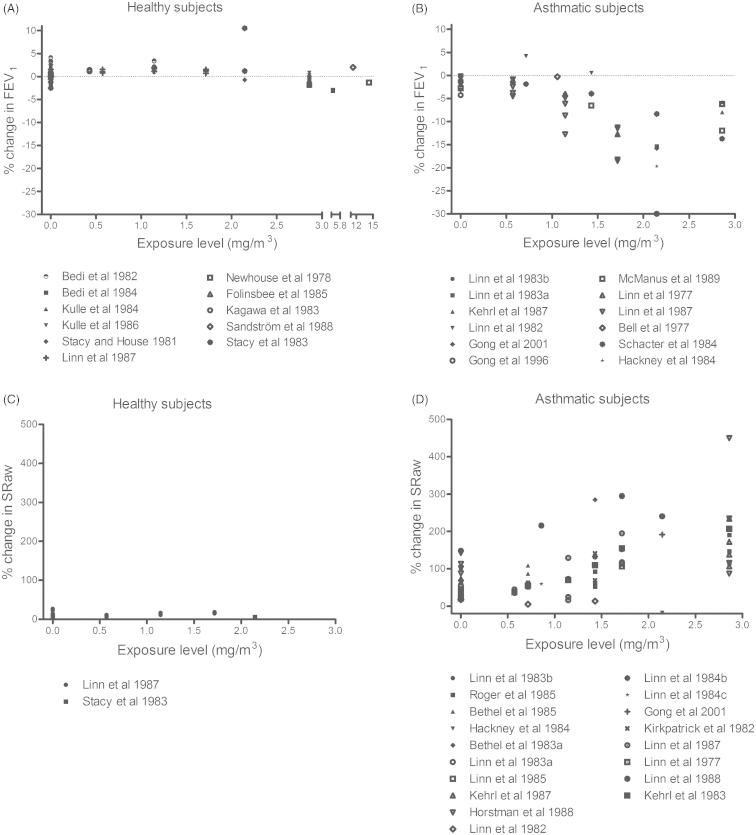
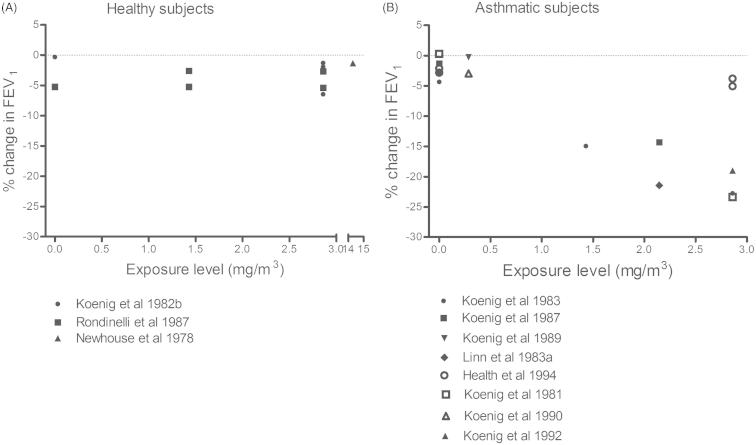
After performing systematic review of relevant documents and the scientific literature estimated differential response factors (EDRF) were derived as the ratio between the lowest observed adverse effect levels for healthy and asthmatic subjects based on studies in which both groups were tested under the same conditions. Thereafter, the concentration-response relationships for healthy and asthmatic subjects exposed separately to four extensively tested chemicals (nitrogen dioxide, ozone, sulfuric acid, sulfur dioxide) were compared on the basis of combined data. Finally, a Benchmark Concentration (BMC) analysis was performed for sulfur dioxide.
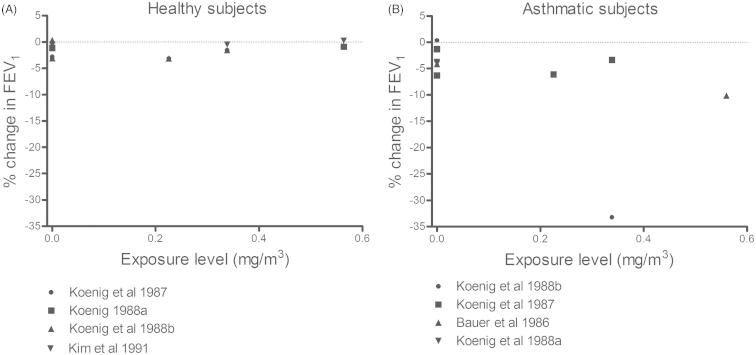
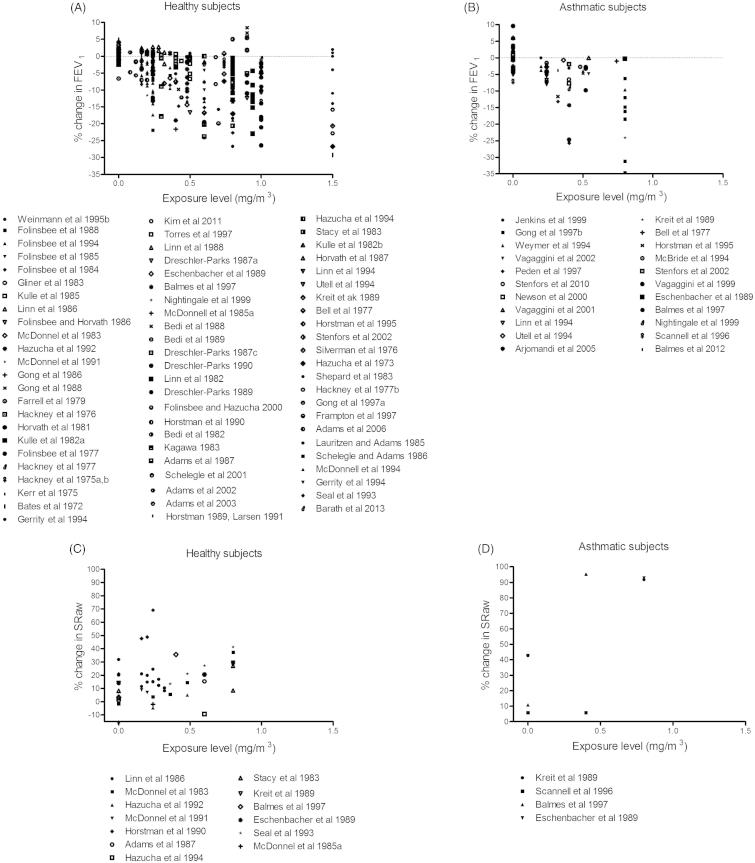
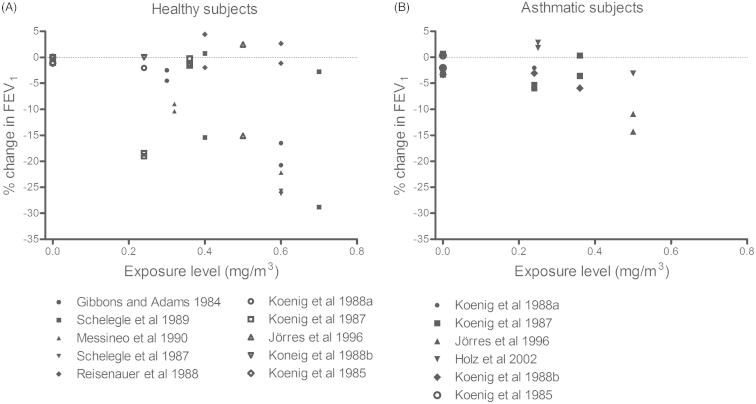
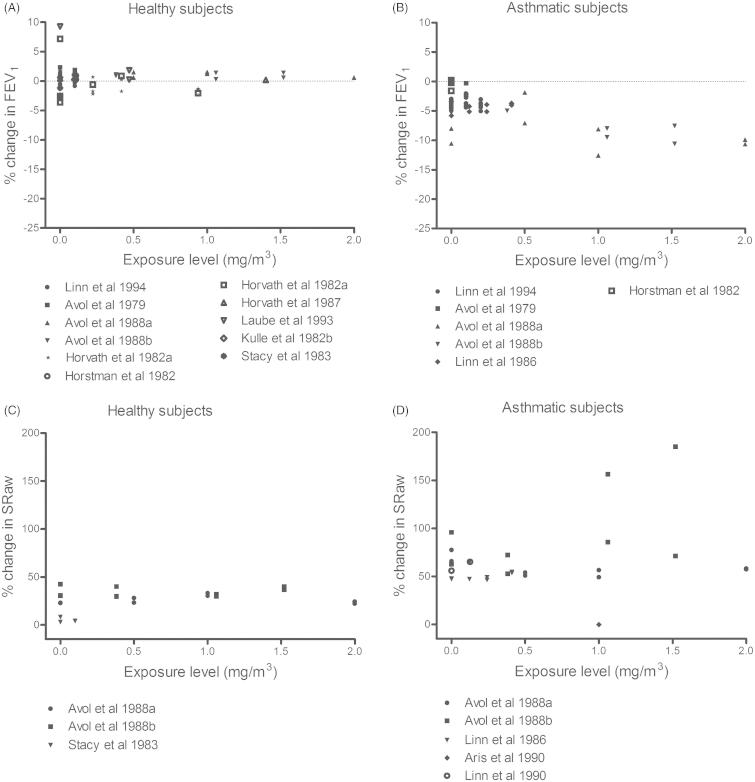
We found evidence of higher sensitivity among asthmatics (EDRF > 1) to 8 of 19 tested chemicals, and to 3 of 11 mixtures. Thereafter, we confirmed the higher sensitivity of asthmatics to sulfuric acid and sulfur dioxide. No difference was observed in the case of ozone and nitrogen dioxide. Finally, our BMC analysis of sulfur dioxide indicated a ninefold higher sensitivity among asthmatics.
Although experimental data are often inconclusive, our analyses suggest that an AF of 10 is adequate to protect asthmatics from the deleterious respiratory effects of airborne chemicals.
哮喘患者是一个庞大的亚群体,常被认为特别容易受到吸入空气中化学物质的有害影响。然而,对于大多数此类化学物质,缺乏关于哮喘患者的信息,并且已经提出了3至25的个体间评估因子(AFs)用于推导基于健康的指导值。
评估现有信息,试图确定能否识别出健康个体和哮喘个体在短期暴露期间气道反应的一般差异,以及当前个体间变异性的AFs是否为哮喘患者提供了足够的保护。
在对相关文件和科学文献进行系统综述后,根据在相同条件下对两组进行测试的研究,将估计的差异反应因子(EDRF)推导为健康受试者和哮喘受试者的最低观察到的不良反应水平之比。此后,根据合并数据比较了分别暴露于四种经过广泛测试的化学物质(二氧化氮、臭氧、硫酸、二氧化硫)的健康受试者和哮喘受试者的浓度-反应关系。最后,对二氧化硫进行了基准浓度(BMC)分析。
我们发现哮喘患者对19种测试化学物质中的8种以及11种混合物中的3种具有更高的敏感性(EDRF>1)。此后,我们证实了哮喘患者对硫酸和二氧化硫具有更高的敏感性。在臭氧和二氧化氮的情况下未观察到差异。最后,我们对二氧化硫的BMC分析表明哮喘患者的敏感性高九倍。
尽管实验数据往往没有定论,但我们的分析表明,10的AF足以保护哮喘患者免受空气中化学物质的有害呼吸影响。