Program in Translational Neuropsychiatric Genomics (R.B., C.C.W., B.G., M.L., S.P., A.R., H.W., P.L.D.J.), Ann Romney Center for Neurologic Diseases, and the Partners Multiple Sclerosis Center, Department of Neurology, Brigham and Women's Hospital, Brookline, MA; Harvard Medical School (R.B., B.G., S.P., H.W., P.L.D.G.), Boston, MA; Blizard Institute (G.G.) and Royal Holloway (D.L.), University College London, London, UK; Vertex Pharmaceuticals Incorporated (V.G., A.L., S.R., R.R., M.B.), Boston MA; Woo Sports (J.H.), Boston, MA; McGovern Institute Neurotechnology Program (C.J.), MIT, Cambridge, MA; and Biogen-Idec (J.P., J.R.), Cambridge, MA.
Neurol Neuroimmunol Neuroinflamm. 2015 Oct 15;2(6):e162. doi: 10.1212/NXI.0000000000000162. eCollection 2015 Dec.
In this cohort of individuals with and without multiple sclerosis (MS), we illustrate some of the novel approaches that smartphones provide to monitor patients with chronic neurologic disorders in their natural setting.
Thirty-eight participant pairs (MS and cohabitant) aged 18-55 years participated in the study. Each participant received an Android HTC Sensation 4G smartphone containing a custom application suite of 19 tests capturing participant performance and patient-reported outcomes (PROs). Over 1 year, participants were prompted daily to complete one assigned test.
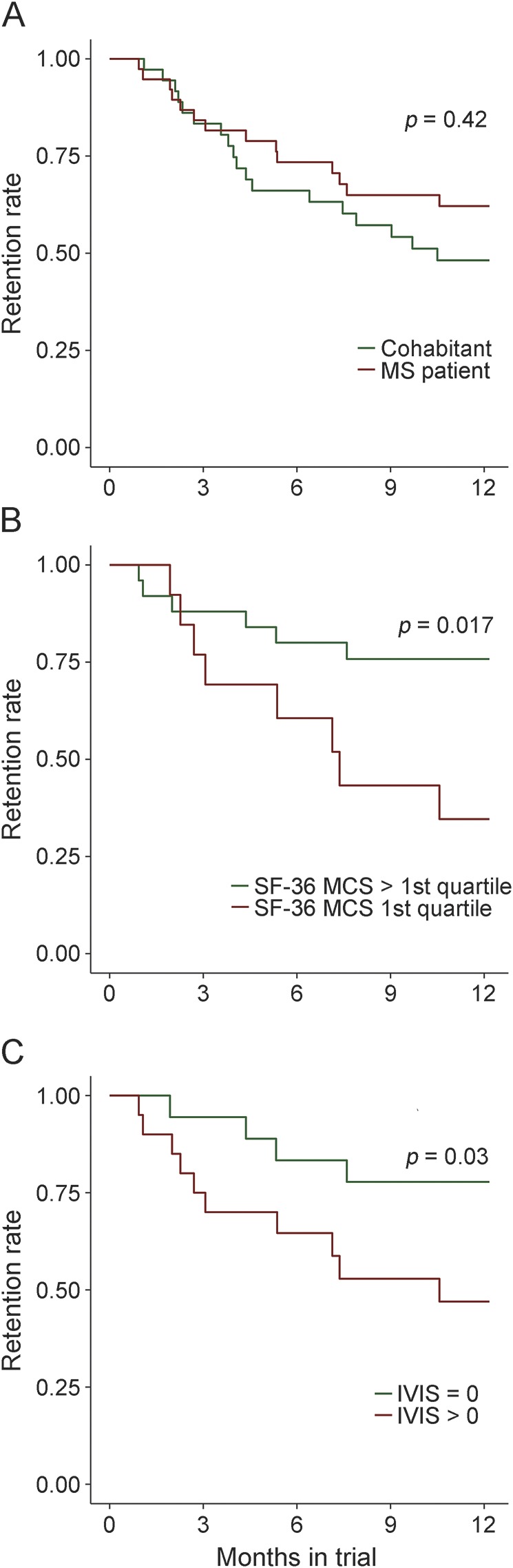
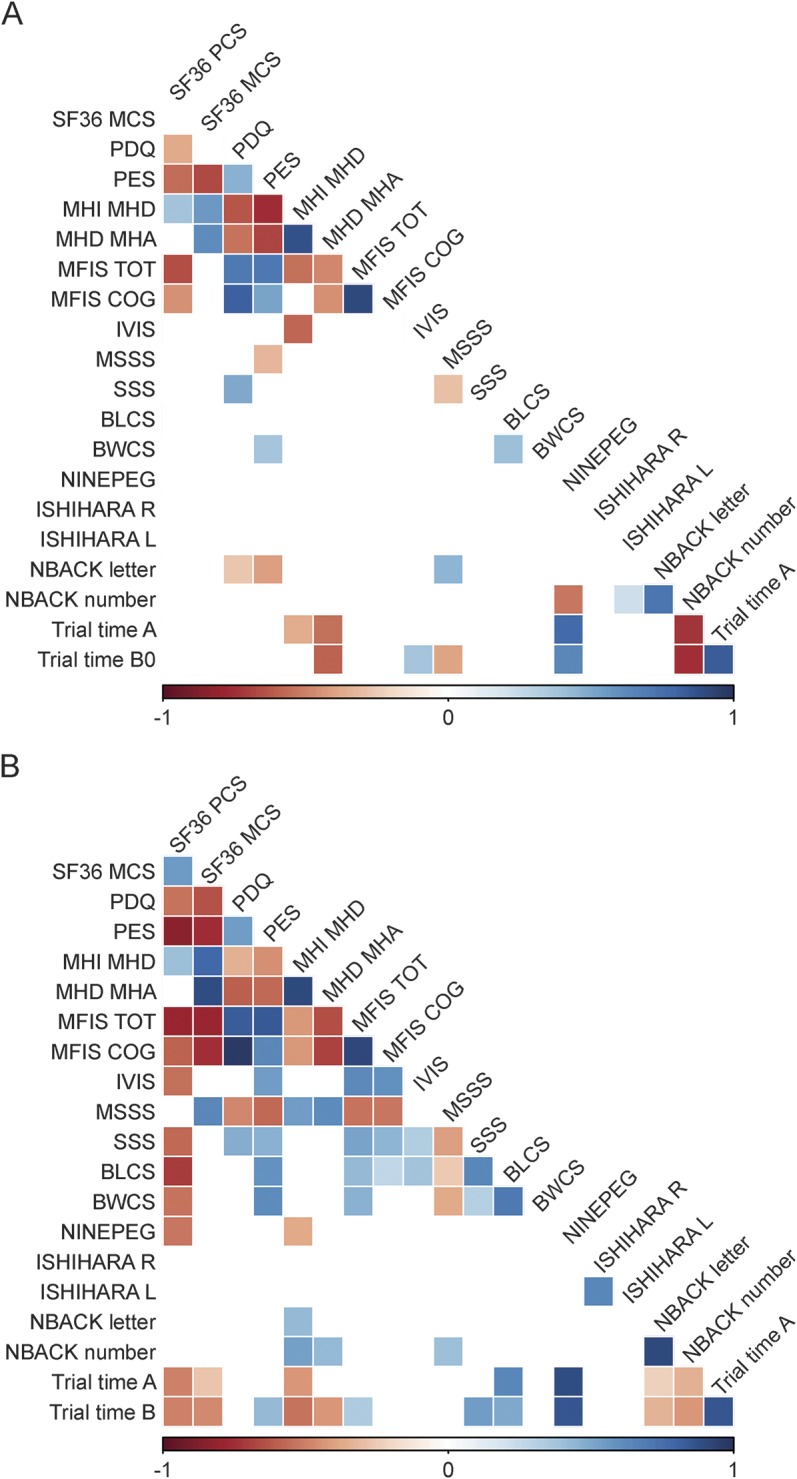
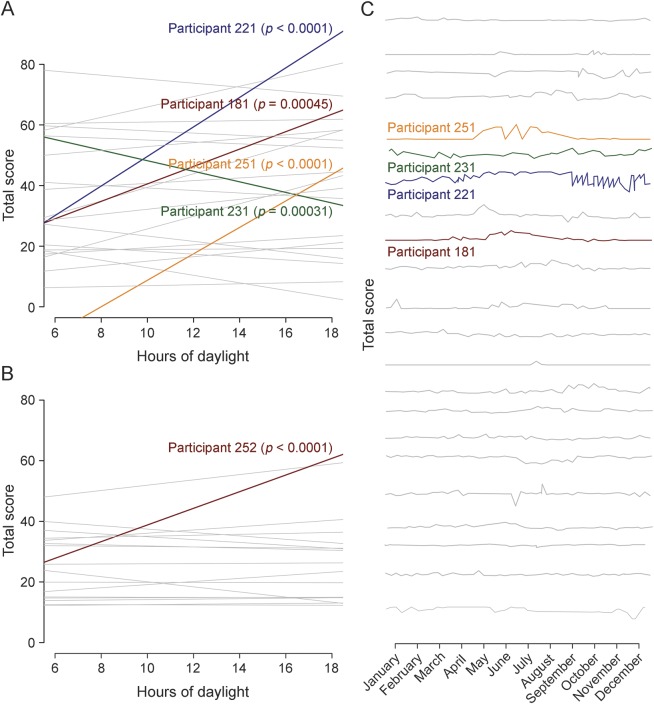
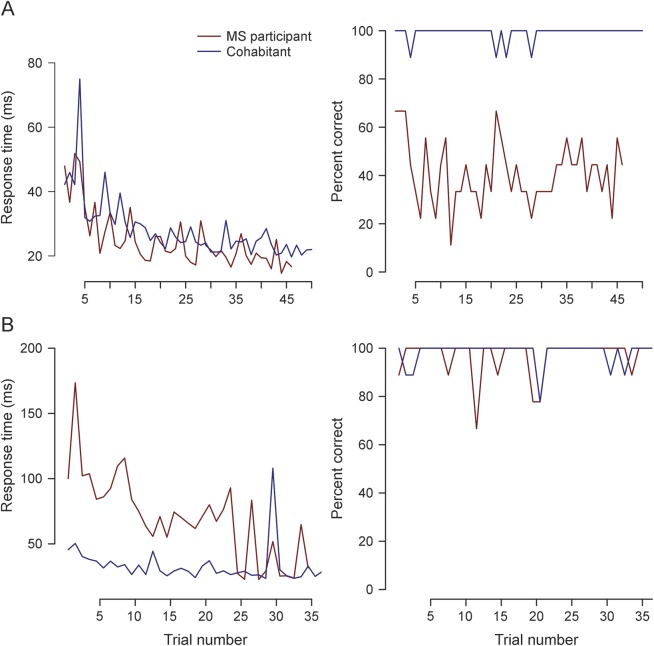
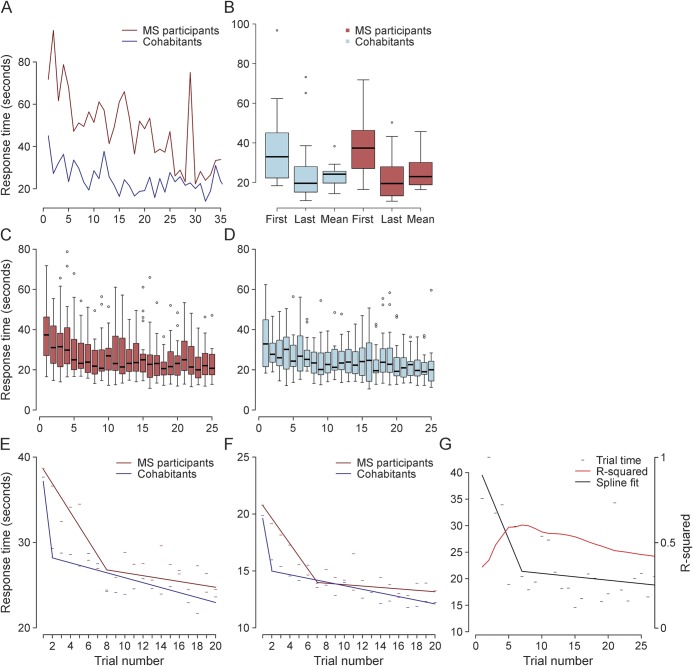
A total of 22 patients with MS and 17 cohabitants completed the entire study. Among patients with MS, low scores on PROs relating to mental and visual function were associated with dropout (p < 0.05). We illustrate several novel features of a smartphone platform. First, fluctuations in MS outcomes (e.g., fatigue) were assessed against an individual's ambient environment by linking responses to meteorological data. Second, both response accuracy and speed for the Ishihara color vision test were captured, highlighting the benefits of both active and passive data collection. Third, a new trait, a person-specific learning curve in neuropsychological testing, was identified using spline analysis. Finally, averaging repeated measures over the study yielded the most robust correlation matrix of the different outcome measures.
We report the feasibility of, and barriers to, deploying a smartphone platform to gather useful passive and active performance data at high frequency in an unstructured manner in the field. A smartphone platform may therefore enable large-scale naturalistic studies of patients with MS or other neurologic diseases.
在本项包含有和不包含多发性硬化症(MS)患者的队列研究中,我们展示了智能手机在监测慢性神经疾病患者自然状态下病情时提供的一些新方法。
38 对年龄在 18-55 岁的参与者(MS 患者及其同居者)参与了本研究。每位参与者都收到一部包含 19 项测试的定制应用软件套件的 Android HTC Sensation 4G 智能手机,这些测试用于捕捉参与者的表现和患者报告的结果(PROs)。在 1 年的时间里,参与者每天都被提示完成一项指定的测试。
共有 22 名 MS 患者和 17 名同居者完成了整个研究。在 MS 患者中,与精神和视觉功能相关的 PRO 评分较低与脱落有关(p < 0.05)。我们展示了智能手机平台的几个新功能。首先,通过将反应与气象数据相关联,来评估 MS 结果(例如疲劳)相对于个体环境的波动。其次,捕获了 Ishihara 色盲测试的反应准确性和速度,突出了主动和被动数据收集的好处。第三,使用样条分析确定了一种新的特征,即神经心理学测试中的个体特定学习曲线。最后,通过对研究期间的重复测量进行平均,得出了不同结果测量的最稳健相关矩阵。
我们报告了在现场以非结构化方式以高频率收集有用的被动和主动表现数据的可行性和障碍。因此,智能手机平台可能会使 MS 或其他神经疾病患者的大规模自然主义研究成为可能。