Cao Mingjun, Pan Qingjie, Dong Huansheng, Yuan Xinxu, Li Yang, Sun Zhen, Dong Xiao, Wang Hongjun
Colleges of Life Sciences, Qingdao Agricultural University, 700 Chenyang Road, Chenyang, Shandong, 266109, P.R. China.
College of Animal Science and Veterinary Medicine, 700 Chenyang Road, Chenyang, Shandong, 266109, P.R. China.
Stem Cell Res Ther. 2015 Oct 31;6:208. doi: 10.1186/s13287-015-0201-3.
Effective therapies for obesity and diabetes are still lacking. The aim of this study was to evaluate whether a single intravenous infusion of syngeneic adipose-derived mesenchymal stem cells (ASCs) can reduce obesity, lower insulin resistance, and improve glucose homeostasis in a high-fat diet-induced obese (DIO) mouse model.
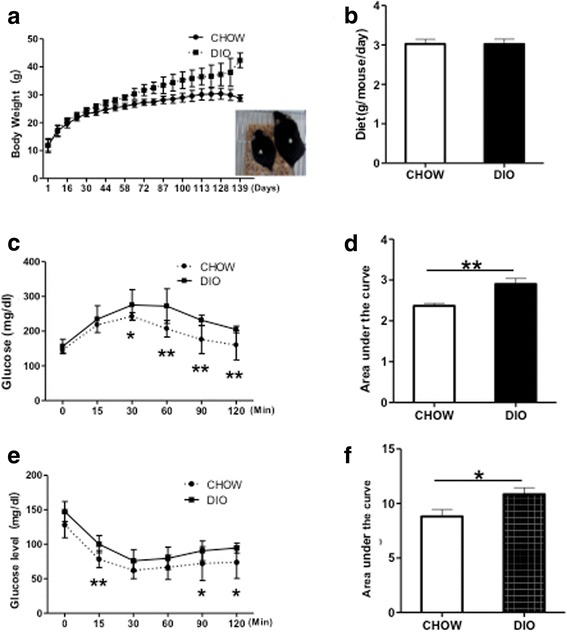
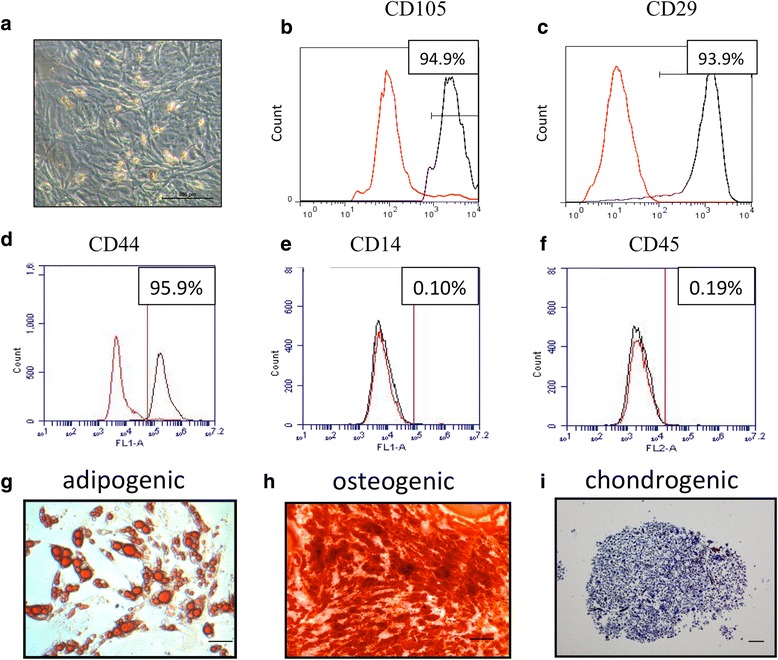
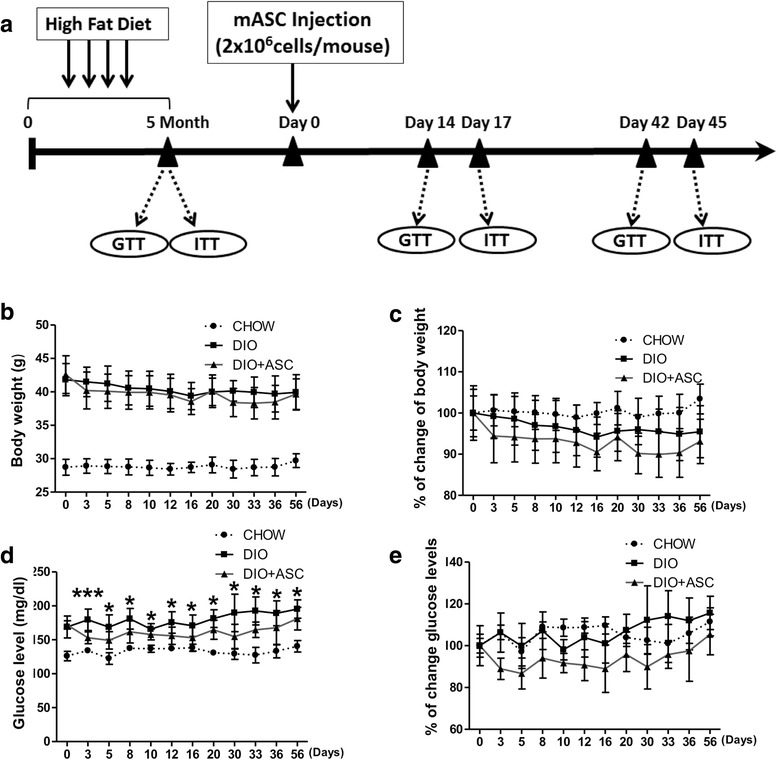
Seven-week-old C57BL/6 mice were fed a high-fat diet for 20 weeks to generate the DIO mouse model. Mice were given a single intravenous infusion of ex vivo expanded syngeneic ASCs at 2 × 10(6) cells per mouse. DIO or CHOW mice injected with saline were used as controls. Body weights, blood glucose levels, glucose, and insulin tolerance test results were obtained before and 2 and 6 weeks after cell infusion. Triglyceride (TG), high-density lipoprotein (HDL), and insulin levels in serum were measured. Expressions of genes related to insulin resistance, including peroxisome proliferator-activated receptor γ (PPARγ) and insulin receptor (InsR), and inflammation (IL-6, F4/80, and nucleotide-binding oligomerization domain containing 2, or NOD2), were measured in livers at mRNA level by real-time-polymerase chain reaction analysis. Beta-cell mass in pancrheases from CHOW, DIO, and DIO + ASC mice was quantified. GFP(+) ASCs were injected, and the presence of GFP(+) cells in livers and pancreases was determined.
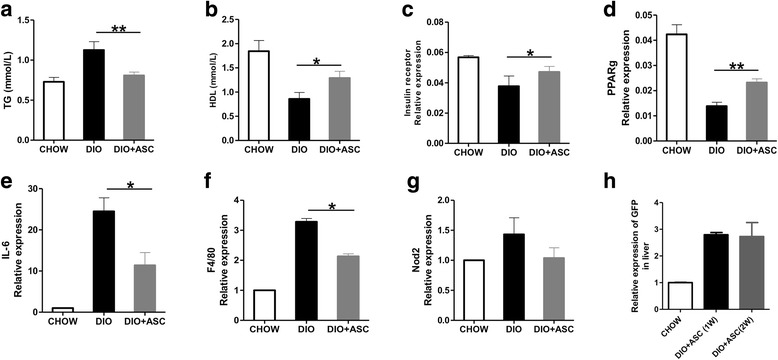
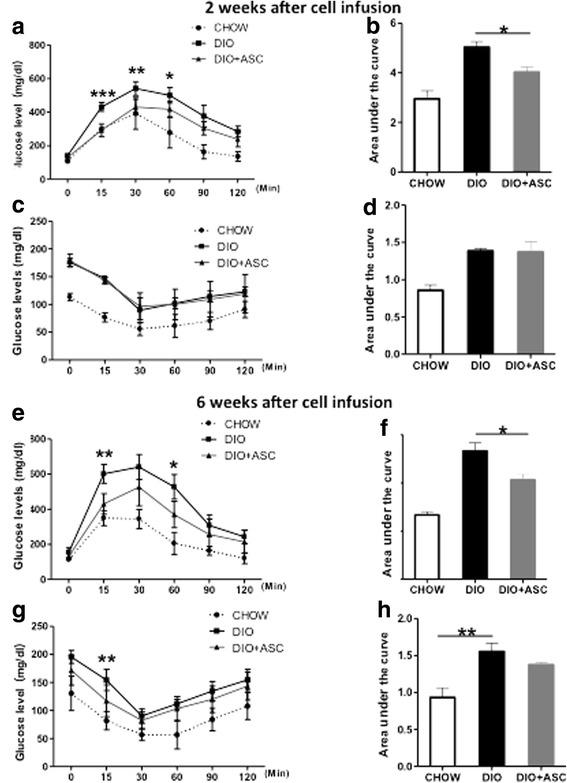
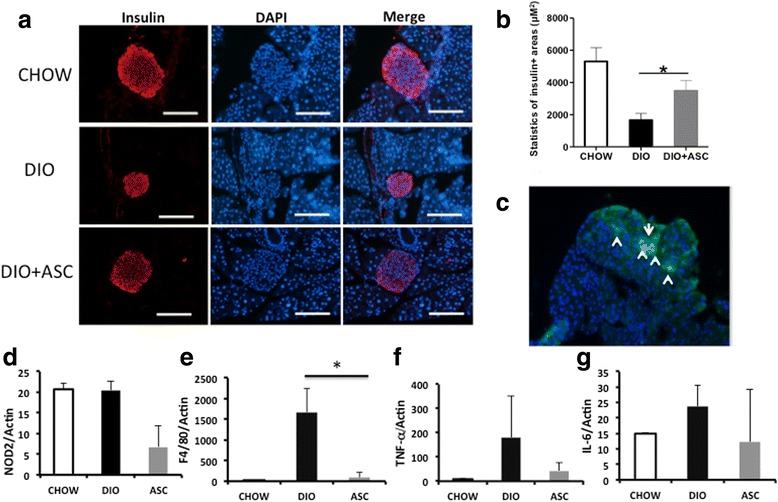
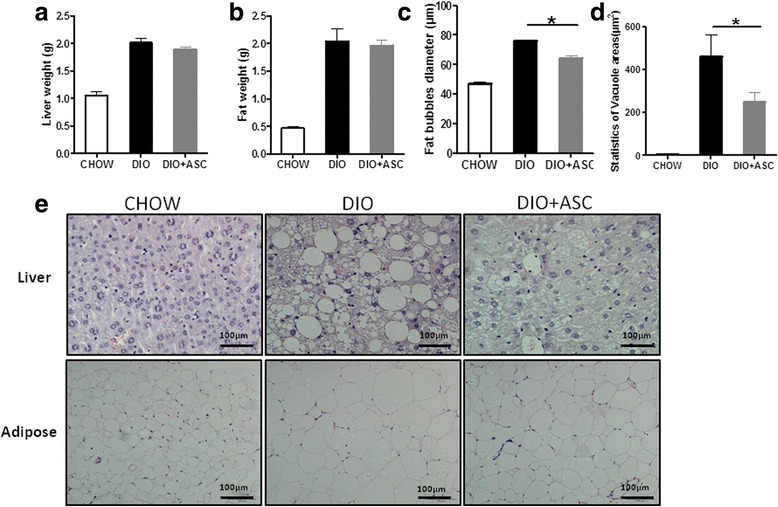
DIO mice that had received ASCs showed reduced body weights, reduced blood glucose levels, and increased glucose tolerance. ASC treatment was found to reduce TG levels and increase serum HDL levels. In livers, less fat cell deposition was observed, as were increased expression of InsR and PPARγ and reduction in expressions of IL-6 and F4/80. Treated mice showed well-preserved pancreatic β-cell mass with reduced expression of F4/80 and TNF-α compared with DIO controls. GFP(+) cells were found in liver and pancreas tissues at 1 and 2 weeks after cell injection.
ASC therapy is effective in lowering blood glucose levels and increasing glucose tolerance in DIO mice. The protective effects of ASCs arise at least in part from suppression of inflammation in the liver. In addition, ASCs are associated with better-preserved pancreatic β-cell mass.
目前仍缺乏针对肥胖症和糖尿病的有效治疗方法。本研究的目的是评估单次静脉输注同基因脂肪间充质干细胞(ASC)是否能减轻高脂饮食诱导的肥胖(DIO)小鼠模型的肥胖程度、降低胰岛素抵抗并改善葡萄糖稳态。
将7周龄的C57BL/6小鼠喂食高脂饮食20周以建立DIO小鼠模型。给小鼠单次静脉输注经体外扩增的同基因ASC,每只小鼠输注2×10⁶个细胞。注射生理盐水的DIO或正常饮食(CHOW)小鼠用作对照。在细胞输注前以及输注后2周和6周获取体重、血糖水平、葡萄糖和胰岛素耐量试验结果。测量血清中的甘油三酯(TG)、高密度脂蛋白(HDL)和胰岛素水平。通过实时聚合酶链反应分析在mRNA水平测量肝脏中与胰岛素抵抗相关的基因(包括过氧化物酶体增殖物激活受体γ(PPARγ)和胰岛素受体(InsR))以及炎症相关基因(白细胞介素6(IL-6)、F4/80和含核苷酸结合寡聚化结构域2(NOD2))的表达。对正常饮食、DIO和DIO + ASC小鼠胰腺中的β细胞量进行定量。注射绿色荧光蛋白(GFP)⁺ ASC,并确定肝脏和胰腺中GFP⁺细胞的存在情况。
接受ASC治疗的DIO小鼠体重减轻、血糖水平降低且葡萄糖耐量增加。发现ASC治疗可降低TG水平并提高血清HDL水平。在肝脏中,观察到脂肪细胞沉积减少,InsR和PPARγ的表达增加,IL-6和F4/80的表达减少。与DIO对照相比,接受治疗的小鼠胰腺β细胞量保存良好,F4/80和肿瘤坏死因子-α(TNF-α)的表达降低。在细胞注射后1周和2周,在肝脏和胰腺组织中发现了GFP⁺细胞。
ASC治疗可有效降低DIO小鼠的血糖水平并提高其葡萄糖耐量。ASC的保护作用至少部分源于对肝脏炎症的抑制。此外,ASC与更好地保存胰腺β细胞量有关。