Zhang Qian-Qian, Hu Xi-Wen, Liu Yi-Long, Ye Zhi-Jin, Gui Yi-He, Zhou Da-Lei, Qi Cui-Ling, He Xiao-Dong, Wang Honglin, Wang Li-Jing
Vascular Biology Research Institute, School of Basic Course, Guangdong Pharmaceutical University, Guangzhou 510006, China.
Institute of Immunology, Institute of Medical Sciences, Shanghai Jiao Tong University School of Medicine, Shanghai 200025, China.
Sci Rep. 2015 Nov 3;5:15948. doi: 10.1038/srep15948.
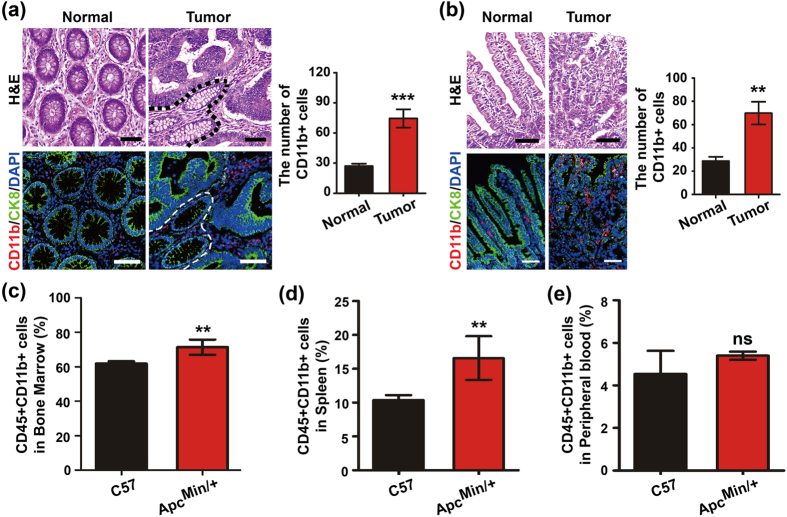
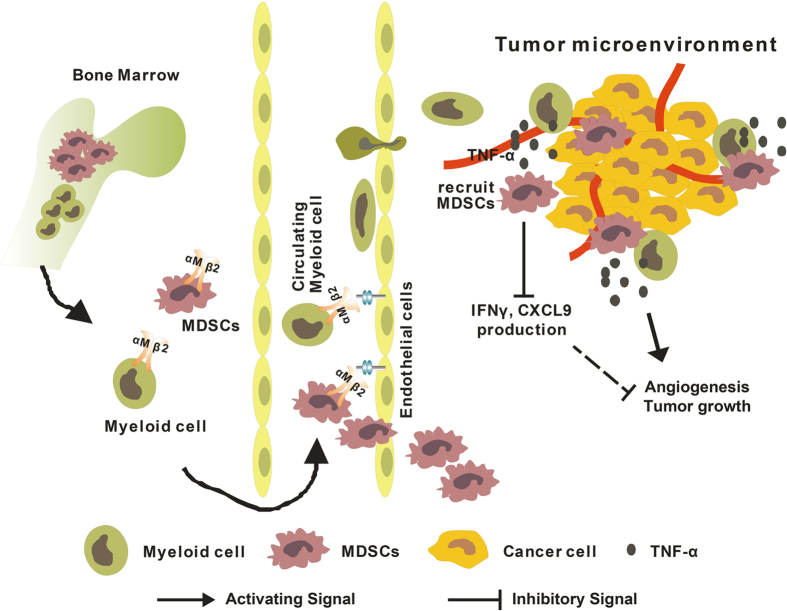
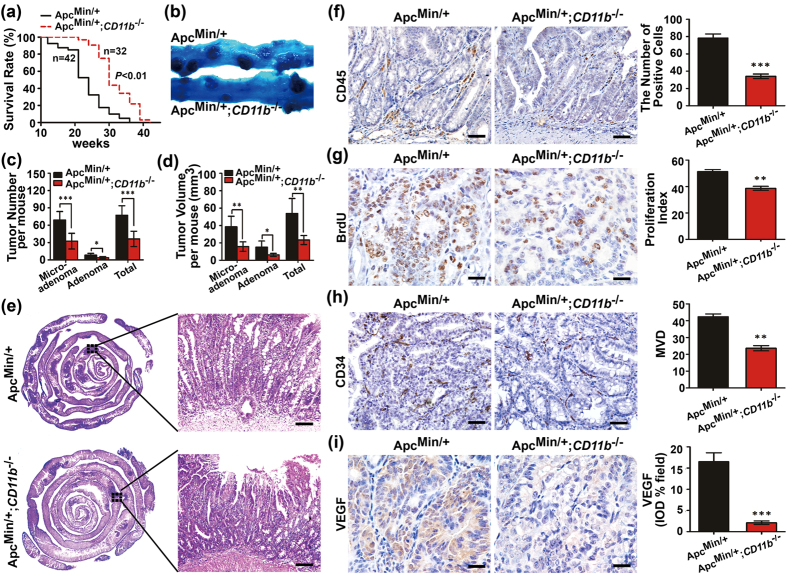
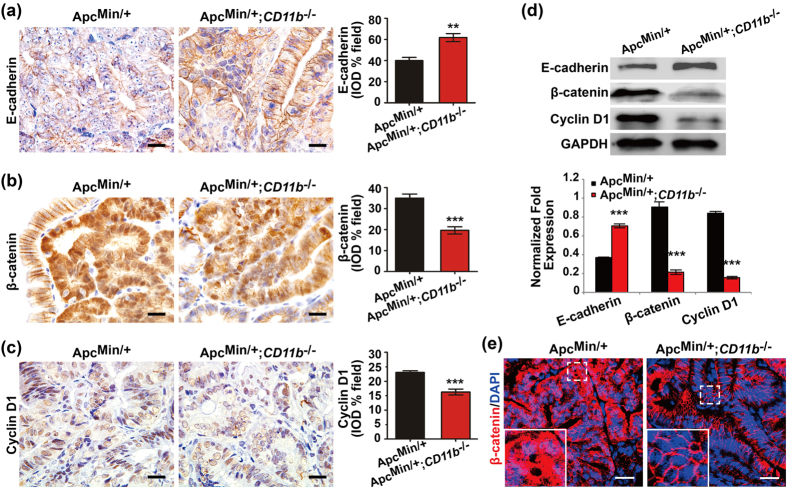
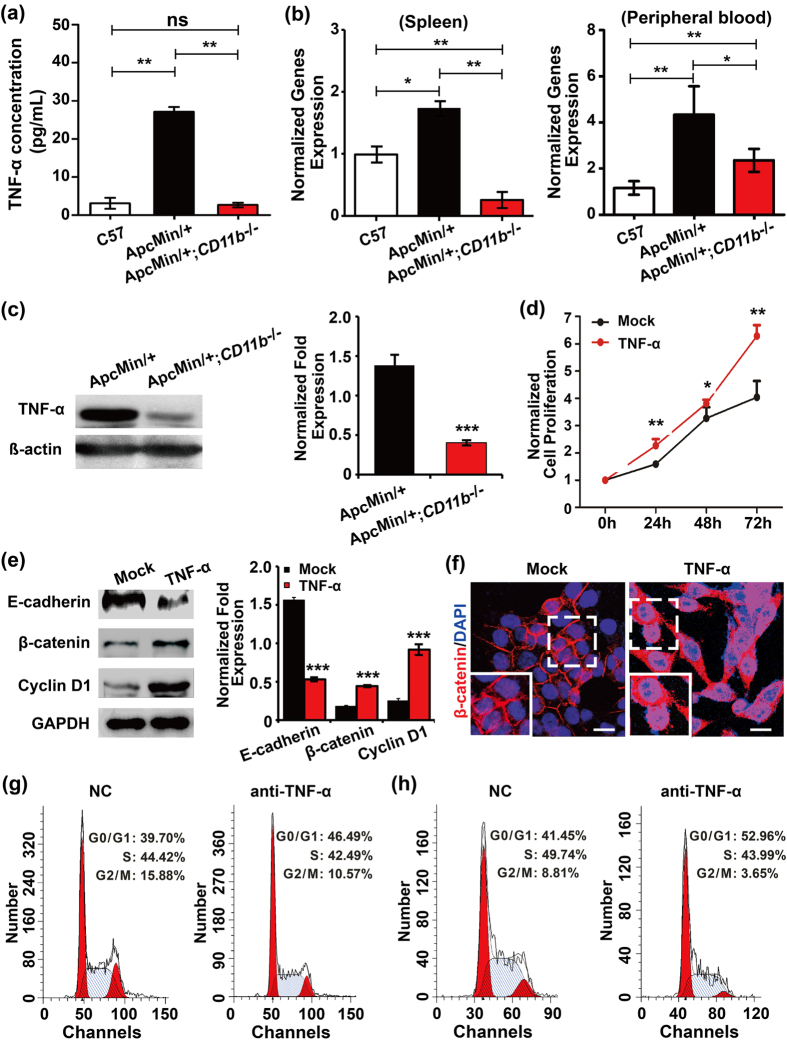
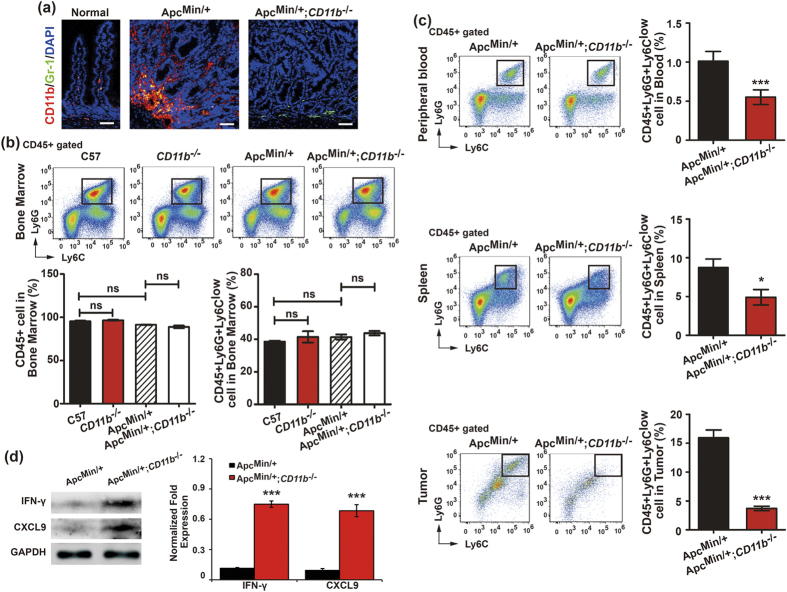
Mac-1 (CD11b) is expressed on bone marrow-derived immune cells. CD11b binds to ligands to regulate leukocyte adhesion and migration across the endothelium or epithelium. Here, we employed CD11b knockout mice and an Apc(Min/+) spontaneous intestinal adenoma mouse model to clarify the function of CD11b in intestinal tumorigenesis. We showed that CD11b deficiency may contribute to the inhibition of myeloid cell trafficking to the tumor microenvironment and inactivated Wnt/β-catenin pathway to suppress tumor growth. This effect was partly mediated by inhibiting the myeloid cell-mediated decrease in TNF-α secretion, which inhibits the recruitment of myeloid-derived suppressor cells to the tumor microenvironment and subsequently induces IFN-γ and CXCL9 production. This work provides evidence for the mechanism by which CD11b may function as an important oncogene and highlights the potential of CD11b as a therapeutic target in CRC.
Mac-1(CD11b)在骨髓来源的免疫细胞上表达。CD11b与配体结合以调节白细胞在内皮或上皮上的黏附和迁移。在此,我们使用CD11b基因敲除小鼠和Apc(Min/+)自发性肠道腺瘤小鼠模型来阐明CD11b在肠道肿瘤发生中的功能。我们发现,CD11b缺陷可能有助于抑制髓样细胞向肿瘤微环境的募集,并使Wnt/β-连环蛋白信号通路失活,从而抑制肿瘤生长。这种效应部分是通过抑制髓样细胞介导的TNF-α分泌减少来介导的,TNF-α分泌减少会抑制髓源抑制细胞向肿瘤微环境的募集,随后诱导IFN-γ和CXCL9的产生。这项工作为CD11b可能作为重要癌基因发挥作用的机制提供了证据,并突出了CD11b作为结直肠癌治疗靶点的潜力。