Broncel Marlena, Gorzelak-Pabiś Paulina, Sahebkar Amirhossein, Serejko Katarzyna, Ursoniu Sorin, Rysz Jacek, Corina Serban Maria, Możdżan Monika, Banach Maciej
Department of Internal Diseases and Clinical Pharmacology, Medical University of Lodz, Lodz, Poland.
Biotechnology Research Center, Mashhad University of Medical Sciences, Mashhad, Iran ; Metabolic Research Centre, Royal Perth Hospital, School of Medicine and Pharmacology, University of Western Australia, Perth, Australia.
Arch Med Sci. 2015 Oct 12;11(5):915-26. doi: 10.5114/aoms.2015.54841.
Statin use might be associated with an increased risk of sleep disturbances including insomnia, but the evidence regarding sleep changes following statin therapy has not been conclusive. Therefore we assessed the impact of statin therapy on sleep changes through a systematic review and meta-analysis of available randomized controlled trials (RCTs).
We searched MEDLINE and SCOPUS up to October 1, 2014 to identify placebo-controlled RCTs investigating the effect of statin therapy on sleep changes. A meta-analysis was performed using either a fixed-effects or a random-effect model according to the I2 statistic. Effect size was expressed as weighted mean difference (WMD) and 95% confidence interval (CI).
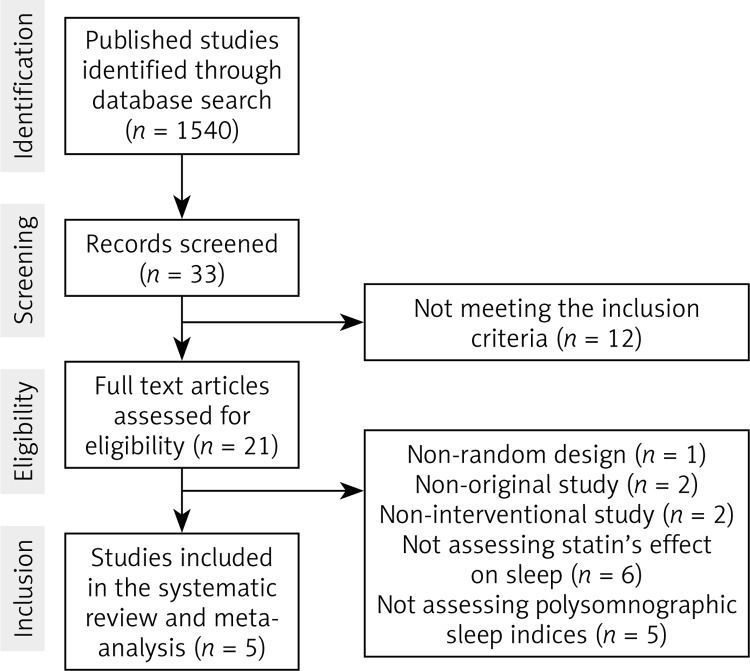
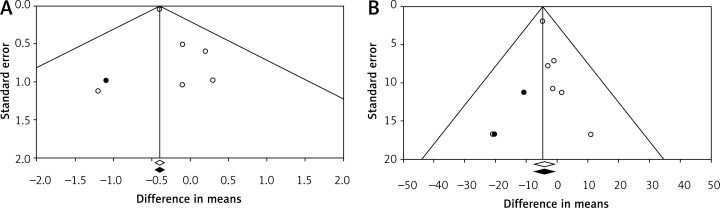
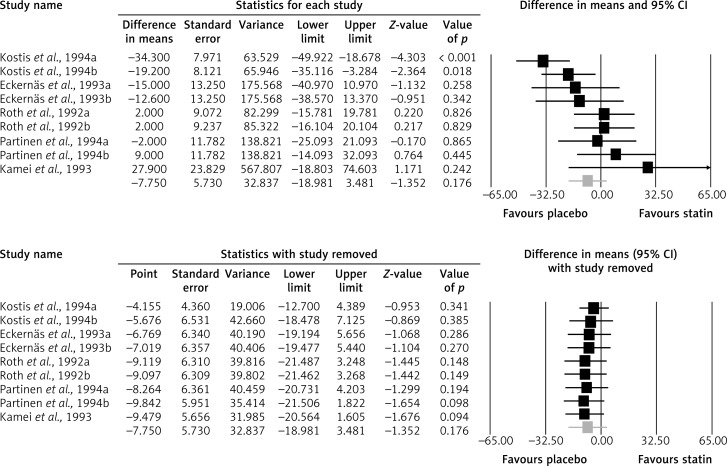
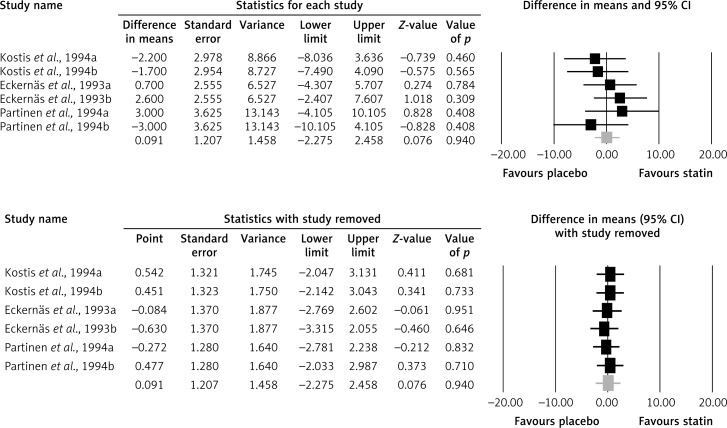
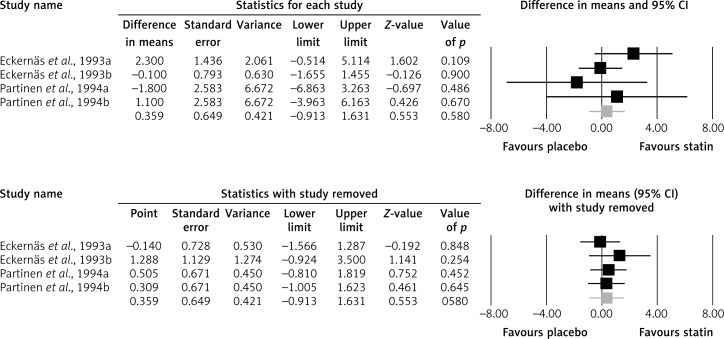
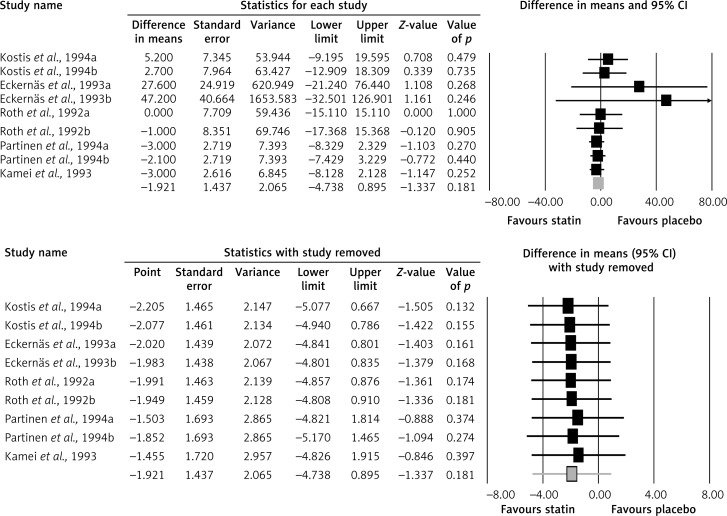
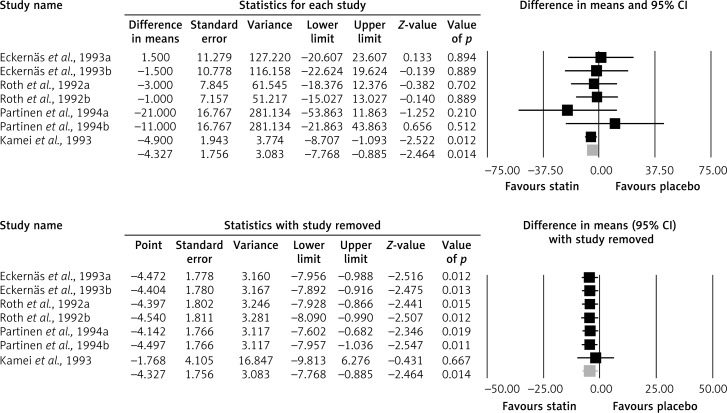
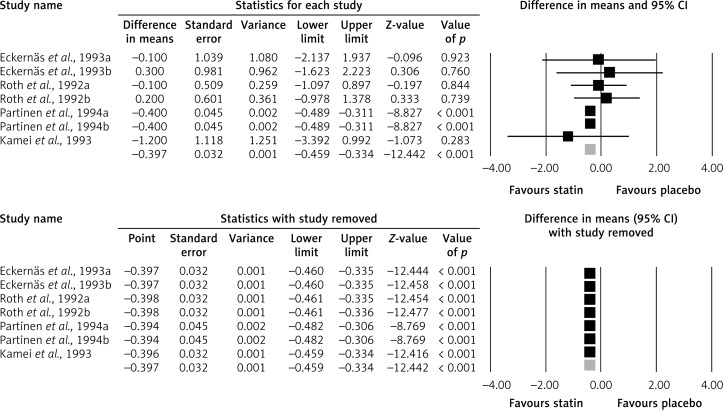
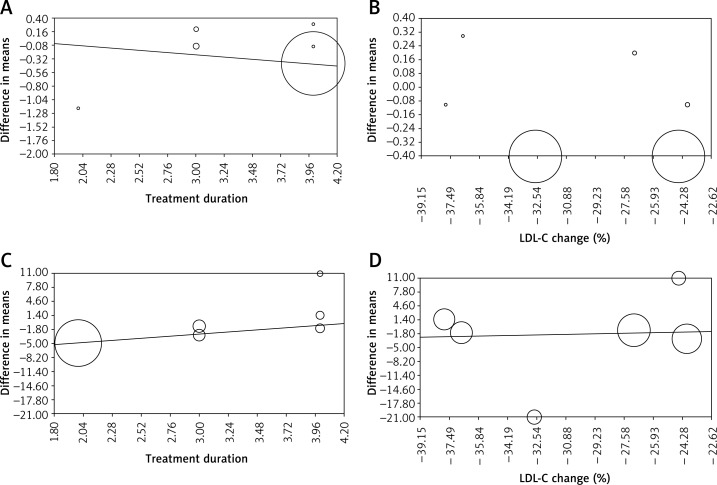
Overall, the impact of statin therapy on polysomnography (PSG) indices of sleep was reported in 5 trials comprising 9 treatment arms. Overall, statin therapy had no significant effect on total sleep duration (WMD: -7.75 min, 95% CI: -18.98, 3.48, p = 0.176), sleep efficiency (WMD: 0.09%, 95% CI: -2.27, 2.46, p = 0.940), entries to stage I (WMD: 0.36, 95% CI: -0.91, 1.63, p = 0.580), or latency to stage I (WMD: -1.92 min, 95% CI: -4.74, 0.89, p = 0.181). In contrast, statin therapy significantly reduced wake time (WMD: -4.43 min, 95% CI: -7.77, -0.88, p = 0.014) and number of awakenings (WMD: -0.40, 95% CI: -0.46, -0.33, p < 0.001). Meta-regression did not suggest any correlation between changes in wake time and awakening episodes with duration of treatment and LDL-lowering effect of statins.
The results indicated that statins have no significant adverse effect on sleep duration and efficiency, entry to stage I, or latency to stage I sleep, but significantly reduce wake time and number of awakenings.
使用他汀类药物可能会增加包括失眠在内的睡眠障碍风险,但关于他汀类药物治疗后睡眠变化的证据尚无定论。因此,我们通过对现有随机对照试验(RCT)进行系统评价和荟萃分析,评估他汀类药物治疗对睡眠变化的影响。
我们检索了截至2014年10月1日的MEDLINE和SCOPUS数据库,以确定研究他汀类药物治疗对睡眠变化影响的安慰剂对照RCT。根据I²统计量,使用固定效应模型或随机效应模型进行荟萃分析。效应大小以加权平均差(WMD)和95%置信区间(CI)表示。
总体而言,5项试验(共9个治疗组)报告了他汀类药物治疗对多导睡眠图(PSG)睡眠指标的影响。总体而言,他汀类药物治疗对总睡眠时间(WMD:-7.75分钟,95%CI:-18.98,3.48,p = 0.176)、睡眠效率(WMD:0.09%,95%CI:-2.27,2.46,p = 0.940)、进入I期睡眠(WMD:0.36,95%CI:-0.91,1.63,p = 0.580)或I期睡眠潜伏期(WMD:-1.92分钟,95%CI:-4.74,0.89,p = 0.181)均无显著影响。相比之下,他汀类药物治疗显著减少了清醒时间(WMD:-4.43分钟,95%CI:-7.77,-0.88,p = 0.014)和觉醒次数(WMD:-0.40,95%CI:-0.46,-0.33,p < 0.001)。荟萃回归未显示清醒时间和觉醒次数的变化与治疗持续时间及他汀类药物降低低密度脂蛋白的效果之间存在任何相关性。
结果表明,他汀类药物对睡眠时间、睡眠效率、进入I期睡眠或I期睡眠潜伏期无显著不良影响,但可显著减少清醒时间和觉醒次数。