Reilly Sean B, Corl Ammon, Wake David B
Museum of Vertebrate Zoology and Department of Integrative Biology, University of California, 3101 Valley Life Sciences Building, Berkeley, CA, 94720-3160, USA.
BMC Evol Biol. 2015 Nov 4;15:241. doi: 10.1186/s12862-015-0524-9.
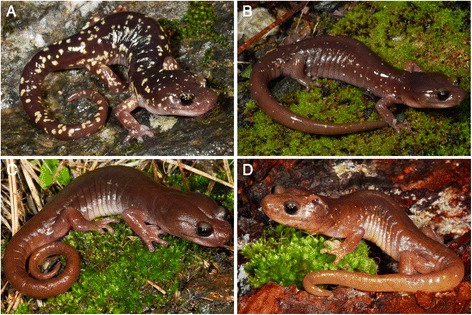
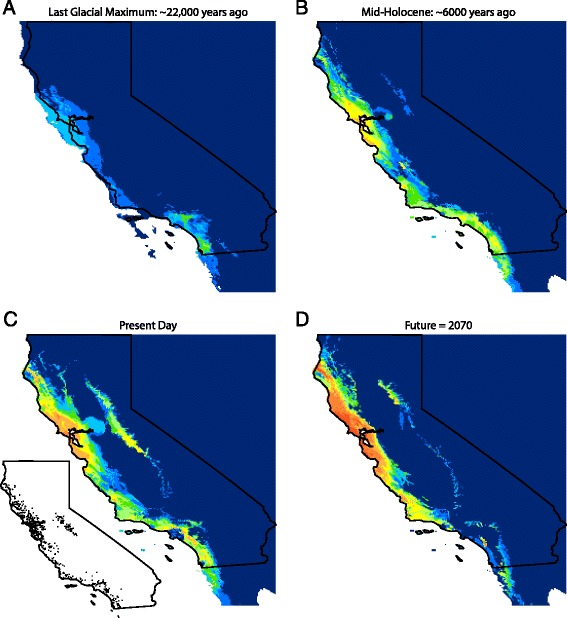
Phylogeography is an important tool that can be used to reveal cryptic biodiversity and to better understand the processes that promote lineage diversification. We studied the phylogeographic history of the Arboreal Salamander (Aneides lugubris), a wide-ranging species endemic to the California floristic province. We used multi-locus data to reconstruct the evolutionary history of A. lugubris and to discover the geographic location of major genetic breaks within the species. We also used species distribution modeling and comparative phylogeography to better understand the environmental factors that have shaped the genetic history of A. lugubris.
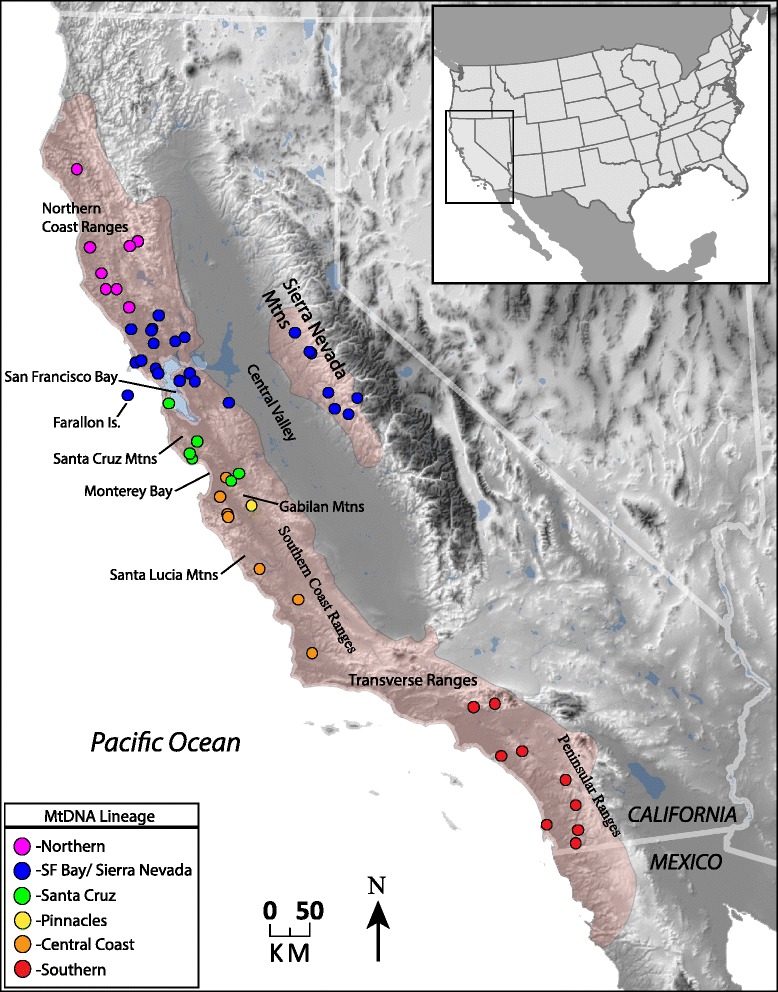
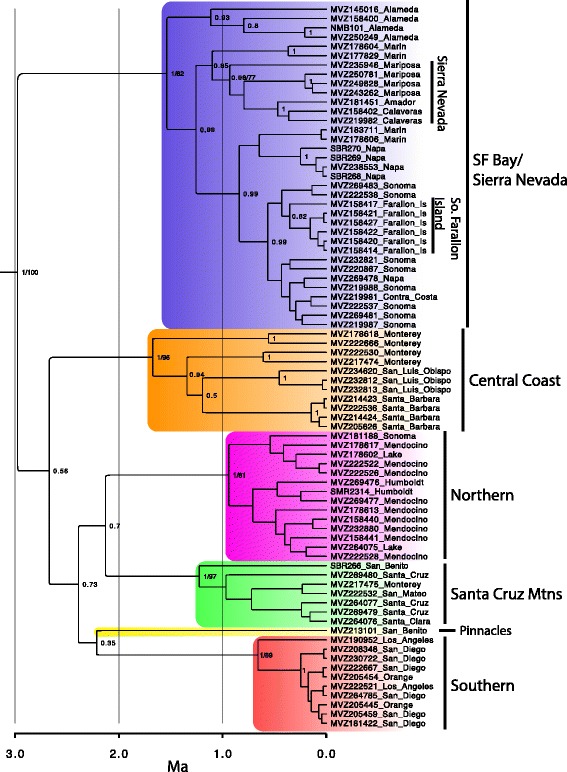
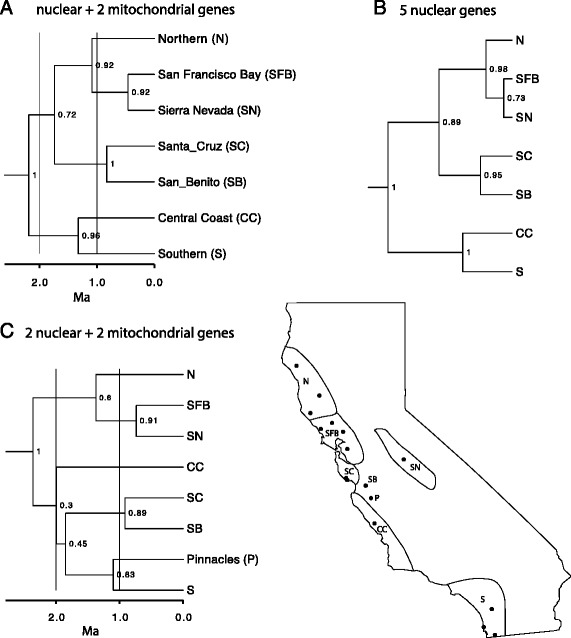
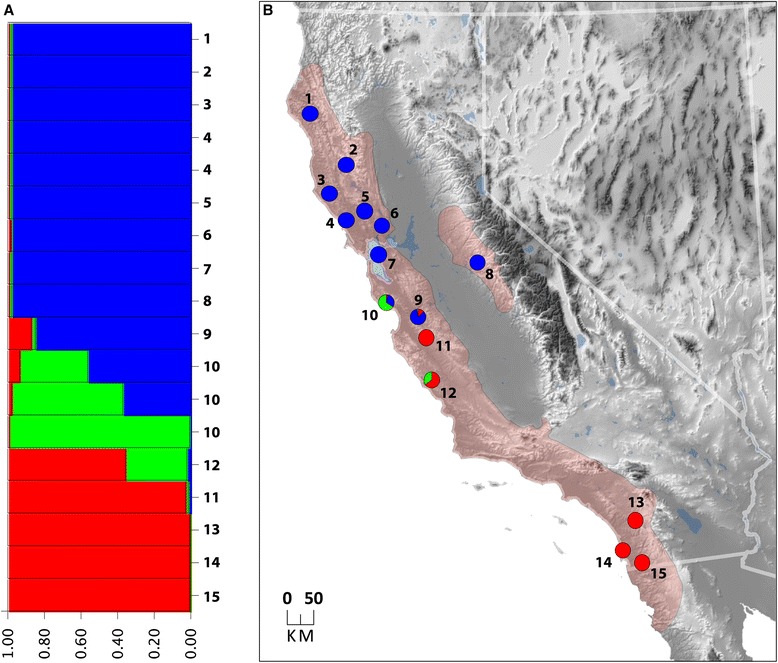
We found six major mitochondrial clades in A. lugubris. Nuclear loci supported the existence of at least three genetically distinct groups, corresponding to populations north of the San Francisco Bay and in the Sierra Nevada, in the Santa Cruz Mountains, and in the central coast and southern California. All of the genetic breaks in mitochondrial and nuclear loci corresponded to regions where historical barriers to dispersal have been observed in other species. Geologic or water barriers likely were the most important factors restricting gene flow among clades. Climatic unsuitability during glacial maximum may have contributed to the isolation of the mitochondrial clades in the central coast and southern California. A projection of our species distribution model to a future scenario with a moderate amount of climate change suggests that most of the range of A. lugubris will remain climatically suitable, but climatic conditions in the Sierra Nevada and low elevation areas in Southern California are likely to deteriorate.
Aneides lugubris contains substantial cryptic genetic diversity as a result of historical isolation of populations. At least two (and perhaps three) evolutionarily significant units in A. lugubris merit protection; all six mitochondrial clades should be considered as management units within the species.
系统发育地理学是一种重要工具,可用于揭示隐秘的生物多样性,并更好地理解促进谱系多样化的过程。我们研究了树栖蝾螈(Aneides lugubris)的系统发育地理历史,这是一种广泛分布于加利福尼亚植物区系省份的特有物种。我们使用多基因座数据来重建树栖蝾螈的进化历史,并发现该物种内主要遗传间断的地理位置。我们还使用物种分布模型和比较系统发育地理学来更好地理解塑造树栖蝾螈遗传历史的环境因素。
我们在树栖蝾螈中发现了六个主要的线粒体分支。核基因座支持至少三个遗传上不同的群体的存在,分别对应于旧金山湾以北和内华达山脉、圣克鲁斯山脉以及中部海岸和南加利福尼亚的种群。线粒体和核基因座中的所有遗传间断都对应于在其他物种中观察到有历史扩散障碍的区域。地质或水障碍可能是限制分支间基因流动的最重要因素。末次盛冰期期间气候不适宜可能导致了中部海岸和南加利福尼亚线粒体分支的隔离。将我们的物种分布模型投影到气候变化适度的未来情景表明,树栖蝾螈的大部分分布范围在气候上仍将适宜,但内华达山脉和南加利福尼亚低海拔地区的气候条件可能会恶化。
由于种群的历史隔离,树栖蝾螈包含大量隐秘的遗传多样性。树栖蝾螈中至少有两个(也许三个)具有进化意义的单元值得保护;所有六个线粒体分支都应被视为该物种内的管理单元。