Lu Bingwei, Chen Ying, Ou Dapeng, Chen Hang, Diao Liwei, Zhang Wei, Zheng Jun, Ma Weiguo, Sun Lizhong, Feng Xue
AML, Department of Engineering Mechanics, Tsinghua University, Beijing, 100084, China.
Center for Mechanics and Materials, Tsinghua University, Beijing, 100084, China.
Sci Rep. 2015 Nov 5;5:16065. doi: 10.1038/srep16065.
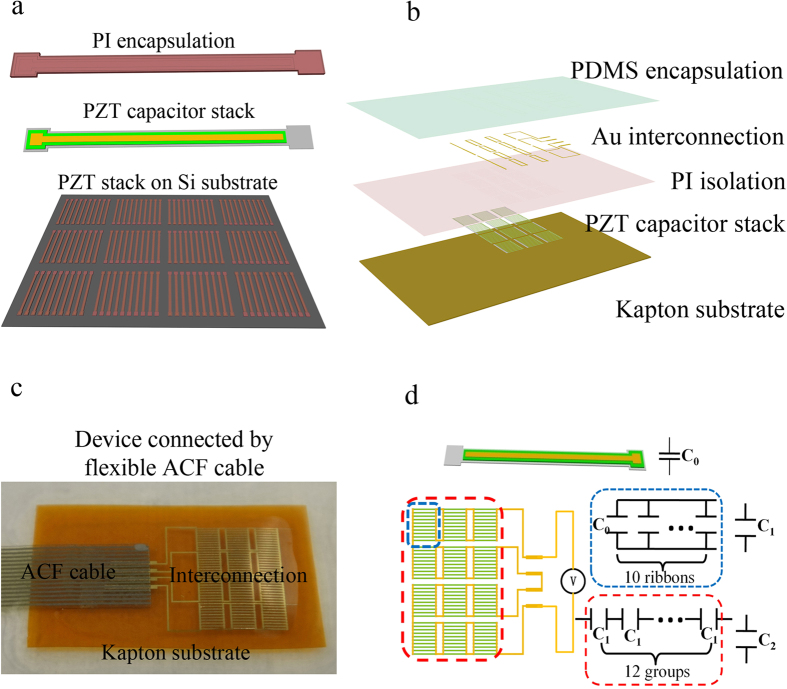
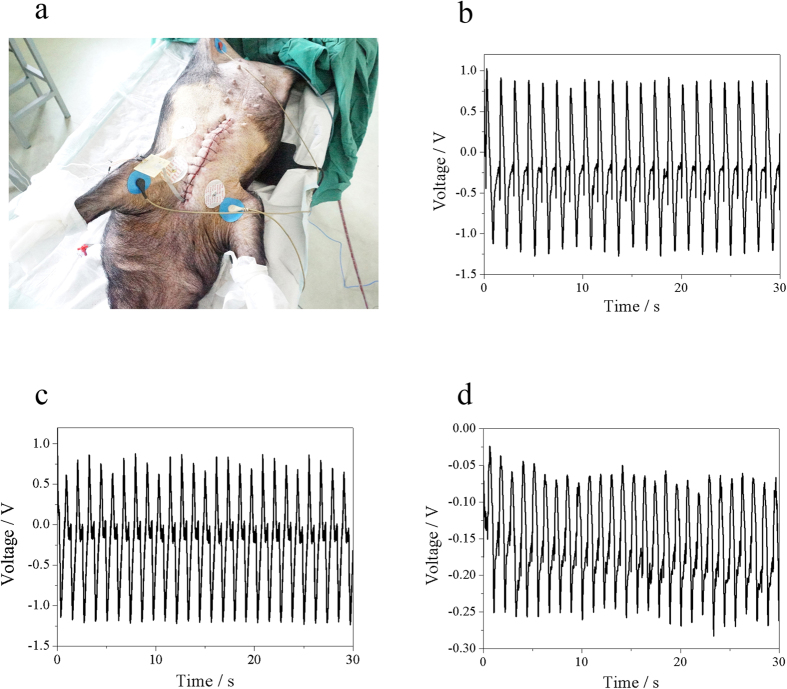
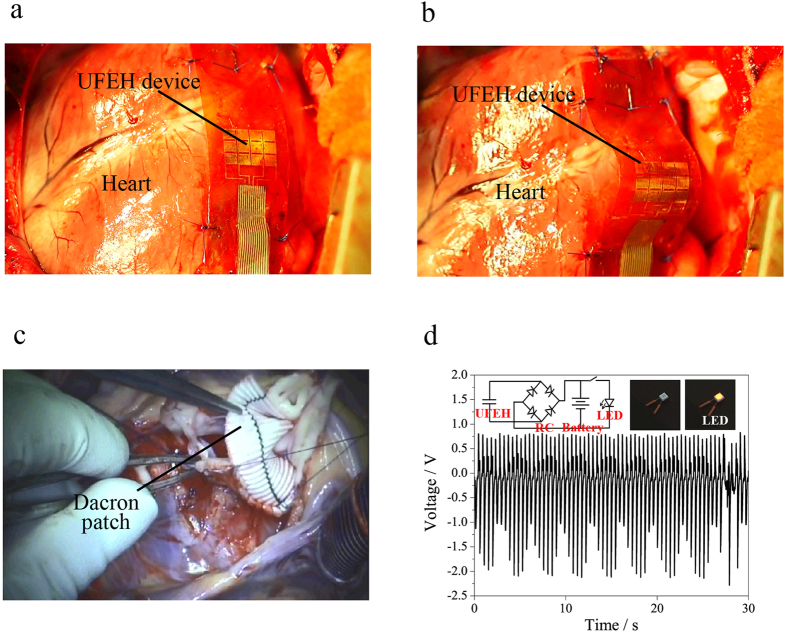
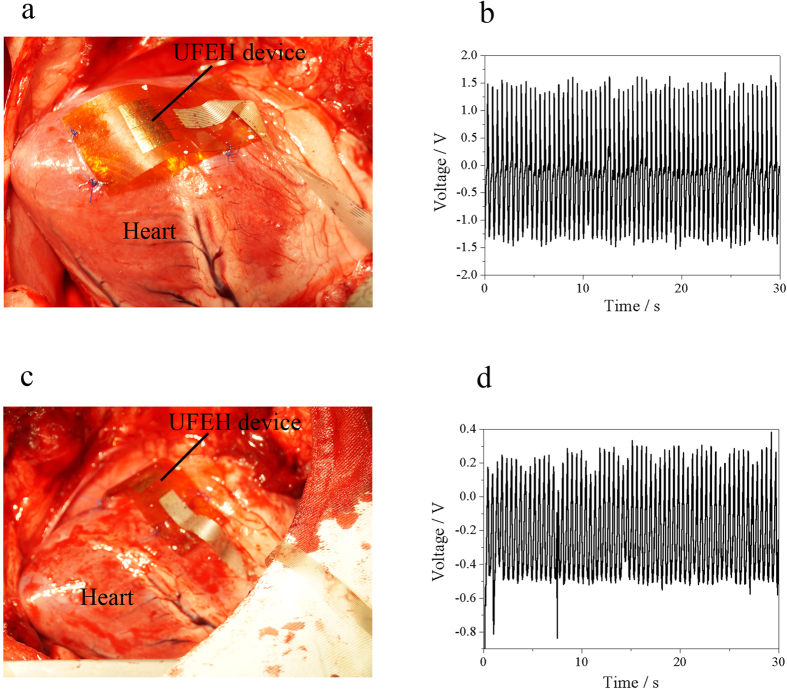
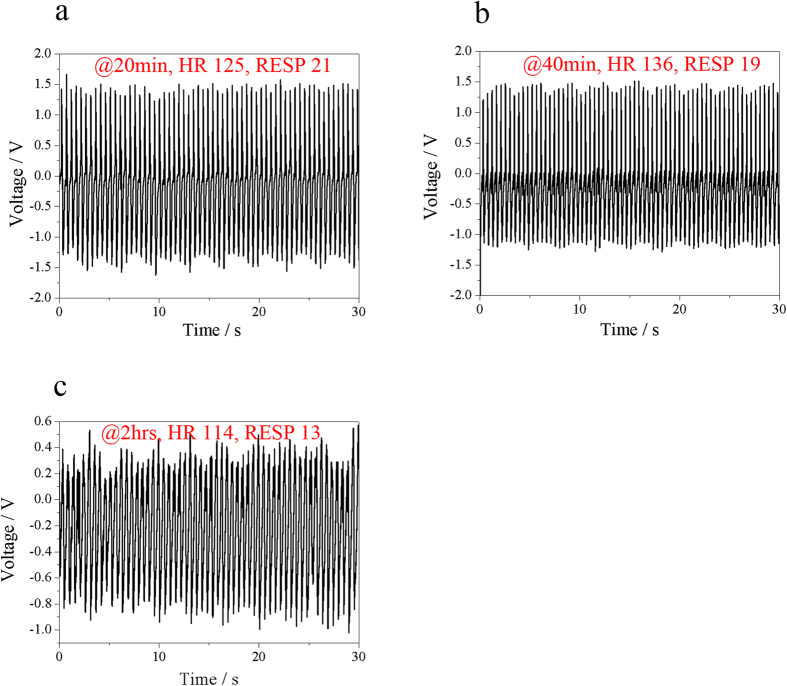
Power supply for medical implantable devices (i.e. pacemaker) always challenges not only the surgery but also the battery technology. Here, we report a strategy for energy harvesting from the heart motion by using ultra-flexible piezoelectric device based on lead zirconate titanate (PZT) ceramics that has most excellent piezoelectricity in commercial materials, without any burden or damage to hearts. Experimental swine are selected for in vivo test with different settings, i.e. opened chest, close chest and awake from anesthesia, to simulate the scenario of application in body due to their hearts similar to human. The results show the peak-to-peak voltage can reach as high as 3 V when the ultra-flexible piezoelectric device is fixed from left ventricular apex to right ventricle. This demonstrates the possibility and feasibility of fully using the biomechanical energy from heart motion in human body for sustainably driving implantable devices.
用于医疗植入设备(如起搏器)的电源不仅对手术构成挑战,对电池技术也是如此。在此,我们报告一种利用基于锆钛酸铅(PZT)陶瓷的超柔性压电器件从心脏运动中收集能量的策略,该陶瓷在商业材料中具有最优异的压电性,且不会给心脏带来任何负担或损伤。选择实验猪进行不同设置的体内测试,即开胸、闭胸和从麻醉中苏醒,以模拟其心脏与人类相似的情况下在体内的应用场景。结果表明,当超柔性压电器件从左心室心尖固定到右心室时,峰峰值电压可高达3V。这证明了充分利用人体心脏运动产生的生物机械能来可持续驱动植入设备的可能性和可行性。