Madhushankari G S, Yamunadevi Andamuthu, Selvamani M, Mohan Kumar K P, Basandi Praveen S
Department of Oral and Maxillofacial Pathology and Microbiology, College of Dental Sciences and Hospital, Davangere, Karnataka, India.
Department of Oral Pathology, Vivekanandha Dental College for Women, Tiruchengode, Tamil Nadu, India.
J Pharm Bioallied Sci. 2015 Aug;7(Suppl 2):S339-43. doi: 10.4103/0975-7406.163441.
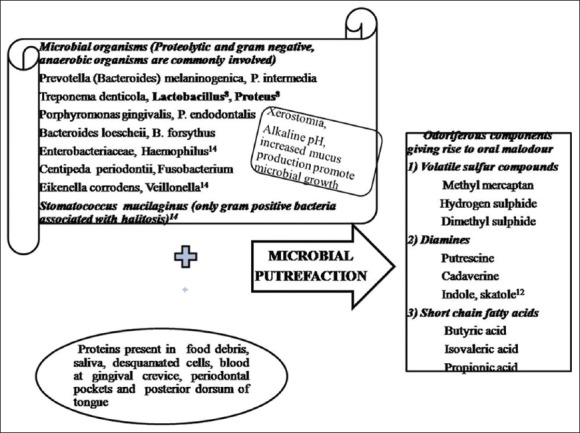
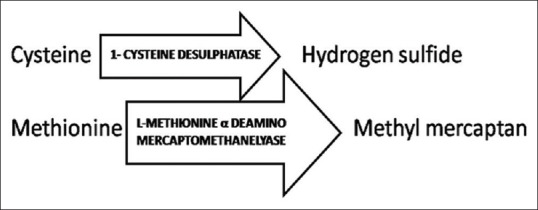
Halitosis is a condition where the breath is altered in an unpleasant manner for the affected individuals and impairs them socially as well as psychologically. Halitosis can be clinically classified as real halitosis, pseudohalitosis, and halitophobia. Real halitosis has oral and extra-oral etiologies and the pathophysiology involves interaction of anaerobic microbes (mainly) with the proteins present in the oral cavity fluids and contents, resulting in production of volatile sulfur compounds (VSCs). These VSCs, beyond responsible for halitosis, can also initiate and accelerate periodontal disease progression. Thus, this review is about the pathophysiology and various etiologies of halitosis, the knowledge of which can help in the betterment of treatment options.
口臭是一种情况,即患者的口气以令人不快的方式发生改变,并且在社交和心理方面对他们造成损害。口臭在临床上可分为真性口臭、假性口臭和口臭恐惧症。真性口臭有口腔和口腔外的病因,其病理生理学涉及厌氧微生物(主要是)与口腔液和内容物中存在的蛋白质相互作用,导致挥发性硫化物(VSCs)的产生。这些VSCs除了导致口臭外,还可引发并加速牙周疾病的进展。因此,本综述围绕口臭的病理生理学和各种病因展开,了解这些知识有助于改善治疗方案。