Institute for Reference Materials and Measurements, Joint Research Centre, European Commission Geel, Belgium.
Institute of Materials and Environmental Chemistry, Research Centre for Natural Sciences, Hungarian Academy of Sciences Budapest, Hungary.
Front Chem. 2015 Oct 19;3:56. doi: 10.3389/fchem.2015.00056. eCollection 2015.
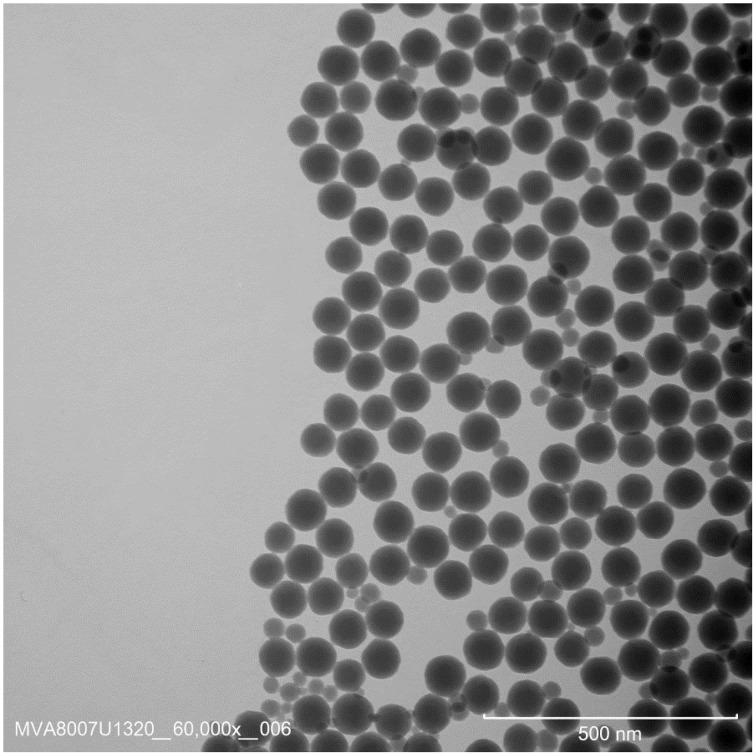
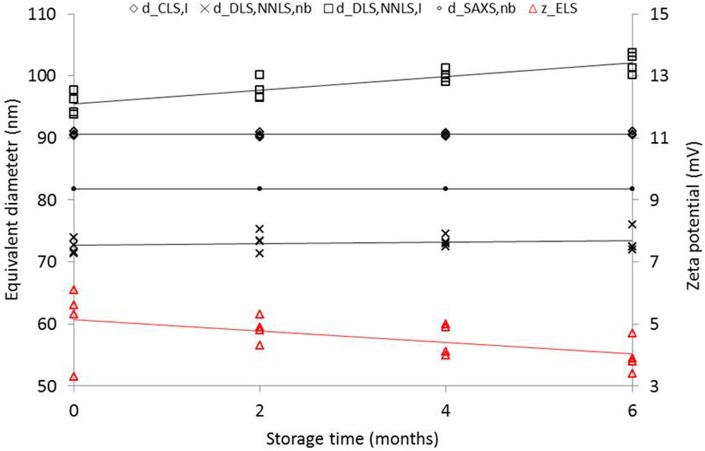
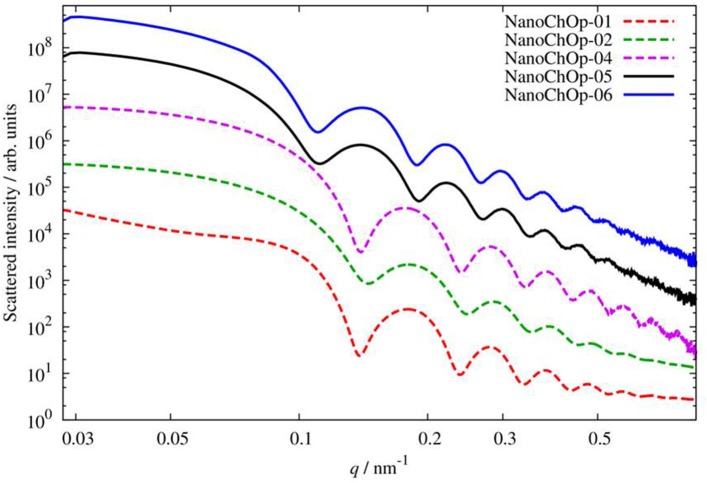
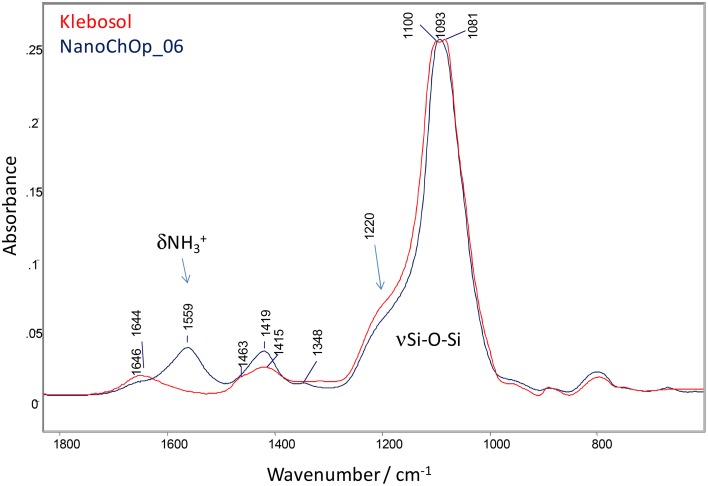
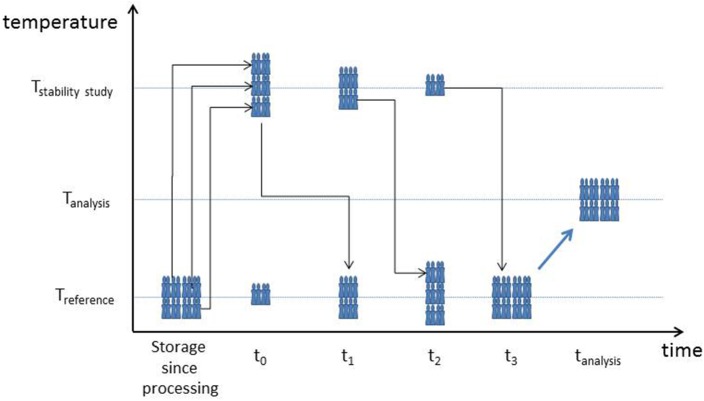
This paper describes the production and characteristics of the nanoparticle test materials prepared for common use in the collaborative research project NanoChOp (Chemical and optical characterization of nanomaterials in biological systems), in casu suspensions of silica nanoparticles and CdSe/CdS/ZnS quantum dots (QDs). This paper is the first to illustrate how to assess whether nanoparticle test materials meet the requirements of a "reference material" (ISO Guide 30, 2015) or rather those of the recently defined category of "representative test material (RTM)" (ISO/TS 16195, 2013). The NanoChOp test materials were investigated with small-angle X-ray scattering (SAXS), dynamic light scattering (DLS), and centrifugal liquid sedimentation (CLS) to establish whether they complied with the required monomodal particle size distribution. The presence of impurities, aggregates, agglomerates, and viable microorganisms in the suspensions was investigated with DLS, CLS, optical and electron microscopy and via plating on nutrient agar. Suitability of surface functionalization was investigated with attenuated total reflection Fourier transform infrared spectrometry (ATR-FTIR) and via the capacity of the nanoparticles to be fluorescently labeled or to bind antibodies. Between-unit homogeneity and stability were investigated in terms of particle size and zeta potential. This paper shows that only based on the outcome of a detailed characterization process one can raise the status of a test material to RTM or reference material, and how this status depends on its intended use.
本文描述了为共同参与协作研究项目 NanoChOp(生物体系中纳米材料的化学和光学特性)而制备的纳米颗粒测试材料的生产和特性,这些测试材料为硅纳米颗粒和 CdSe/CdS/ZnS 量子点(QDs)的悬浮液。本文首次阐述了如何评估纳米颗粒测试材料是否符合“参考物质”(ISO 指南 30,2015)的要求,或者更符合最近定义的“代表性测试材料(RTM)”(ISO/TS 16195,2013)的要求。使用小角 X 射线散射(SAXS)、动态光散射(DLS)和离心液体沉降(CLS)对 NanoChOp 测试材料进行了研究,以确定它们是否符合所需的单模态粒径分布要求。使用 DLS、CLS、光学和电子显微镜以及在营养琼脂上进行平板培养,研究了悬浮液中杂质、聚集体、团聚体和存活微生物的存在情况。使用衰减全反射傅里叶变换红外光谱(ATR-FTIR)和纳米颗粒的荧光标记或结合抗体的能力研究了表面功能化的适用性。通过粒径和 Zeta 电位研究了单元间的均一性和稳定性。本文表明,只有基于详细的特征化过程的结果,才能将测试材料的状态提高到 RTM 或参考物质的水平,以及这种状态如何取决于其预期用途。