Ikehara S, Yasumizu R, Inaba M, Izui S, Hayakawa K, Sekita K, Toki J, Sugiura K, Iwai H, Nakamura T
1st Department of Pathology, Kansai Medical University, Osaka, Japan.
Proc Natl Acad Sci U S A. 1989 May;86(9):3306-10. doi: 10.1073/pnas.86.9.3306.
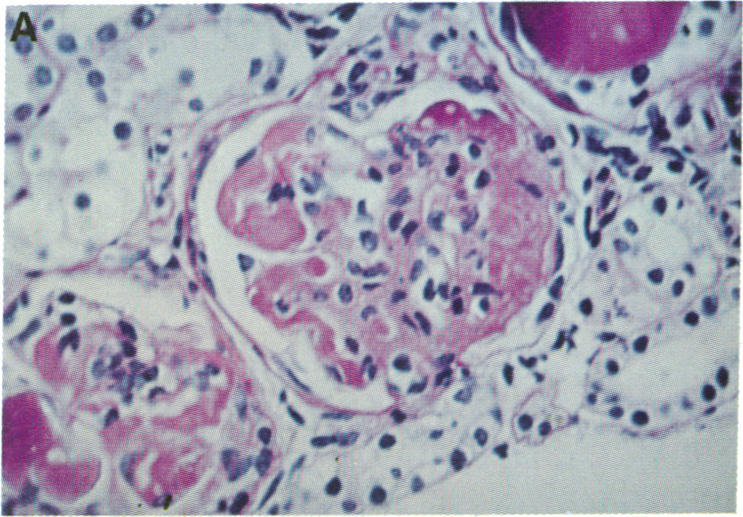
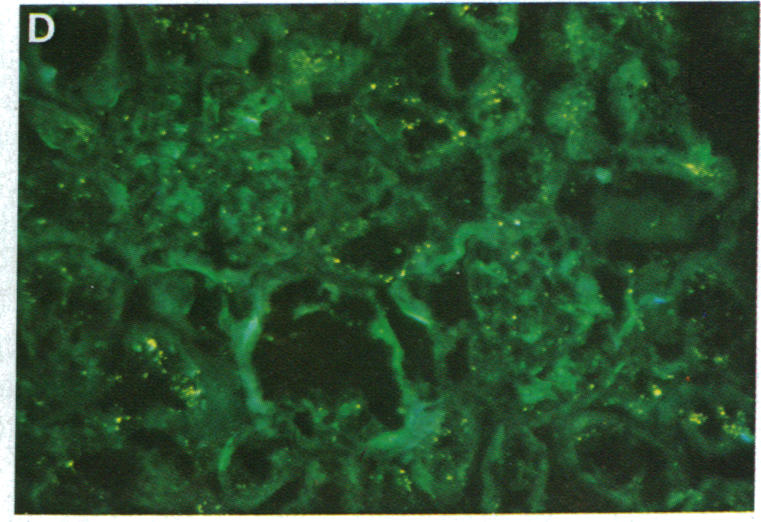
Long-term effects of allogeneic bone marrow transplantation (ABMT) across major histocompatibility complex barriers were studied in (NZB x NZW)F1 (B/W), BXSB, and MRL/Mr-lpr-lpr (MRL/lpr) mice with established autoimmune disease at the time of ABMT. In the BXSB or B/W mice, ABMT cured all aspects of autoimmune disease. Glomerular damage, revealed by histological study was dramatically improved. Serological abnormalities and immunologic functions also were normalized. Correction of autoimmune disease and advanced renal disease in BXSB and B/W mice regularly lasted greater than 5-6 mo and even 1 yr after ABMT. In the MRL/lpr mice, however, autoimmune and renal disease at first improved but then recurred after ABMT, apparently because of intolerance of mice for high doses of irradiation and a high degree of resistance of recipient stem cells to irradiation. In this model, H-2 typing revealed that by the time of relapse, immunocompetent cells of the chimeric mice had been replaced by host (MRL/lpr; H-2k) cells. B220+ Ly-1+ cells, present in increased numbers in untreated MRL/lpr mice, initially returned to normal levels after ABMT but then reappeared in the MRL/lpr mice that had received marrow from donors having few such lymphocytes. Thus, our results show that MRL/lpr mice possess abnormal radioresistant stem cells and provide impressive evidence that the origin of autoimmune diseases in this strain, as in the several other strains studied, residues in abnormalities present in stem cells.
在(新西兰黑鼠×新西兰白鼠)F1(B/W)、BXSB和MRL/Mr-lpr-lpr(MRL/lpr)小鼠发生自身免疫性疾病时,研究了跨越主要组织相容性复合体屏障的同种异体骨髓移植(ABMT)的长期影响。在BXSB或B/W小鼠中,ABMT治愈了自身免疫性疾病的所有方面。组织学研究显示的肾小球损伤得到显著改善。血清学异常和免疫功能也恢复正常。BXSB和B/W小鼠的自身免疫性疾病和晚期肾病的纠正通常在ABMT后持续超过5 - 6个月,甚至1年。然而,在MRL/lpr小鼠中,自身免疫性和肾病起初有所改善,但在ABMT后又复发,显然是因为小鼠对高剂量辐射不耐受以及受体干细胞对辐射具有高度抗性。在这个模型中,H - 2分型显示,到复发时,嵌合小鼠的免疫活性细胞已被宿主(MRL/lpr;H - 2k)细胞取代。未处理的MRL/lpr小鼠中数量增加的B220 + Ly - 1 +细胞,在ABMT后最初恢复到正常水平,但随后在接受来自此类淋巴细胞较少的供体骨髓的MRL/lpr小鼠中再次出现。因此,我们的结果表明,MRL/lpr小鼠拥有异常的抗辐射干细胞,并提供了令人信服的证据,表明该品系自身免疫性疾病的起源,与其他几个研究过的品系一样,在于干细胞中存在的异常。