Wu Rong-Si, Hong Jing-Jing, Wu Jia-Fa, Yan Shen, Wu Di, Liu Na, Liu Qing-Feng, Wu Qiu-Wan, Xie Yuan-Yuan, Liu Yun-Jia, Zheng Zhong-Zheng, Chan Err-Cheng, Zhang Zhi-Ming, Li Bo-An
State Key Laboratory of Cellular Stress Biology, Innovation Center for Cell Signaling Network, School of Life Sciences, Xiamen University, Xiamen, Fujian, China.
Engineering Research Center of Molecular Diagnostics, Ministry of Education, School of Life Sciences, Xiamen University, Xiamen, Fujian, China.
Oncotarget. 2017 Jun 13;8(24):39401-39416. doi: 10.18632/oncotarget.17031.
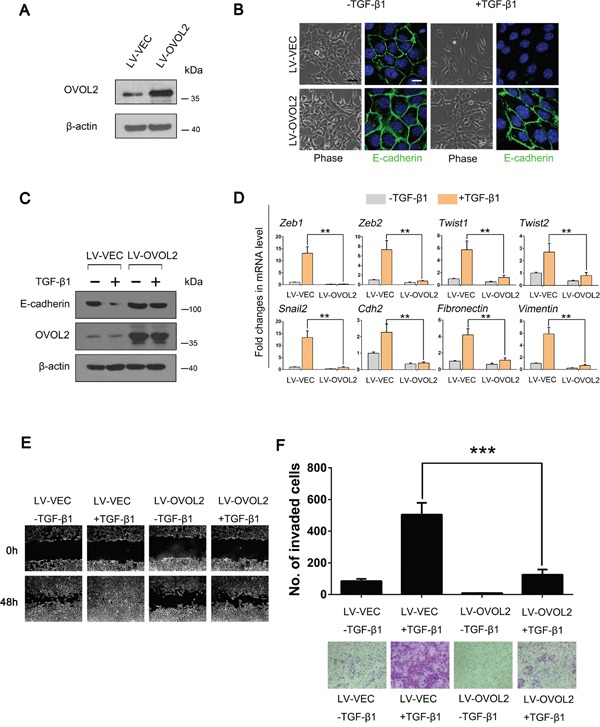
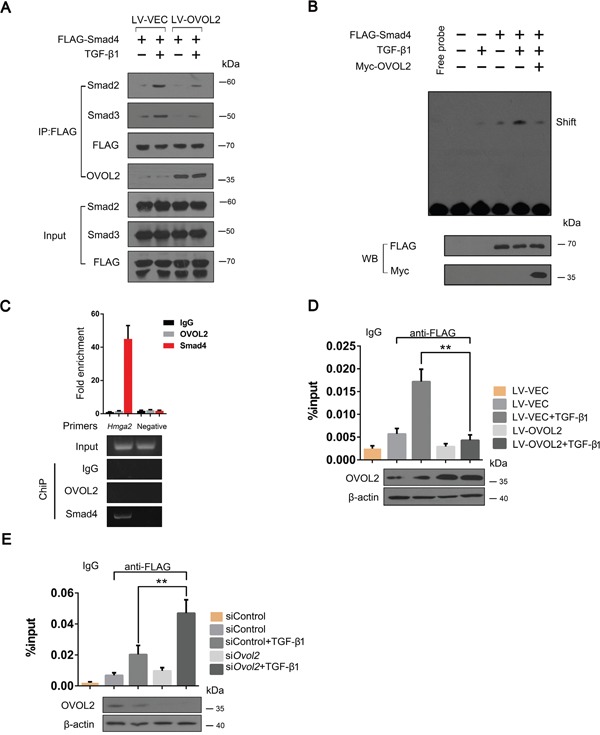
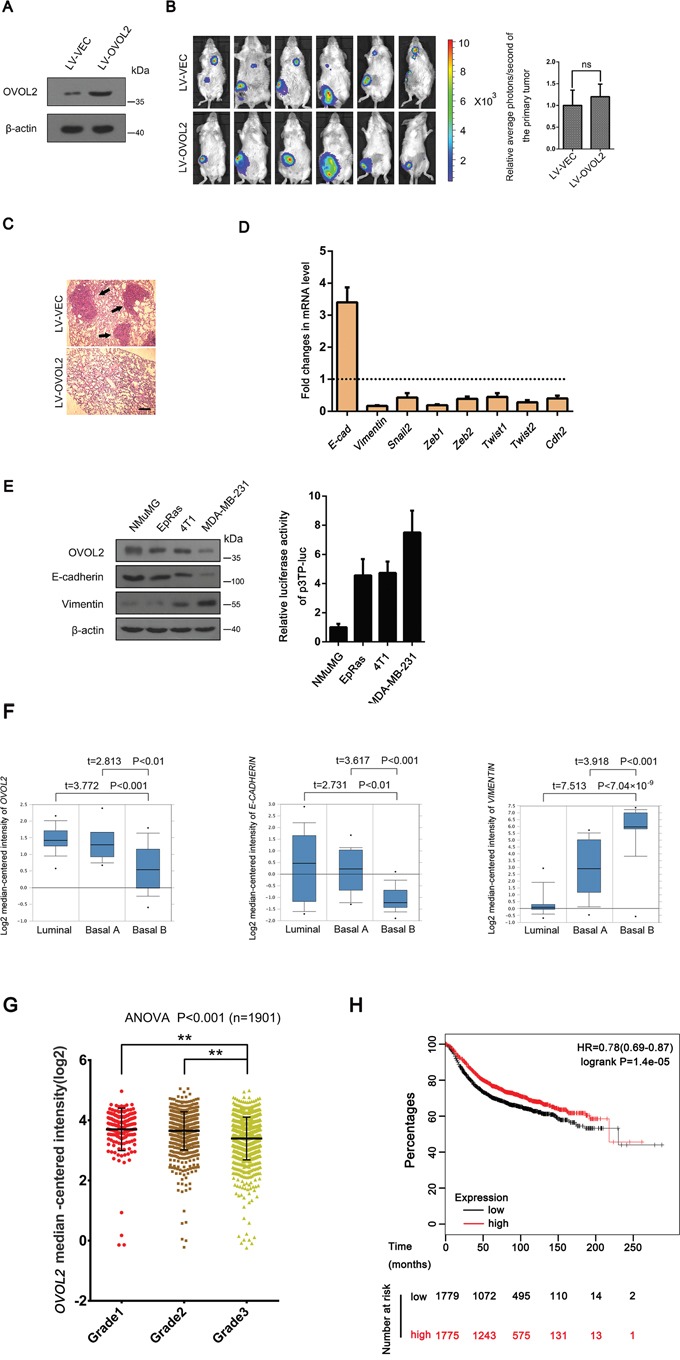
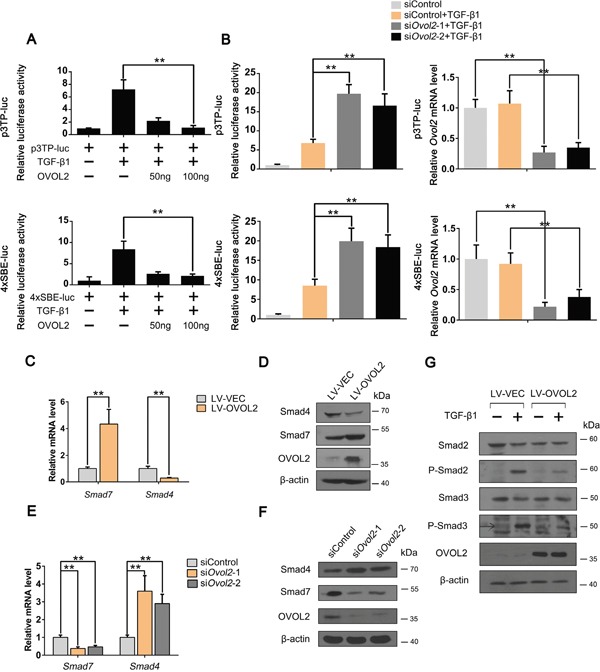
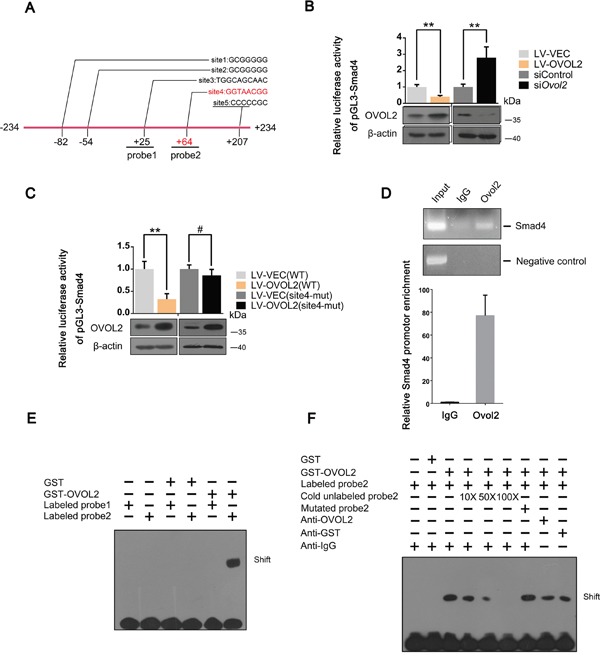
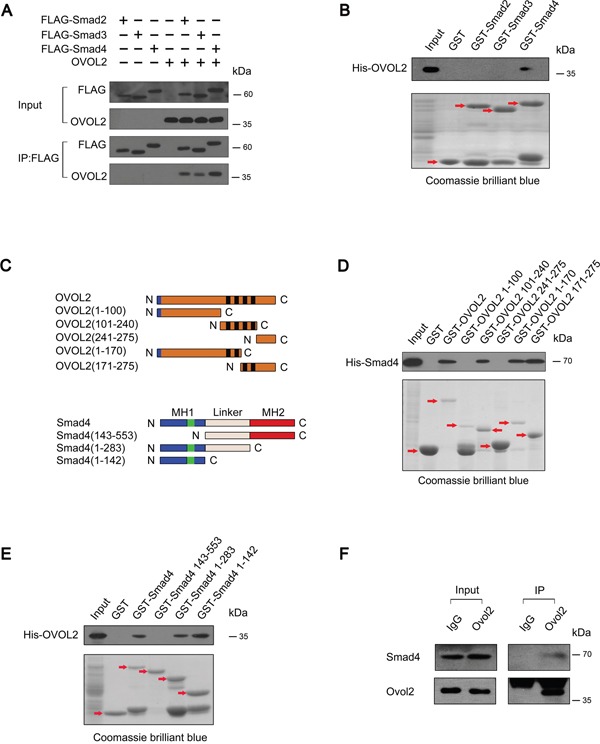
Great progress has been achieved in the study of the role of TGF-β signaling in triggering epithelial-mesenchymal transition (EMT) in a variety of cancers; however, the regulation of TGF-β signaling during EMT in mammary tumor metastasis has not been completely defined. In the present study, we demonstrated that OVOL2, a zinc finger transcription factor, inhibits TGF-β signaling-induced EMT in mouse and human mammary tumor cells, as well as in mouse tumor models. Data from the Oncomine databases indicated a strong negative relationship between OVOL2 expression and breast cancer progression. Moreover, our experiments revealed that OVOL2 inhibits TGF-β signaling at multiple levels, including inhibiting Smad4 mRNA expression and inducing Smad7 mRNA expression, blocking the binding between Smad4 and target DNA, and interfering with complex formation between Smad4 and Smad2/3. These findings reveal a novel mechanism that controls the TGF-β signaling output level in vitro and in vivo. The modulation of these molecular processes may represent a strategy for inhibiting breast cancer invasion by restoring OVOL2 expression.
在研究转化生长因子-β(TGF-β)信号通路在多种癌症中触发上皮-间质转化(EMT)的作用方面已取得了巨大进展;然而,乳腺肿瘤转移过程中EMT期间TGF-β信号通路的调控尚未完全明确。在本研究中,我们证明了锌指转录因子OVOL2在小鼠和人类乳腺肿瘤细胞以及小鼠肿瘤模型中抑制TGF-β信号通路诱导的EMT。来自Oncomine数据库的数据表明OVOL2表达与乳腺癌进展之间存在强烈的负相关关系。此外,我们的实验表明OVOL2在多个水平上抑制TGF-β信号通路,包括抑制Smad4 mRNA表达并诱导Smad7 mRNA表达、阻断Smad4与靶DNA之间的结合以及干扰Smad4与Smad2/3之间的复合物形成。这些发现揭示了一种在体外和体内控制TGF-β信号输出水平的新机制。调节这些分子过程可能代表一种通过恢复OVOL2表达来抑制乳腺癌侵袭的策略。