Rocha Naruna Pereira, Milagres Luana Cupertino, Novaes Juliana Farias de, Franceschini Sylvia do Carmo Castro
Departamento de Nutrição e Saúde, Universidade Federal de Viçosa (UFV), Viçosa, MG, Brasil.
Departamento de Nutrição e Saúde, Universidade Federal de Viçosa (UFV), Viçosa, MG, Brasil.
Rev Paul Pediatr. 2016 Jun;34(2):225-33. doi: 10.1016/j.rpped.2015.08.007. Epub 2015 Oct 20.
: To address the association between food and nutrition insecurity and cardiometabolic risk factors in childhood and adolescence.
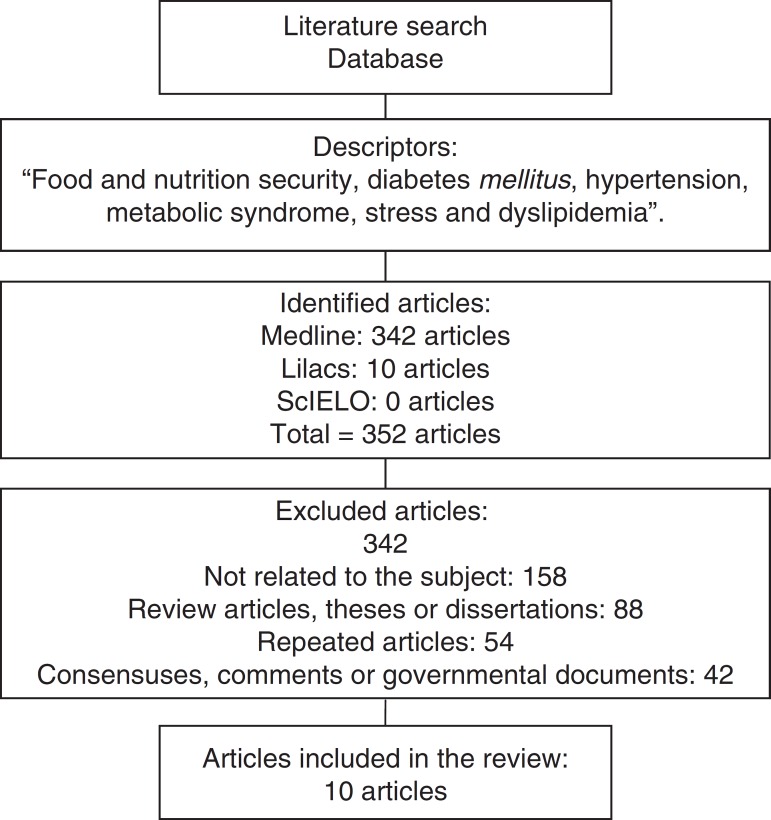
: Articles were selected from the Medline, Lilacs and SciELO databases with no publication date limit, involving children and adolescents, using the descriptors: food and nutrition security, diabetes mellitus, hypertension, metabolic syndrome, stress and dyslipidemia. The terms were used in Portuguese, English and Spanish. The search was carried out systematically and independently by two reviewers.
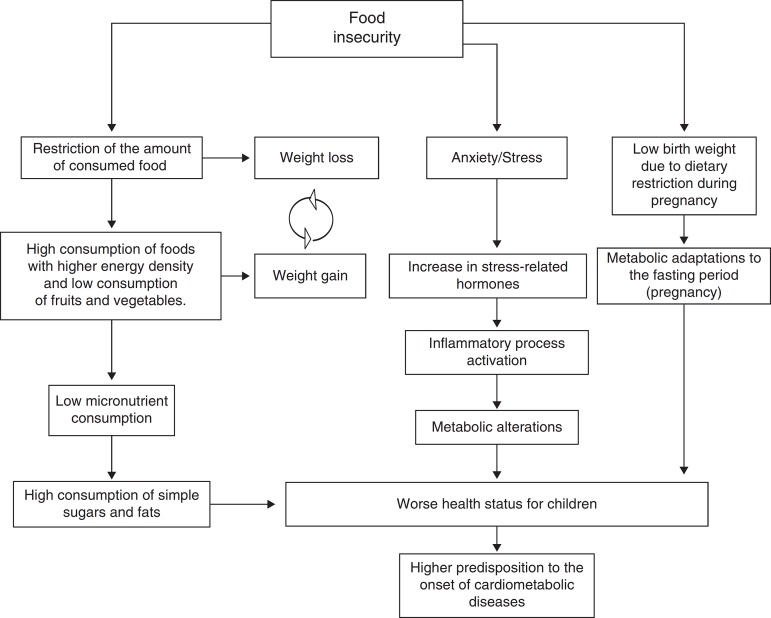
: Exposure to food insecurity during childhood and adolescence ranged from 3.3% to 82% in the selected publications. Exposure to food insecurity was associated with stress, anxiety, greater chance of hospitalization, nutritional deficiencies, excess weight and inadequate diets with reduced intake of fruits and vegetables and increased consumption of refined carbohydrates and fats.
: Food and nutrition insecurity was associated with the presence of cardiometabolic risk factors in the assessed publications. Childhood and adolescence constitute a period of life that is vulnerable to food insecurity consequences, making it extremely important to ensure the regular and permanent access to food. Because this is a complex association, some difficulties are found, such as the synergy between risk factors, the assessment of heterogeneous groups and extrapolation of data to other populations, in addition to the influence of environmental factors.
探讨儿童和青少年时期食物与营养不安全状况与心脏代谢危险因素之间的关联。
从Medline、Lilacs和SciELO数据库中选取不限出版日期的文章,涉及儿童和青少年,使用的描述词包括:食物与营养安全、糖尿病、高血压、代谢综合征、压力和血脂异常。这些术语分别用葡萄牙语、英语和西班牙语进行检索。检索工作由两名评审员系统且独立地完成。
在所选出版物中,儿童和青少年时期面临食物不安全状况的比例在3.3%至82%之间。食物不安全状况与压力、焦虑、更高的住院几率、营养缺乏、超重以及饮食不当(水果和蔬菜摄入量减少,精制碳水化合物和脂肪的消费量增加)有关。
在所评估的出版物中,食物与营养不安全状况与心脏代谢危险因素的存在有关。儿童和青少年时期是生命中易受食物不安全后果影响的阶段,因此确保定期且持续的食物获取极为重要。由于这种关联较为复杂,还存在一些困难,比如危险因素之间的协同作用、对异质群体的评估以及将数据外推至其他人群,此外还有环境因素的影响。