Schwartenbeck Philipp, FitzGerald Thomas H B, Mathys Christoph, Dolan Ray, Kronbichler Martin, Friston Karl
The Wellcome Trust Centre for Neuroimaging, UCL, 12 Queen Square, London, WC1N 3BG, UK.
Centre for Cognitive Neuroscience, University of Salzburg, Salzburg, Austria.
Sci Rep. 2015 Nov 13;5:16575. doi: 10.1038/srep16575.
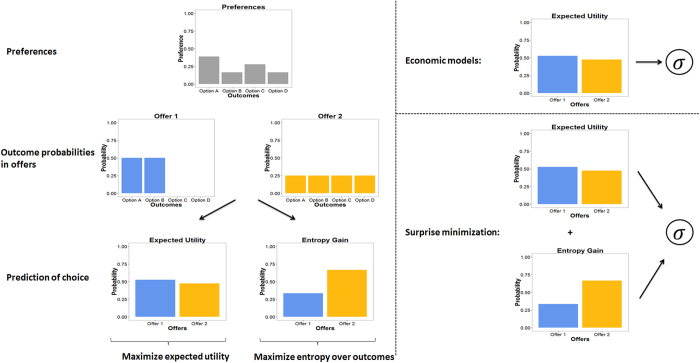
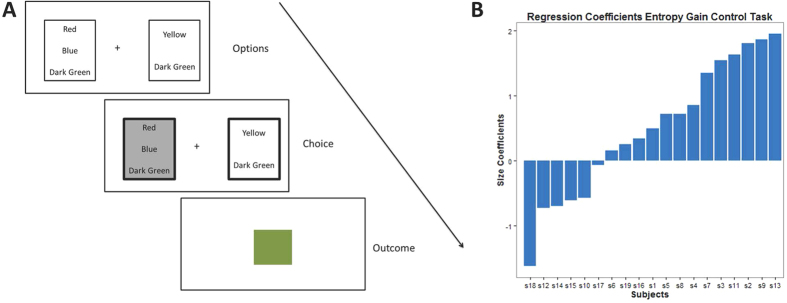
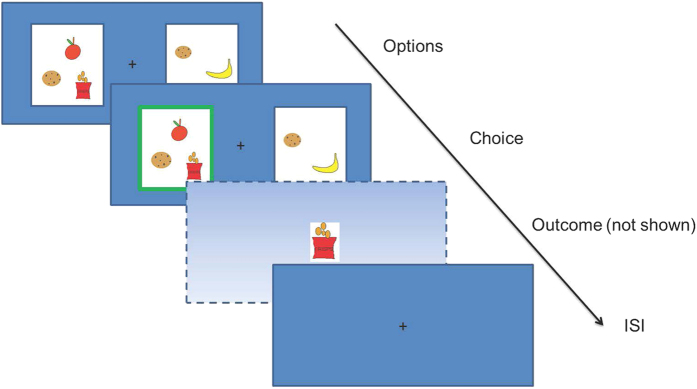
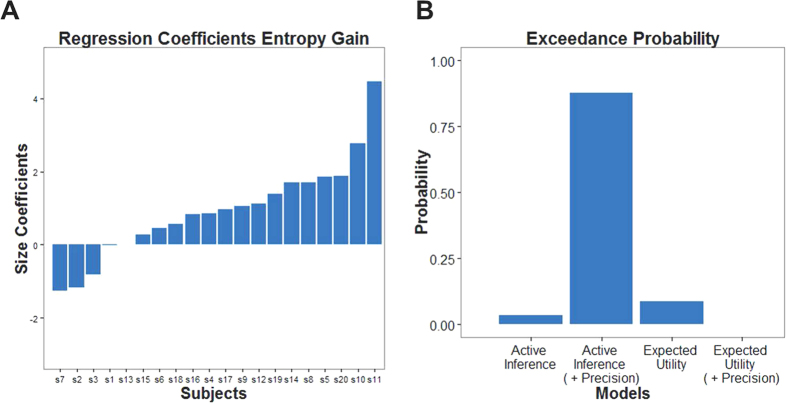
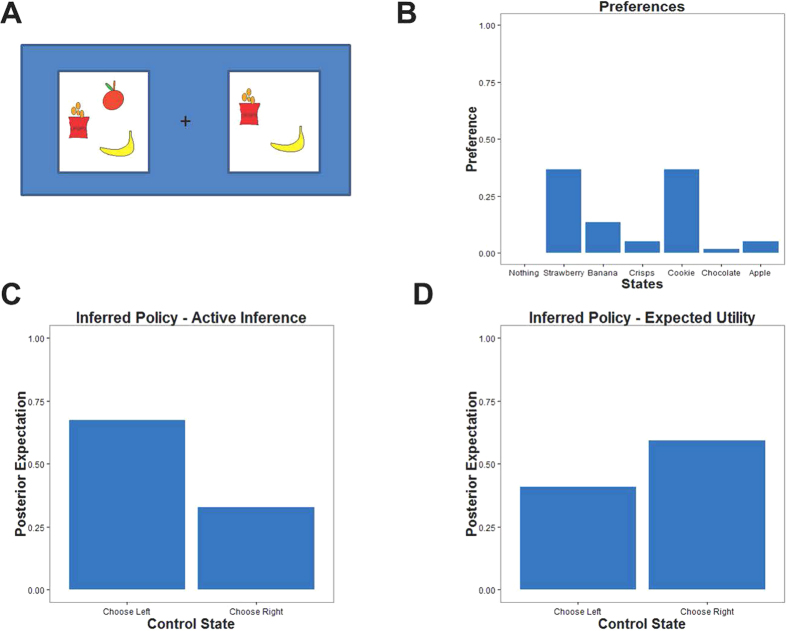
Classical economic models are predicated on the idea that the ultimate aim of choice is to maximize utility or reward. In contrast, an alternative perspective highlights the fact that adaptive behavior requires agents' to model their environment and minimize surprise about the states they frequent. We propose that choice behavior can be more accurately accounted for by surprise minimization compared to reward or utility maximization alone. Minimizing surprise makes a prediction at variance with expected utility models; namely, that in addition to attaining valuable states, agents attempt to maximize the entropy over outcomes and thus 'keep their options open'. We tested this prediction using a simple binary choice paradigm and show that human decision-making is better explained by surprise minimization compared to utility maximization. Furthermore, we replicated this entropy-seeking behavior in a control task with no explicit utilities. These findings highlight a limitation of purely economic motivations in explaining choice behavior and instead emphasize the importance of belief-based motivations.
经典经济模型基于这样一种观点,即选择的最终目的是使效用或奖励最大化。相比之下,另一种观点强调了这样一个事实,即适应性行为要求主体对其环境进行建模,并将他们经常遇到的状态的意外程度降至最低。我们提出,与仅通过奖励或效用最大化相比,通过将意外程度降至最低可以更准确地解释选择行为。将意外程度降至最低会做出与预期效用模型不同的预测;也就是说,除了获得有价值的状态外,主体还试图使结果的熵最大化,从而“保持选择的开放性”。我们使用一个简单的二元选择范式对这一预测进行了测试,结果表明,与效用最大化相比,将意外程度降至最低能更好地解释人类的决策过程。此外,我们在一个没有明确效用的控制任务中重现了这种寻求熵的行为。这些发现凸显了纯粹经济动机在解释选择行为方面的局限性,转而强调了基于信念的动机的重要性。