Kumagai Kotaro, Tabu Kazuaki, Sasaki Fumisato, Takami Yoichiro, Morinaga Yuko, Mawatari Seiichi, Hashimoto Shinichi, Tanoue Shiroh, Kanmura Shuji, Tamai Tsutomu, Moriuchi Akihiro, Uto Hirofumi, Tsubouchi Hirohito, Ido Akio
Digestive and Lifestyle Diseases, Department of Human and Environmental Sciences, Kagoshima University Graduate School of Medical and Dental Sciences, Kagoshima, Japan.
Pharmaceutical Care and Health Sciences, School of Pharmacy, Shujitsu University, Okayama, Japan.
PLoS One. 2015 Nov 23;10(11):e0143413. doi: 10.1371/journal.pone.0143413. eCollection 2015.
Glycoprotein nonmetastatic melanoma B (Gpnmb), a transmembrane glycoprotein that is expressed in macrophages, negatively regulates inflammation. We have reported that Gpnmb is strongly expressed in the livers of rats fed a choline-deficient, L-amino acid-defined (CDAA) diet. However, the role of macrophage-expressed Gpnmb in liver injury is still unknown. This study aimed to clarify the characteristics of infiltrating macrophages that express Gpnmb, and the involvement of Gpnmb in the repair process in response to liver injury.
C57BL/6J, DBA/2J [DBA] and DBA/2J-Gpnmb+ [DBA-g+] mice were treated with a single intraperitoneal injection of carbon tetrachloride (CCl4) at a dose of 1.0 mL/kg body weight. Mice were sacrificed at predetermined time points, followed by measurement of serum alanine aminotransferase (ALT) levels and histological examination. Expression of Gpnmb, pro-/anti-inflammatory cytokines, and profibrotic/antifibrotic factors were examined by quantitative RT-PCR and/or Western blotting. Immunohistochemistry, fluorescent immunostaining and flow cytometry were used to determine the expression of Gpnmb, CD68, CD11b and α-SMA, phagocytic activity, and the presence of apoptotic bodies. We used quantitative RT-PCR and ELISA to examine TGF-β and MMP-13 expression and the concentrations and supernatants of isolated infiltrating hepatic macrophages transfected with siGpnmb.
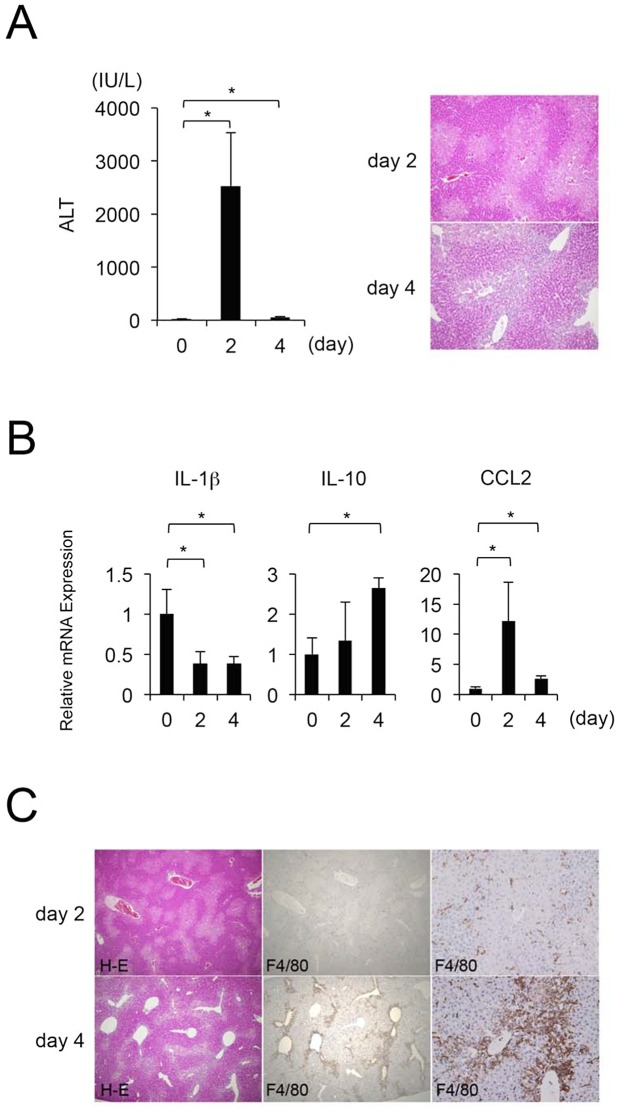
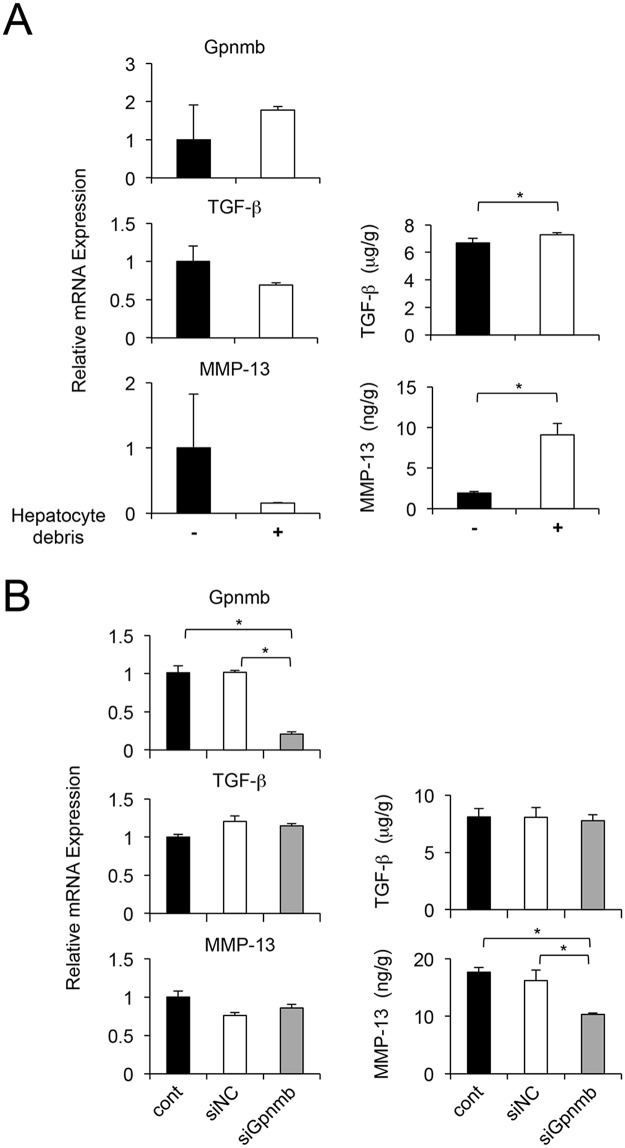
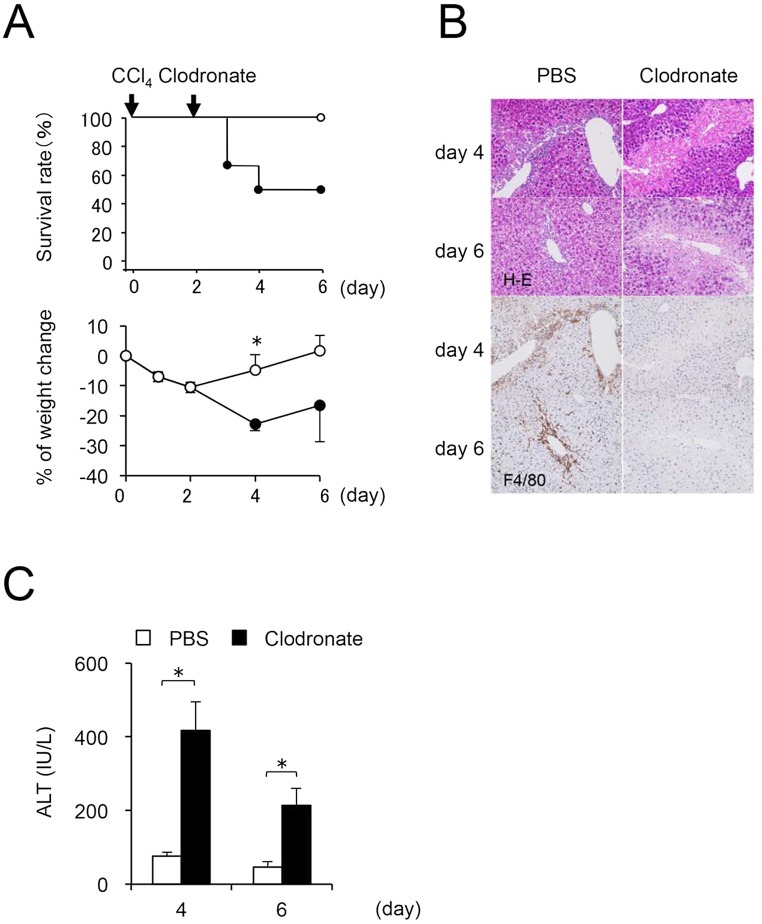
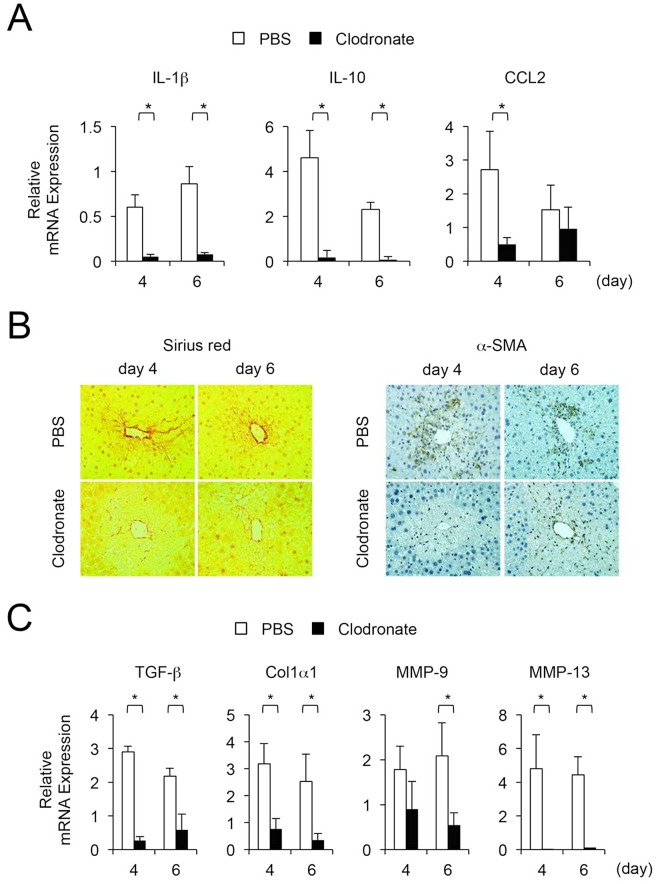
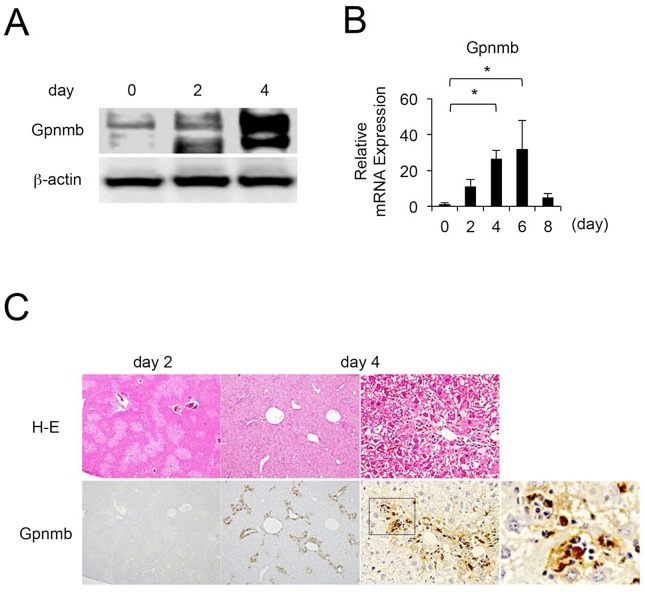
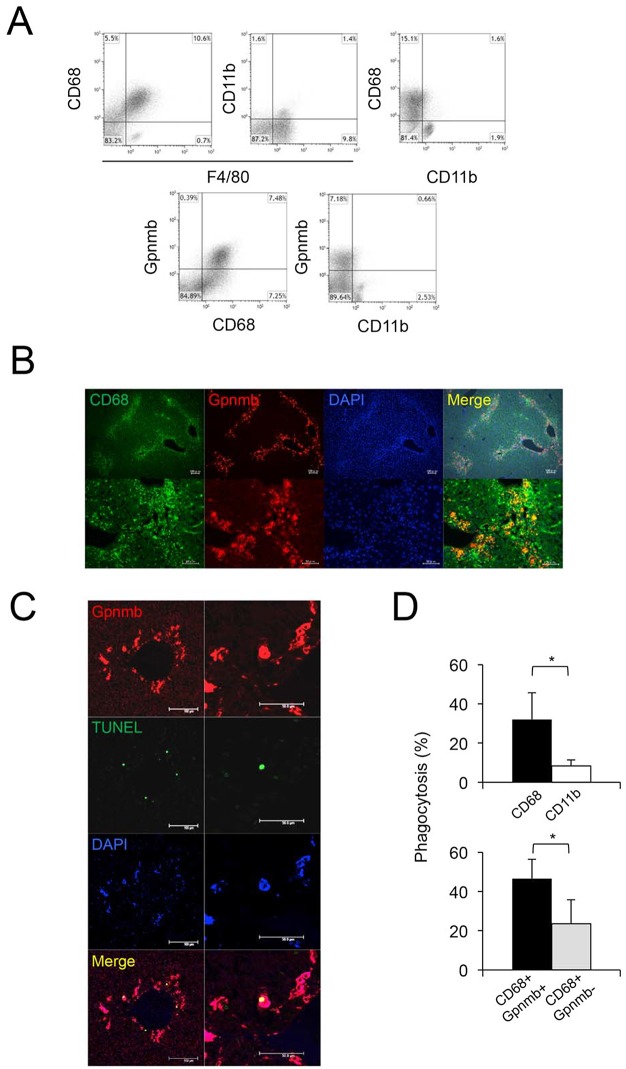
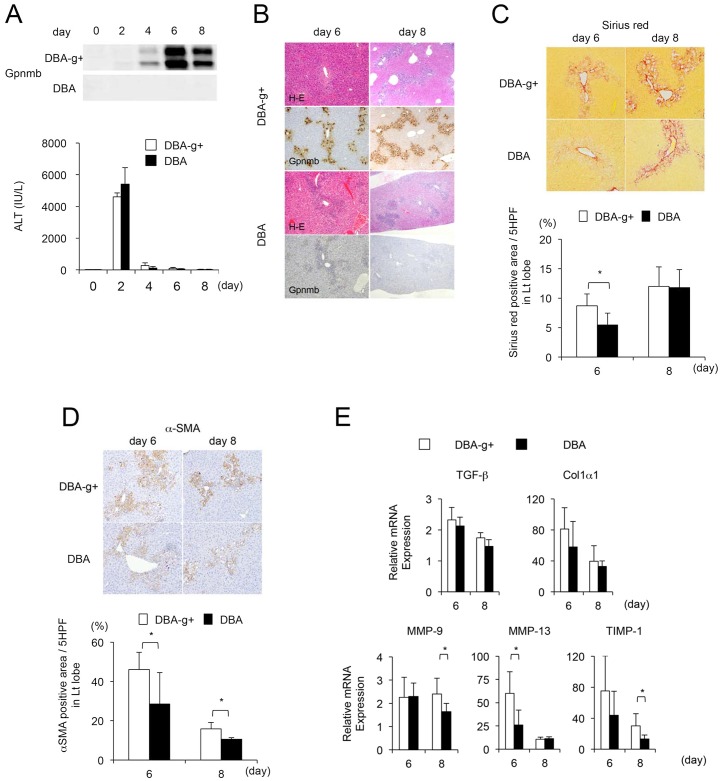
In C57BL/6J mice, serum ALT levels increased at two days after CCl4 injection and decreased at four days. Gpnmb expression in the liver was stimulated four days after CCl4 injection. Histological examination and flow cytometry showed that Gpnmb-positive cells were almost positive for CD68-positive macrophages, contained engulfed apoptotic bodies and exhibited enhanced phagocytic activity. Isolated infiltrating hepatic macrophages transfected with siGpnmb showed high MMP-13 secretion. There was no significant difference in the magnitude of CCl4-induced liver injury between DBA-g+ and DBA mice. However, hepatic MMP-13 expression, as well as α-SMA expression and collagen production, increased significantly in DBA-g+ compared with DBA mice.
Gpnmb-positive macrophages infiltrate the liver during the recovery phase of CCl4-induced acute liver injury and contribute to the balance between fibrosis and fibrolysis in the repair process following acute liver injury.
糖蛋白非转移性黑色素瘤B(Gpnmb)是一种在巨噬细胞中表达的跨膜糖蛋白,对炎症起负向调节作用。我们曾报道,在喂食胆碱缺乏、L-氨基酸限定(CDAA)饮食的大鼠肝脏中,Gpnmb表达强烈。然而,巨噬细胞表达的Gpnmb在肝损伤中的作用仍不清楚。本研究旨在阐明表达Gpnmb的浸润性巨噬细胞的特征,以及Gpnmb在肝损伤修复过程中的参与情况。
对C57BL/6J、DBA/2J [DBA]和DBA/2J-Gpnmb+ [DBA-g+]小鼠腹腔注射一次剂量为1.0 mL/kg体重的四氯化碳(CCl4)。在预定时间点处死小鼠,随后测定血清丙氨酸氨基转移酶(ALT)水平并进行组织学检查。通过定量逆转录聚合酶链反应(RT-PCR)和/或蛋白质印迹法检测Gpnmb、促炎/抗炎细胞因子以及促纤维化/抗纤维化因子的表达。采用免疫组织化学、荧光免疫染色和流式细胞术来确定Gpnmb、CD68、CD11b和α-平滑肌肌动蛋白(α-SMA)的表达、吞噬活性以及凋亡小体的存在情况。我们使用定量RT-PCR和酶联免疫吸附测定(ELISA)来检测转染小干扰RNA(siGpnmb)的分离浸润性肝巨噬细胞中转化生长因子-β(TGF-β)和基质金属蛋白酶-13(MMP-13)的表达以及浓度和上清液情况。
在C57BL/6J小鼠中,CCl4注射后两天血清ALT水平升高,四天后降低。CCl4注射后四天肝脏中Gpnmb表达受到刺激。组织学检查和流式细胞术显示,Gpnmb阳性细胞几乎对CD68阳性巨噬细胞呈阳性,含有吞噬的凋亡小体并表现出增强的吞噬活性。转染siGpnmb的分离浸润性肝巨噬细胞显示出高MMP-13分泌。DBA-g+和DBA小鼠之间CCl4诱导的肝损伤程度无显著差异。然而,与DBA小鼠相比,DBA-g+小鼠肝脏中MMP-13表达以及α-SMA表达和胶原蛋白产生显著增加。
在CCl4诱导的急性肝损伤恢复期,Gpnmb阳性巨噬细胞浸润肝脏,并在急性肝损伤后的修复过程中促进纤维化和纤维溶解之间的平衡。