Zhang Xiaolin, Jiang Anmin, Qi Banghua, Ma Zhongyou, Xiong Youyi, Dou Jinfeng, Wang Jianfei
College of Food and Drug, University of Anhui Science and Technology, Bengbu 233100, China.
The School of Life Science, University of Science and Technology of China, Hefei 230032, China.
Int J Mol Sci. 2015 Nov 20;16(11):27757-69. doi: 10.3390/ijms161126061.
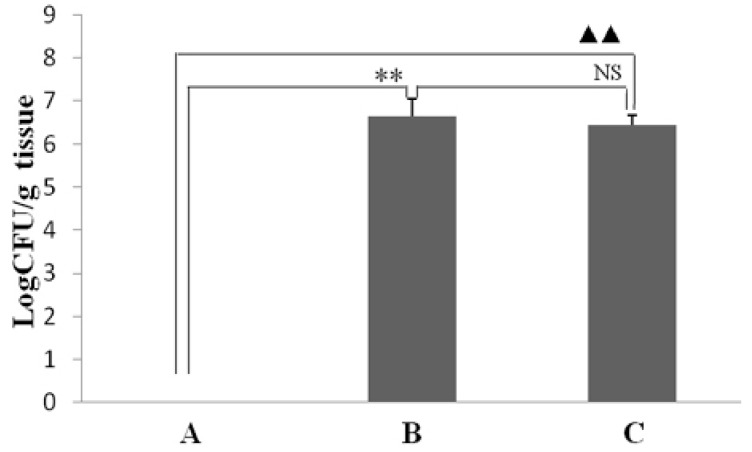
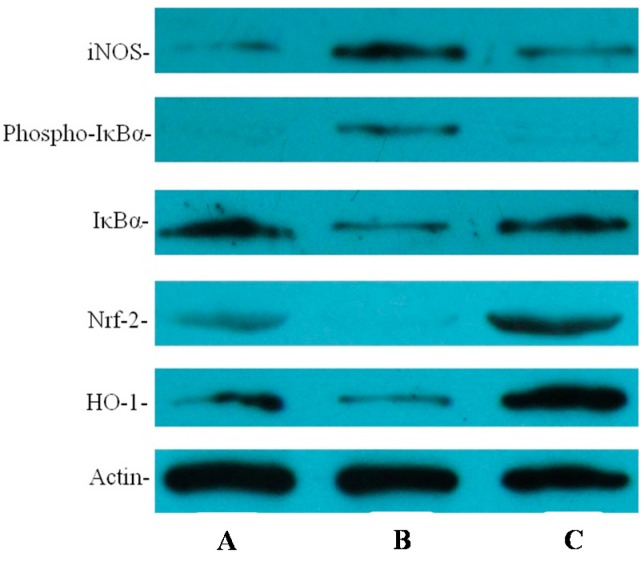
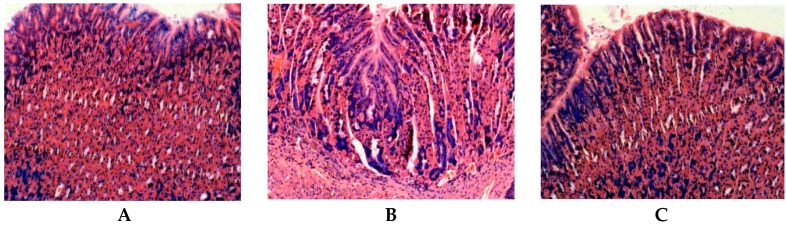
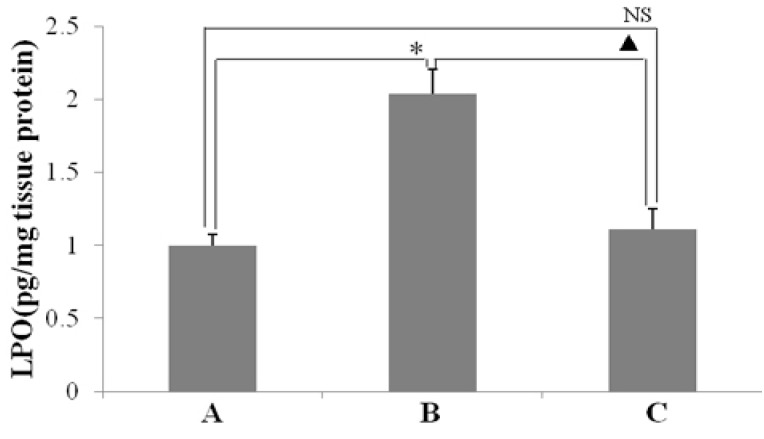
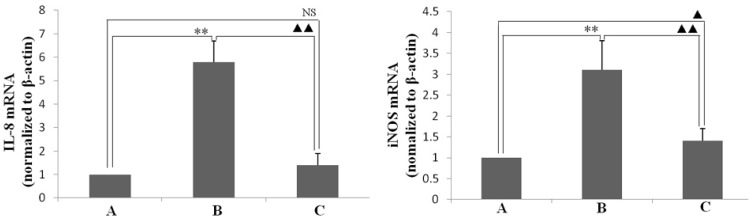
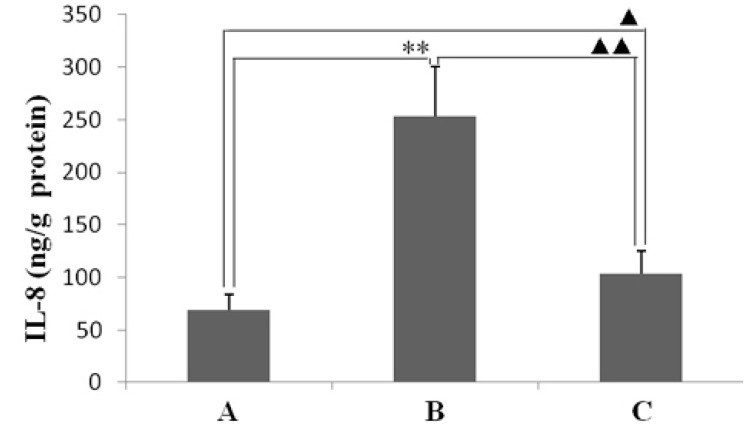
Helicobacter pylori (H. pylori)-induced oxidative stress has been shown to play a very important role in the inflammation of the gastric mucosa and increases the risk of developing gastric cancer. Resveratrol has many biological functions and activities, including antioxidant and anti-inflammatory effect. The purpose of this study was to probe whether resveratrol inhibits H. pylori-induced gastric inflammation and to elucidate the underlying mechanisms of any effect in mice. A mouse model of H. pylori infection was established via oral inoculation with H. pylori. After one week, mice were administered resveratrol (100 mg/kg body weight/day) orally for six weeks. The mRNA and protein levels of iNOS and IL-8 were assessed using RT-PCR, Western blot and ELISA. The expression levels of IκBα and phosphorylated IκBα (which embodies the level and activation of NF-κB), Heme Oxygenase-1 (HO-1; a potent antioxidant enzyme) and nuclear factor-erythroid 2 related factor 2 (Nrf2) were determined using Western blot, and lipid peroxide (LPO) level and myeloperoxidase (MPO) activity were examined using an MPO colorimetric activity assay, thiobarbituric acid reaction, and histological-grade using HE staining of the gastric mucosa. The results showed that resveratrol improved the histological infiltration score and decreased LPO level and MPO activity in the gastric mucosa. Resveratrol down-regulated the H. pylori-induced mRNA transcription and protein expression levels of IL-8 and iNOS, suppressed H. pylori-induced phosphorylation of IκBα, and increased the levels of HO-1 and Nrf2. In conclusion, resveratrol treatment exerted significant effects against oxidative stress and inflammation in H. pylori-infected mucosa through the suppression of IL-8, iNOS, and NF-κB, and moreover through the activation of the Nrf2/HO-1 pathway.
幽门螺杆菌(H. pylori)诱导的氧化应激已被证明在胃黏膜炎症中起非常重要的作用,并增加患胃癌的风险。白藜芦醇具有多种生物学功能和活性,包括抗氧化和抗炎作用。本研究的目的是探究白藜芦醇是否能抑制幽门螺杆菌诱导的胃炎症,并阐明其在小鼠体内产生任何作用的潜在机制。通过口服接种幽门螺杆菌建立幽门螺杆菌感染的小鼠模型。一周后,小鼠口服白藜芦醇(100 mg/kg体重/天),持续六周。使用RT-PCR、蛋白质印迹法和酶联免疫吸附测定法评估诱导型一氧化氮合酶(iNOS)和白细胞介素-8(IL-8)的mRNA和蛋白质水平。使用蛋白质印迹法测定IκBα和磷酸化IκBα(体现核因子κB(NF-κB)的水平和活化)、血红素加氧酶-1(HO-1;一种有效的抗氧化酶)和核因子红细胞2相关因子2(Nrf2)的表达水平,并使用MPO比色活性测定法、硫代巴比妥酸反应检查脂质过氧化物(LPO)水平和髓过氧化物酶(MPO)活性,并使用胃黏膜苏木精-伊红(HE)染色进行组织学分级。结果表明,白藜芦醇改善了组织学浸润评分,降低了胃黏膜中的LPO水平和MPO活性。白藜芦醇下调了幽门螺杆菌诱导的IL-8和iNOS的mRNA转录和蛋白质表达水平,抑制了幽门螺杆菌诱导的IκBα磷酸化,并增加了HO-1和Nrf2的水平。总之,白藜芦醇治疗通过抑制IL-8、iNOS和NF-κB,以及通过激活Nrf2/HO-1途径,对幽门螺杆菌感染的黏膜中的氧化应激和炎症产生显著影响。