Jeunet Camille, N'Kaoua Bernard, Subramanian Sriram, Hachet Martin, Lotte Fabien
Laboratoire Handicap & Système Nerveux, University of Bordeaux, Bordeaux, France.
Project-Team Potioc, Inria Bordeaux Sud-Ouest/LaBRI/CNRS, Talence, France.
PLoS One. 2015 Dec 1;10(12):e0143962. doi: 10.1371/journal.pone.0143962. eCollection 2015.
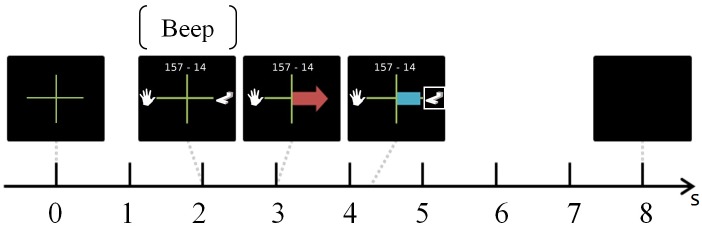
Mental-Imagery based Brain-Computer Interfaces (MI-BCIs) allow their users to send commands to a computer using their brain-activity alone (typically measured by ElectroEncephaloGraphy-EEG), which is processed while they perform specific mental tasks. While very promising, MI-BCIs remain barely used outside laboratories because of the difficulty encountered by users to control them. Indeed, although some users obtain good control performances after training, a substantial proportion remains unable to reliably control an MI-BCI. This huge variability in user-performance led the community to look for predictors of MI-BCI control ability. However, these predictors were only explored for motor-imagery based BCIs, and mostly for a single training session per subject. In this study, 18 participants were instructed to learn to control an EEG-based MI-BCI by performing 3 MI-tasks, 2 of which were non-motor tasks, across 6 training sessions, on 6 different days. Relationships between the participants' BCI control performances and their personality, cognitive profile and neurophysiological markers were explored. While no relevant relationships with neurophysiological markers were found, strong correlations between MI-BCI performances and mental-rotation scores (reflecting spatial abilities) were revealed. Also, a predictive model of MI-BCI performance based on psychometric questionnaire scores was proposed. A leave-one-subject-out cross validation process revealed the stability and reliability of this model: it enabled to predict participants' performance with a mean error of less than 3 points. This study determined how users' profiles impact their MI-BCI control ability and thus clears the way for designing novel MI-BCI training protocols, adapted to the profile of each user.
基于心理意象的脑机接口(MI-BCI)允许用户仅通过大脑活动(通常通过脑电图-EEG测量)向计算机发送命令,这些大脑活动在他们执行特定心理任务时进行处理。虽然前景广阔,但由于用户在控制方面遇到困难,MI-BCI在实验室之外几乎未得到应用。实际上,尽管一些用户在训练后获得了良好的控制性能,但仍有相当一部分人无法可靠地控制MI-BCI。用户表现的这种巨大差异促使该领域寻找MI-BCI控制能力的预测指标。然而,这些预测指标仅在基于运动想象的脑机接口中进行了探索,并且大多是针对每个受试者的单个训练 session。在本研究中,18名参与者被指示通过在6个不同的日子里进行6个训练 session,执行3个MI任务(其中2个是非运动任务)来学习控制基于EEG的MI-BCI。探索了参与者的BCI控制性能与其个性、认知特征和神经生理标记之间的关系。虽然未发现与神经生理标记有相关关系,但揭示了MI-BCI性能与心理旋转分数(反映空间能力)之间的强相关性。此外,还提出了一个基于心理测量问卷分数的MI-BCI性能预测模型。留一受试者交叉验证过程揭示了该模型的稳定性和可靠性:它能够以平均误差小于3分的精度预测参与者的性能。本研究确定了用户特征如何影响他们的MI-BCI控制能力,从而为设计适合每个用户特征的新型MI-BCI训练方案扫清了道路。