Pleiner Tino, Bates Mark, Trakhanov Sergei, Lee Chung-Tien, Schliep Jan Erik, Chug Hema, Böhning Marc, Stark Holger, Urlaub Henning, Görlich Dirk
Department of Cellular Logistics, Max Planck Institute for Biophysical Chemistry, Göttingen, Germany.
Department of NanoBiophotonics, Max Planck Institute for Biophysical Chemistry, Göttingen, Germany.
Elife. 2015 Dec 3;4:e11349. doi: 10.7554/eLife.11349.
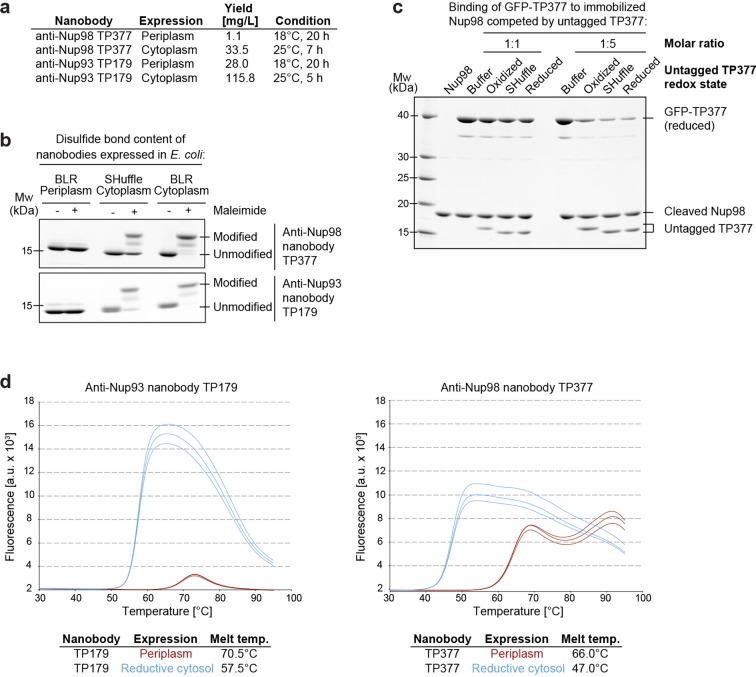
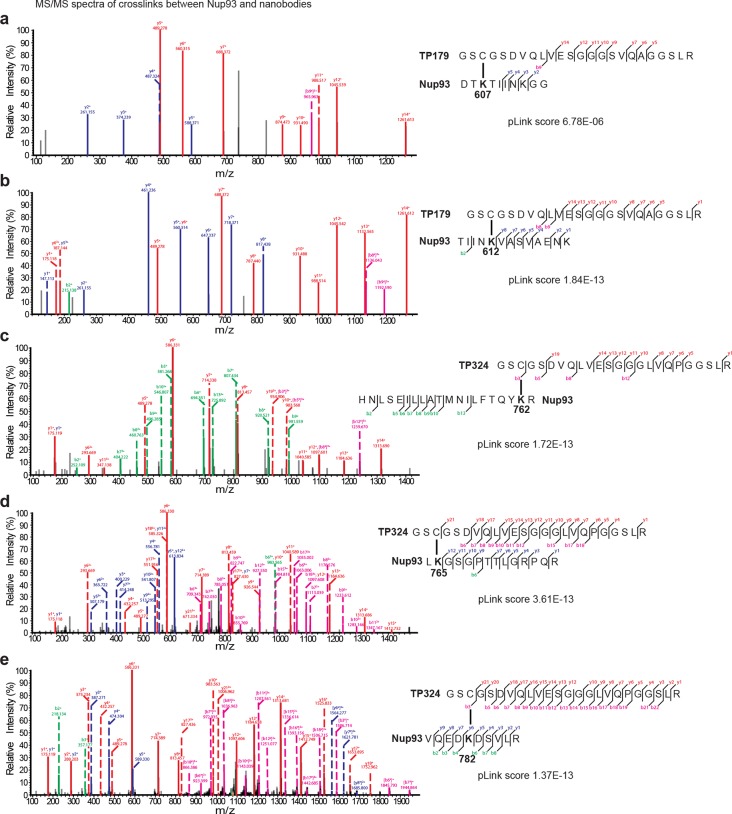
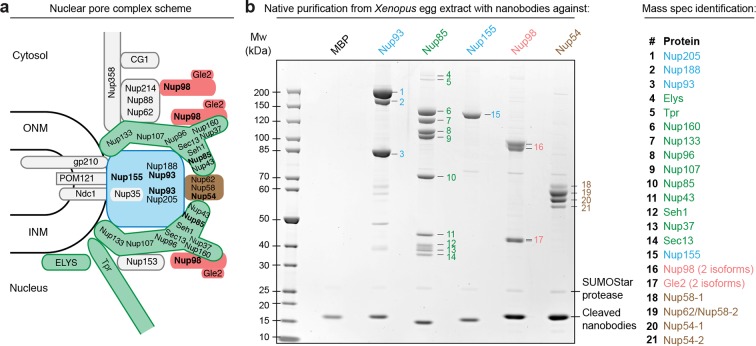
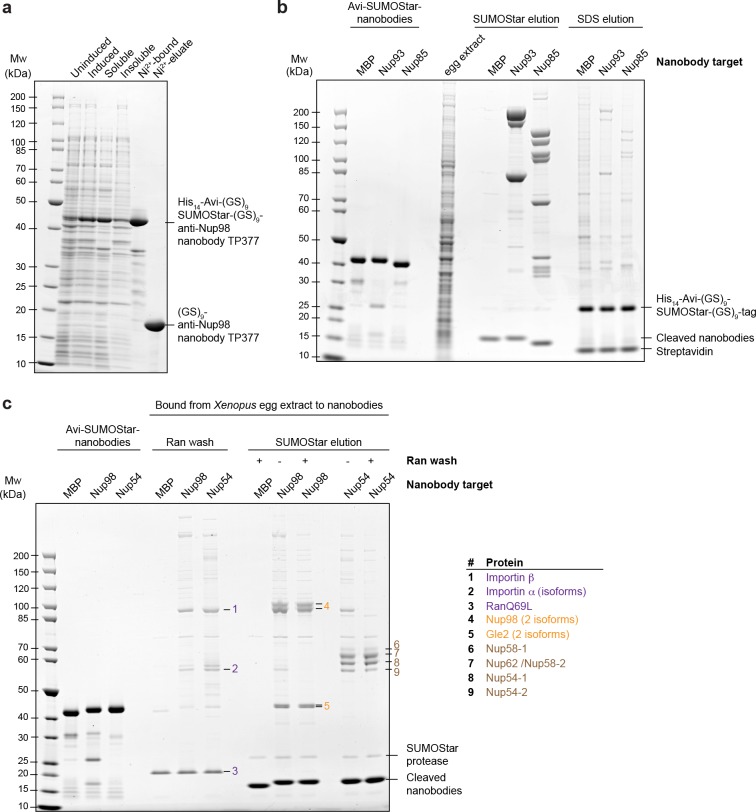
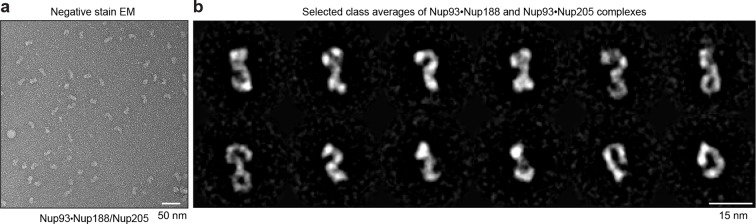
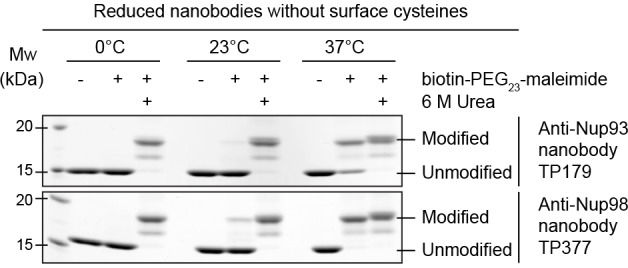
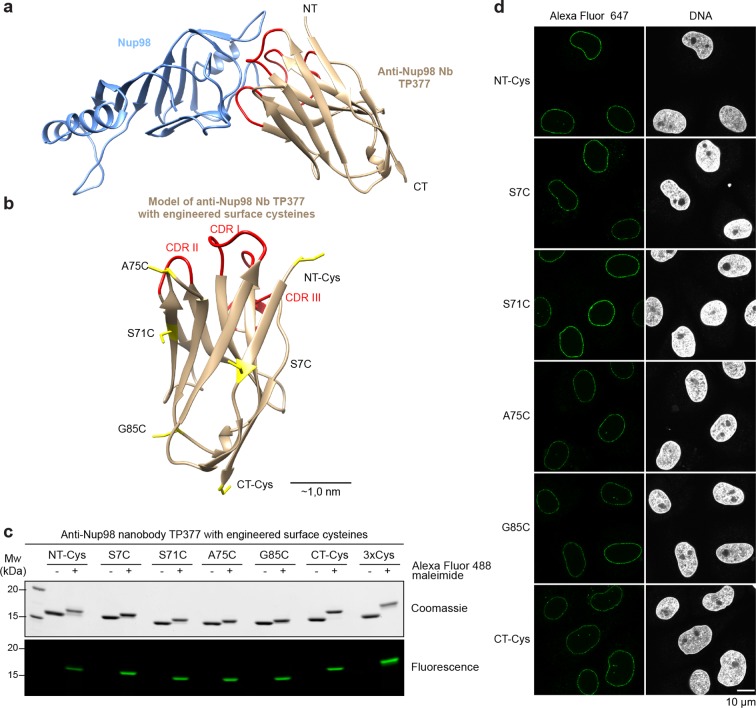
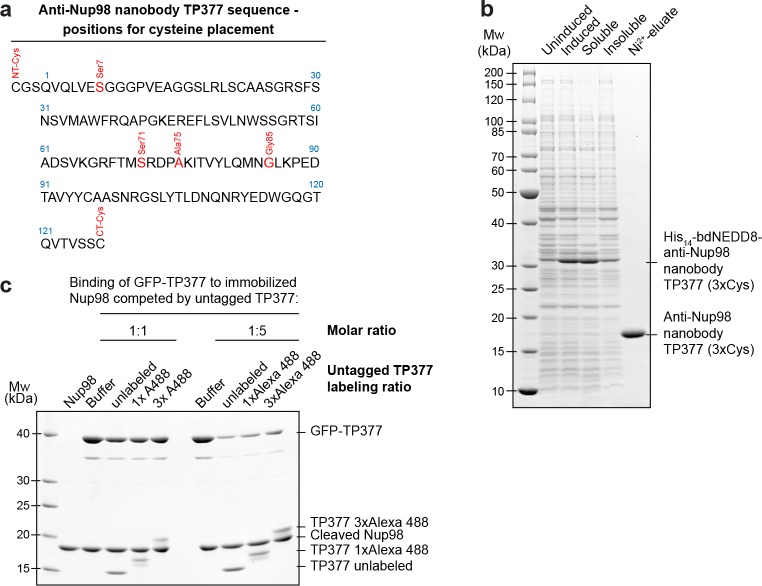
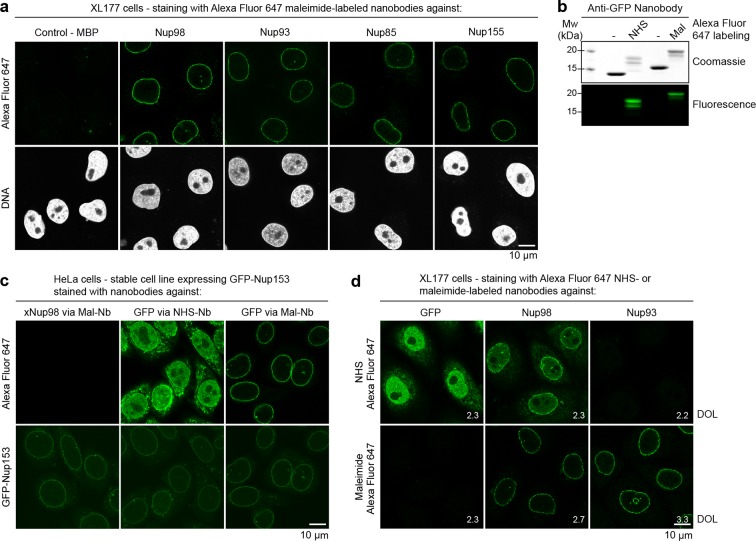
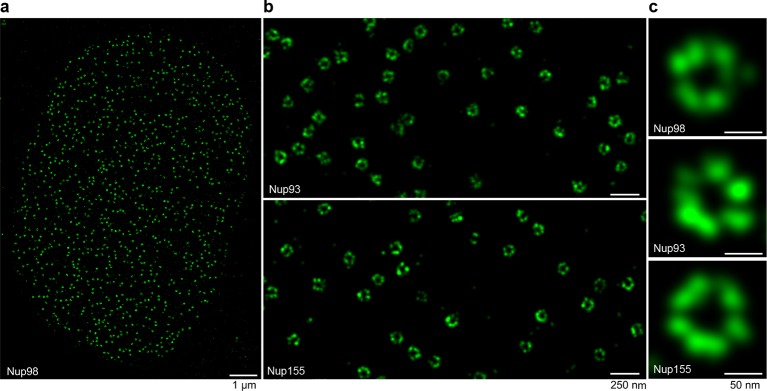
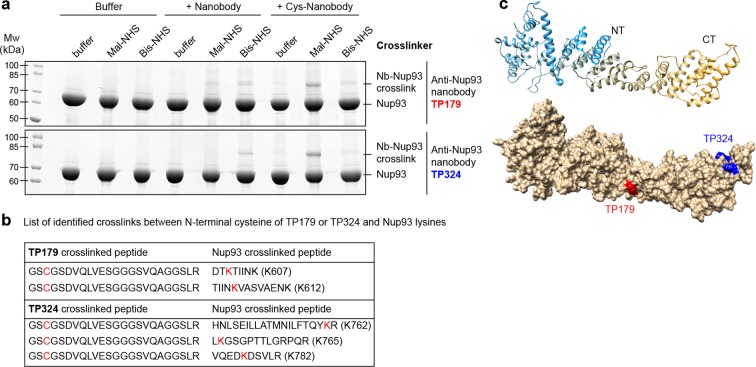
Nanobodies are single-domain antibodies of camelid origin. We generated nanobodies against the vertebrate nuclear pore complex (NPC) and used them in STORM imaging to locate individual NPC proteins with <2 nm epitope-label displacement. For this, we introduced cysteines at specific positions in the nanobody sequence and labeled the resulting proteins with fluorophore-maleimides. As nanobodies are normally stabilized by disulfide-bonded cysteines, this appears counterintuitive. Yet, our analysis showed that this caused no folding problems. Compared to traditional NHS ester-labeling of lysines, the cysteine-maleimide strategy resulted in far less background in fluorescence imaging, it better preserved epitope recognition and it is site-specific. We also devised a rapid epitope-mapping strategy, which relies on crosslinking mass spectrometry and the introduced ectopic cysteines. Finally, we used different anti-nucleoporin nanobodies to purify the major NPC building blocks – each in a single step, with native elution and, as demonstrated, in excellent quality for structural analysis by electron microscopy. The presented strategies are applicable to any nanobody and nanobody-target.
纳米抗体是源自骆驼科动物的单域抗体。我们制备了针对脊椎动物核孔复合体(NPC)的纳米抗体,并将其用于随机光学重建显微镜(STORM)成像,以定位表位标记位移小于2纳米的单个NPC蛋白。为此,我们在纳米抗体序列的特定位置引入了半胱氨酸,并用荧光团马来酰亚胺标记所得蛋白。由于纳米抗体通常通过二硫键连接的半胱氨酸来稳定,这似乎有违常理。然而,我们的分析表明这并未导致折叠问题。与传统的赖氨酸NHS酯标记相比,半胱氨酸-马来酰亚胺策略在荧光成像中产生的背景要少得多,它能更好地保留表位识别,并且具有位点特异性。我们还设计了一种快速表位映射策略,该策略依赖于交联质谱和引入的异位半胱氨酸。最后,我们使用不同的抗核孔蛋白纳米抗体来纯化主要的NPC构建模块——每个步骤只需一步,采用天然洗脱,并且如所证明的,其质量优异,可用于电子显微镜结构分析。所提出的策略适用于任何纳米抗体和纳米抗体靶点。