Merlos Alexandra, Rodríguez Pau, Bárcena-Uribarri Iván, Winterhalter Mathias, Benz Roland, Vinuesa Teresa, Moya Juan A, Viñas Miguel
Molecular Microbiology and Antibiotics, Department of Pathology and Experimental Therapeutics, Medical School, University of Barcelona Barcelona, Spain.
Department of Thoracic Surgery, Hospital Universitari de Bellvitge, University of Barcelona-IDIBELL-HUB Barcelona, Spain.
Front Microbiol. 2015 Nov 23;6:1301. doi: 10.3389/fmicb.2015.01301. eCollection 2015.
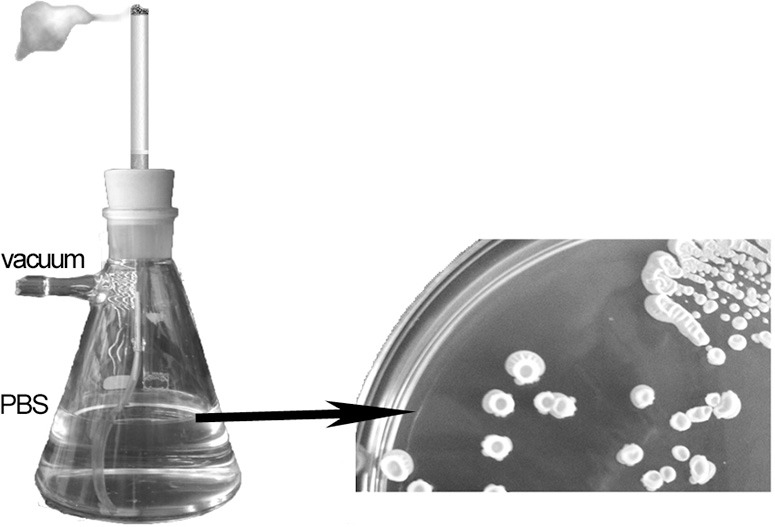
The aim was to explore the eventual role of bacteria in the induction of lung cancer by smoking habits. Viable bacteria closely related to the genus Bacillus were detected at high frequencies in lung-cancer biopsies. Similar, if not identical, microbes were isolated from cigarettes and in smog. Bacteria present in cigarettes could be transferred to a physiological solution via a "smoker" device that mimicked their potential transfer during smoking those bacteria produce exotoxins able to open transmembrane pores. These channels can be used as a way to penetrate cells of benzopyrenes and other toxic substances present in tobacco products. We hypothesize that Bacillaceae present in tobacco play a key role in the development of lung cancer.
目的是探讨细菌在吸烟习惯诱发肺癌过程中最终所起的作用。在肺癌活检样本中高频检测到与芽孢杆菌属密切相关的活细菌。在香烟和烟雾中分离出了相似(即便不是完全相同)的微生物。香烟中的细菌可通过一种“吸烟者”装置转移到生理溶液中,该装置模拟了吸烟过程中细菌的潜在转移,这些细菌会产生能够打开跨膜孔的外毒素。这些通道可被用作一种方式,使烟草制品中存在的苯并芘和其他有毒物质穿透细胞。我们推测烟草中存在的芽孢杆菌科在肺癌的发展中起关键作用。