Ameres Stefanie, Liang Xiaoling, Wiesner Martina, Mautner Josef, Moosmann Andreas
Clinical Cooperation Group Immunooncology, Helmholtz Zentrum München and Ludwig-Maximilians-Universität , Munich , Germany.
Clinical Cooperation Group Immunooncology, Helmholtz Zentrum München and Ludwig-Maximilians-Universität , Munich , Germany ; Research Group Host Control of Viral Latency and Reactivation, Helmholtz Zentrum München , Munich , Germany ; German Research Center for Infection Research (DZIF) , Munich , Germany.
Front Immunol. 2015 Nov 25;6:598. doi: 10.3389/fimmu.2015.00598. eCollection 2015.
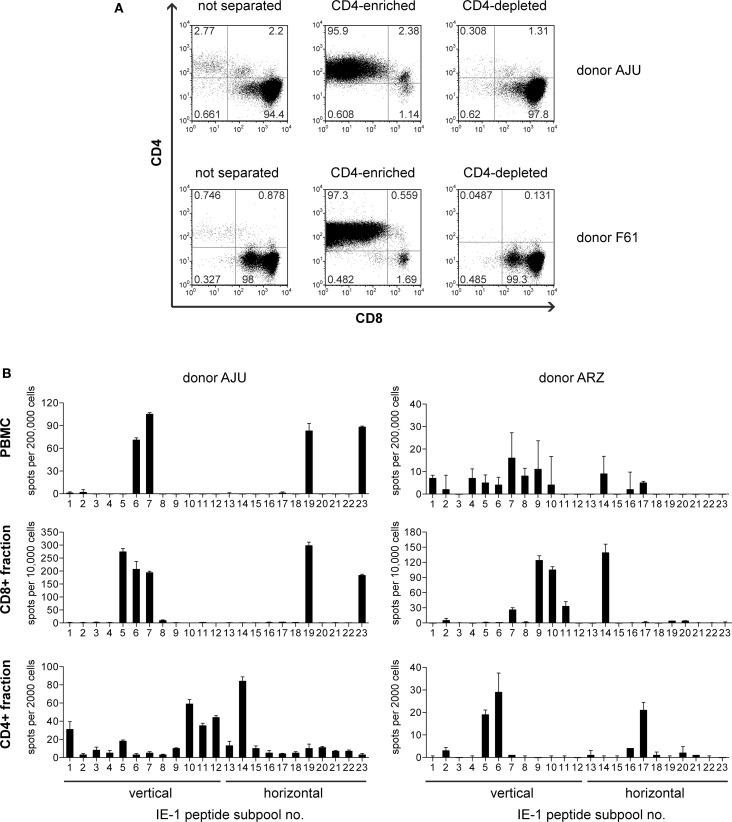
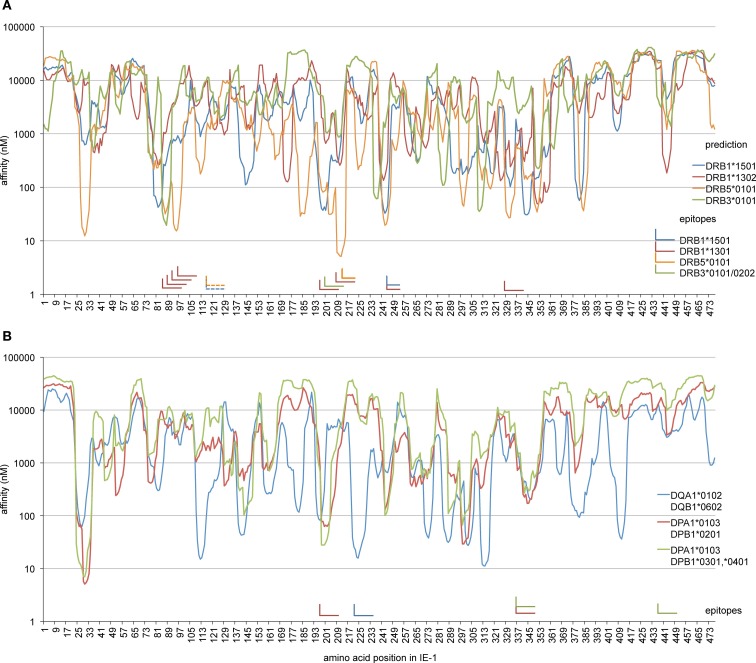
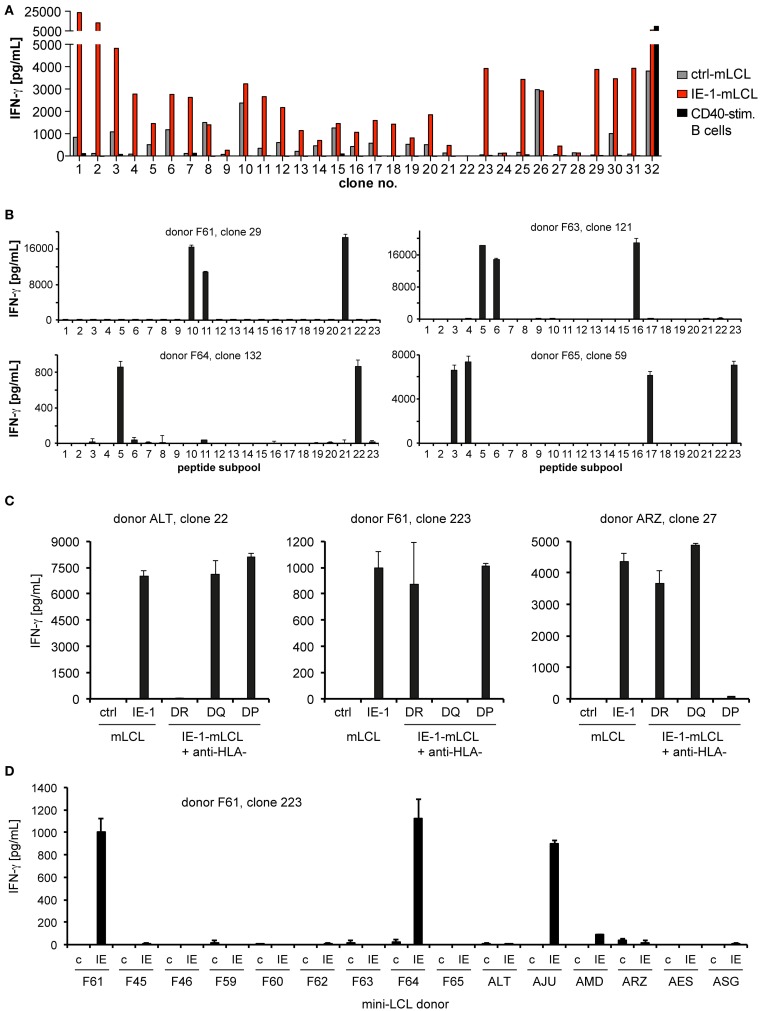
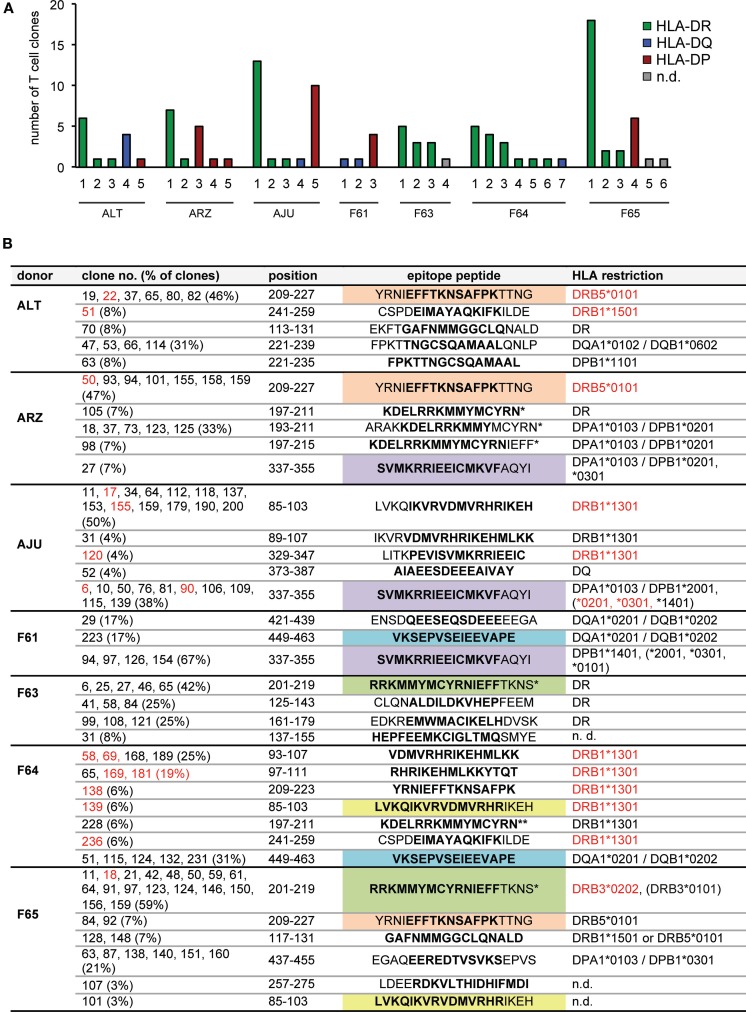
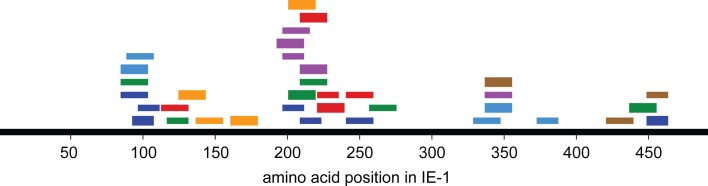
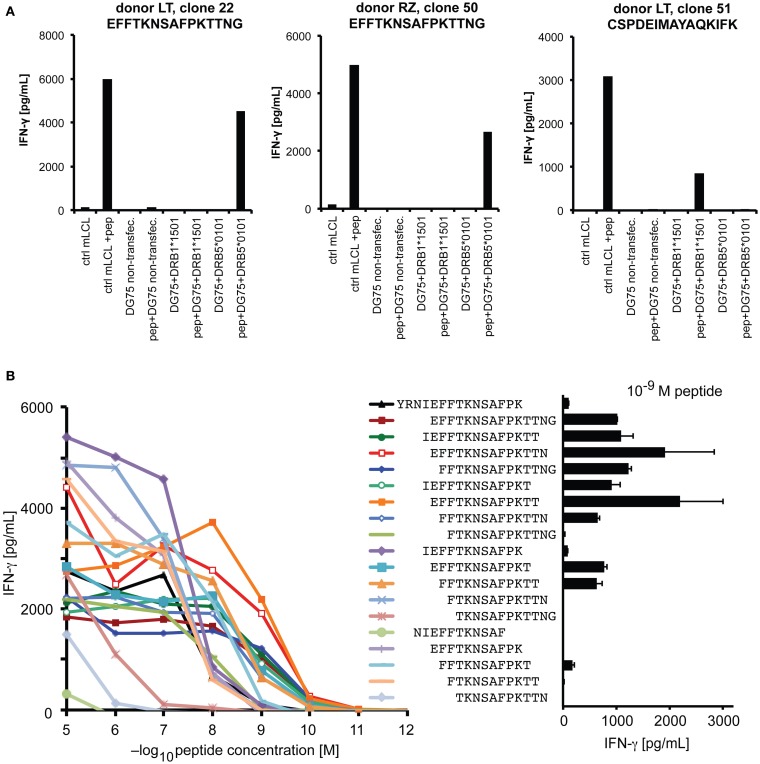
T-cell responses to the immediate-early 1 (IE-1) protein of human cytomegalovirus (HCMV) are associated with protection from viral disease. Thus, IE-1 is a promising target for immunotherapy. CD8 T-cell responses to IE-1 are generally strong. In contrast, CD4 T-cell responses to IE-1 were described to be comparatively infrequent or undetectable in HCMV carriers, and information on their target epitopes and their function has been limited. To analyze the repertoire of IE-1-specific CD4 T cells, we expanded them from healthy donors with autologous IE-1-expressing mini-Epstein-Barr virus-transformed B-cell lines and established IE-1-specific CD4 T-cell clones. Clones from seven out of seven HCMV-positive donors recognized endogenously processed IE-1 epitopes restricted through HLA-DR, DQ, or DP. Three to seven IE-1 epitopes were recognized per donor. Cumulatively, about 27 different HLA/peptide class II complexes were recognized by 117 IE-1-specific clones. Our results suggest that a highly diversified repertoire of IE-1-specific CD4 T cells targeting multiple epitopes is usually present in healthy HCMV carriers. Therefore, multiepitope approaches to immunomonitoring and immunotherapy will make optimal use of this potentially important class of HCMV-specific effector cells.
T细胞对人巨细胞病毒(HCMV)即刻早期1(IE-1)蛋白的应答与预防病毒疾病相关。因此,IE-1是免疫治疗的一个有前景的靶点。CD8 T细胞对IE-1的应答通常很强。相比之下,在HCMV携带者中,CD4 T细胞对IE-1的应答相对较少或无法检测到,并且关于其靶表位及其功能的信息有限。为了分析IE-1特异性CD4 T细胞的库,我们用表达自体IE-1的微型爱泼斯坦-巴尔病毒转化的B细胞系从健康供体中扩增它们,并建立了IE-1特异性CD4 T细胞克隆。来自7名HCMV阳性供体中的7名的克隆识别通过HLA-DR、DQ或DP限制的内源性加工的IE-1表位。每个供体识别3至7个IE-1表位。累积起来,117个IE-1特异性克隆识别了约27种不同的HLA/肽II类复合物。我们的结果表明,健康的HCMV携带者中通常存在针对多个表位的高度多样化的IE-1特异性CD4 T细胞库。因此,多表位免疫监测和免疫治疗方法将充分利用这类潜在重要的HCMV特异性效应细胞。