Waheed Mohammad T, Ismail Hammad, Gottschamel Johanna, Mirza Bushra, Lössl Andreas G
Department of Biochemistry, Faculty of Biological Sciences, Quaid-i-Azam University Islamabad, Pakistan.
NIBIO - Norwegian Institute of Bioeconomy Research Ås, Norway.
Front Plant Sci. 2015 Nov 17;6:1005. doi: 10.3389/fpls.2015.01005. eCollection 2015.
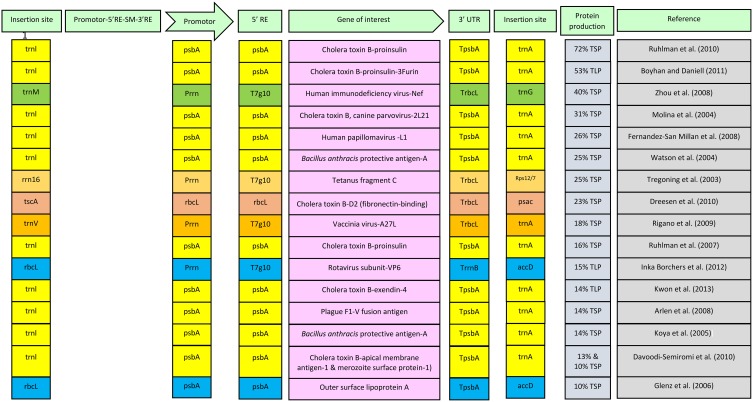
Infectious diseases pose an increasing risk to health, especially in developing countries. Vaccines are available to either cure or prevent many of these diseases. However, there are certain limitations related to these vaccines, mainly the costs, which make these vaccines mostly unaffordable for people in resource poor countries. These costs are mainly related to production and purification of the products manufactured from fermenter-based systems. Plastid biotechnology has become an attractive platform to produce biopharmaceuticals in large amounts and cost-effectively. This is mainly due to high copy number of plastids DNA in mature chloroplasts, a characteristic particularly important for vaccine production in large amounts. An additional advantage lies in the maternal inheritance of plastids in most plant species, which addresses the regulatory concerns related to transgenic plants. These and many other aspects of plastids will be discussed in the present review, especially those that particularly make these green biofactories an attractive platform for vaccine production. A summary of recent vaccine antigens against different human diseases expressed in plastids will also be presented.
传染病对健康构成的风险日益增加,在发展中国家尤为如此。有疫苗可用于治愈或预防其中许多疾病。然而,这些疫苗存在某些局限性,主要是成本问题,这使得资源匮乏国家的人们大多无力承担这些疫苗。这些成本主要与基于发酵罐系统生产的产品的生产和纯化有关。质体生物技术已成为大量且经济高效地生产生物制药的一个有吸引力的平台。这主要是由于成熟叶绿体中质体DNA的高拷贝数,这一特性对于大量生产疫苗尤为重要。另一个优势在于大多数植物物种中质体的母系遗传,这解决了与转基因植物相关的监管问题。本文将讨论质体的这些以及许多其他方面,特别是那些使这些绿色生物工厂成为有吸引力的疫苗生产平台的方面。还将介绍最近在质体中表达的针对不同人类疾病的疫苗抗原的总结。