Realini María Florencia, Poggio Lidia, Cámara-Hernández Julián, González Graciela Esther
Instituto de Ecología, Genética y Evolución (IEGEBA)-Consejo Nacional de Investigaciones Científicas y Técnicas (CONICET) and Laboratorio de Citogenética y Evolución (LaCyE), Departamento de Ecología, Genética y Evolución, Facultad de Ciencias Exactas y Naturales, Universidad de Buenos Aires, Ciudad Autónoma de Buenos Aires, Argentina
Instituto de Ecología, Genética y Evolución (IEGEBA)-Consejo Nacional de Investigaciones Científicas y Técnicas (CONICET) and Laboratorio de Citogenética y Evolución (LaCyE), Departamento de Ecología, Genética y Evolución, Facultad de Ciencias Exactas y Naturales, Universidad de Buenos Aires, Ciudad Autónoma de Buenos Aires, Argentina.
AoB Plants. 2015 Dec 7;8:plv138. doi: 10.1093/aobpla/plv138.
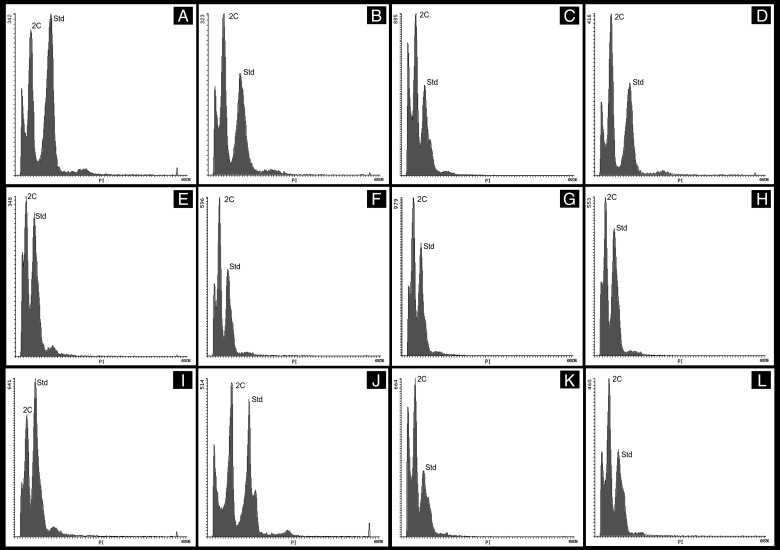
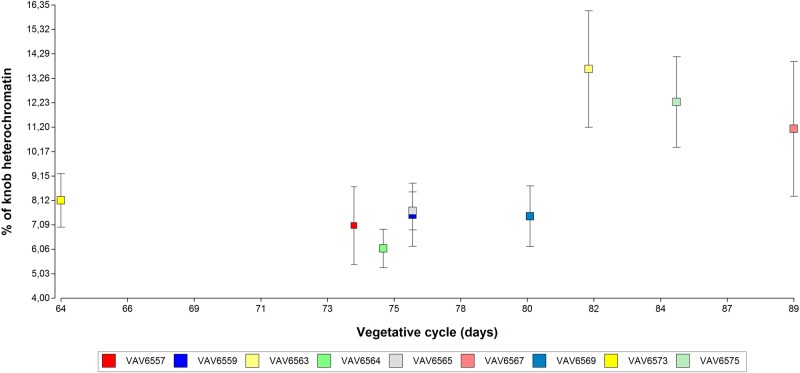
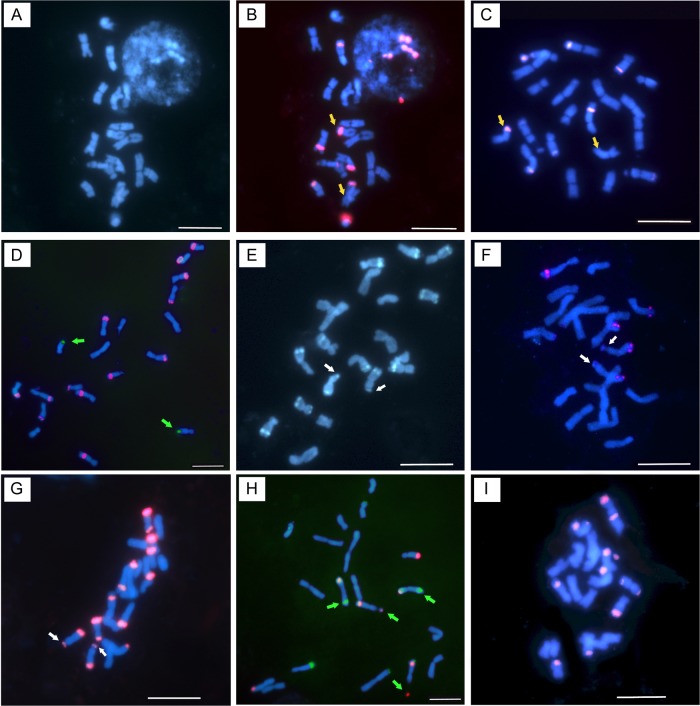
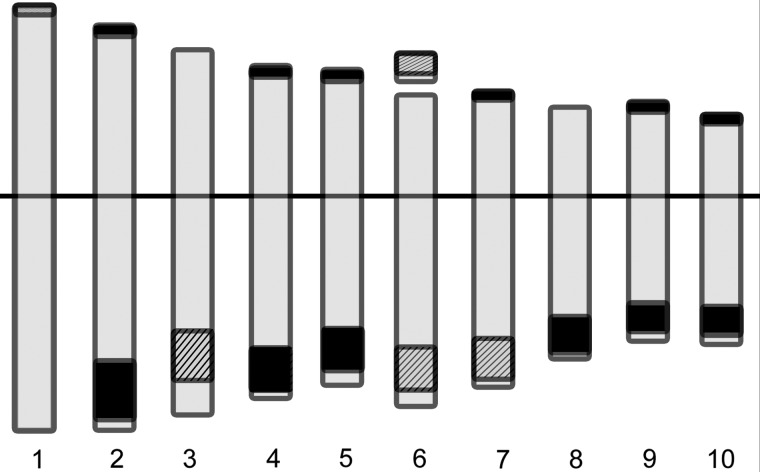
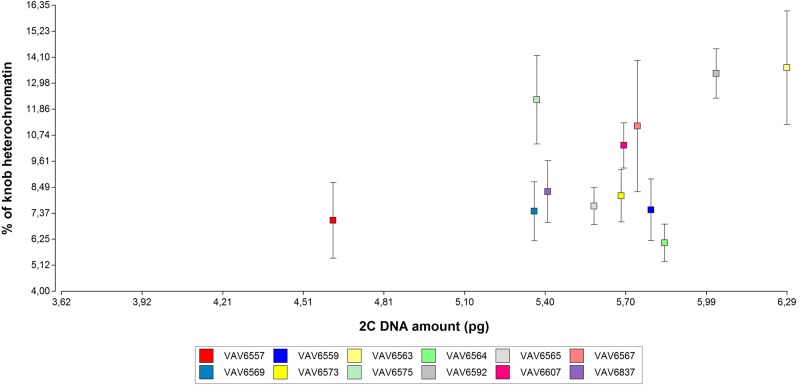
Genome size variation accompanies the diversification and evolution of many plant species. Relationships between DNA amount and phenotypic and cytological characteristics form the basis of most hypotheses that ascribe a biological role to genome size. The goal of the present research was to investigate the intra-specific variation in the DNA content in maize populations from Northeastern Argentina and further explore the relationship between genome size and the phenotypic traits seed weight and length of the vegetative cycle. Moreover, cytological parameters such as the percentage of heterochromatin as well as the number, position and sequence composition of knobs were analysed and their relationships with 2C DNA values were explored. The populations analysed presented significant differences in 2C DNA amount, from 4.62 to 6.29 pg, representing 36.15 % of the inter-populational variation. Moreover, intra-populational genome size variation was found, varying from 1.08 to 1.63-fold. The variation in the percentage of knob heterochromatin as well as in the number, chromosome position and sequence composition of the knobs was detected among and within the populations. Although a positive relationship between genome size and the percentage of heterochromatin was observed, a significant correlation was not found. This confirms that other non-coding repetitive DNA sequences are contributing to the genome size variation. A positive relationship between DNA amount and the seed weight has been reported in a large number of species, this relationship was not found in the populations studied here. The length of the vegetative cycle showed a positive correlation with the percentage of heterochromatin. This result allowed attributing an adaptive effect to heterochromatin since the length of this cycle would be optimized via selection for an appropriate percentage of heterochromatin.
基因组大小变异伴随着许多植物物种的多样化和进化。DNA含量与表型及细胞学特征之间的关系构成了大多数将生物学作用归因于基因组大小的假说的基础。本研究的目的是调查阿根廷东北部玉米种群DNA含量的种内变异,并进一步探索基因组大小与表型性状种子重量和营养周期长度之间的关系。此外,分析了诸如异染色质百分比以及着丝粒的数量、位置和序列组成等细胞学参数,并探讨了它们与2C DNA值的关系。所分析的种群在2C DNA含量上存在显著差异,从4.62到6.29皮克,占种群间变异的36.15%。此外,还发现了种群内基因组大小的变异,变异范围为1.08至1.63倍。在种群间和种群内都检测到了着丝粒异染色质百分比以及着丝粒数量、染色体位置和序列组成的变异。虽然观察到基因组大小与异染色质百分比之间存在正相关,但未发现显著相关性。这证实了其他非编码重复DNA序列也在导致基因组大小变异。大量物种中都报道了DNA含量与种子重量之间存在正相关,但在本研究的种群中未发现这种关系。营养周期长度与异染色质百分比呈正相关。这一结果使得可以将一种适应性效应归因于异染色质,因为这个周期的长度将通过选择合适的异染色质百分比而得到优化。