Cardiology Unit, Department of Medicine, Karolinska University Hospital , Solna , Sweden.
Cardiology, Department of Public Health and Clinical Medicine, Umeå University Hospital , Umeå , Sweden.
Front Cardiovasc Med. 2015 Mar 5;2:7. doi: 10.3389/fcvm.2015.00007. eCollection 2015.
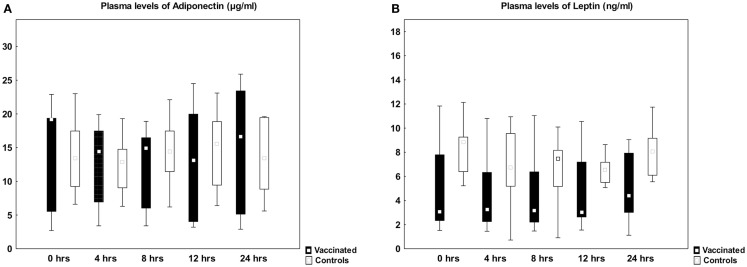
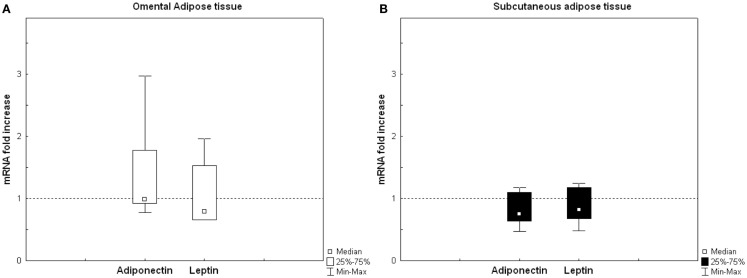
Adipose tissue (AT), classically thought to be merely an energy store, has been shown to produce inflammatory and metabolically active cytokines. Recently, adiponectin and leptin, adipokines primarily synthesized by adipocytes, have attracted considerable attention because inflammation has been suggested to modulate adipokine levels. However, the regulation of adiponectin and leptin is complex and the knowledge about their synthesis within the early onset of inflammation is poorly understood. The aim of this study was to investigate if the synthesis of adiponectin and leptin is affected during the early phase of an acute systemic inflammation. Eighteen healthy subjects were allocated to vaccination against Salmonella typhi or to a control group, and adiponectin and leptin concentrations measured in plasma during 24 h. Nine patients, without markers of inflammation, undergoing open heart surgery were investigated before and after the operation by analysis of plasma levels and AT gene expression of adiponectin and leptin. Plasma interleukin (IL)-6 concentrations were measured in both cohorts. Plasma levels of IL-6 were doubled after vaccination and increased 30-fold after open heart surgery. Plasma levels of adiponectin and leptin were unchanged after vaccination whereas adiponectin and leptin tended to decrease after surgery. The gene expression of adiponectin and leptin was unaltered in omental and subcutaneous AT after surgery. Despite the use of two models of stimulated in vivo systemic inflammation, we found no evidence of an early regulation of adiponectin and leptin synthesis, indicating that these two adipokines are not key elements in an acute systemic inflammation in humans.
脂肪组织(AT),经典上被认为只是能量储存器,已被证明能产生炎症和代谢活跃的细胞因子。最近,脂联素和瘦素,主要由脂肪细胞合成的脂肪因子,引起了相当大的关注,因为炎症被认为可以调节脂肪因子水平。然而,脂联素和瘦素的调节是复杂的,它们在炎症早期的合成知识了解甚少。本研究的目的是研究在急性全身炎症的早期阶段,脂联素和瘦素的合成是否受到影响。18 名健康受试者被分配接种伤寒疫苗或对照组,并在 24 小时内测量血浆中的脂联素和瘦素浓度。9 名无炎症标志物的患者在接受心脏直视手术前和手术后通过分析血浆水平和脂肪组织中脂联素和瘦素的基因表达来进行研究。两个队列均测量了血浆白细胞介素(IL)-6 浓度。接种疫苗后,血浆中 IL-6 浓度增加了一倍,心脏直视手术后增加了 30 倍。接种疫苗后,血浆脂联素和瘦素水平不变,而手术后脂联素和瘦素水平趋于下降。手术后网膜和皮下脂肪组织中脂联素和瘦素的基因表达没有改变。尽管使用了两种刺激体内全身炎症的模型,但我们没有发现脂联素和瘦素合成早期调节的证据,这表明这两种脂肪因子不是人类急性全身炎症的关键因素。