Marth C J, Gallego G M, Lee J C, Lebold T P, Kulyk S, Kou K G M, Qin J, Lilien R, Sarpong R
Department of Chemistry, University of California, Berkeley, California 94720, USA.
Cadre Research Labs, Chicago, Illinois 60654, USA.
Nature. 2015 Dec 24;528(7583):493-8. doi: 10.1038/nature16440.
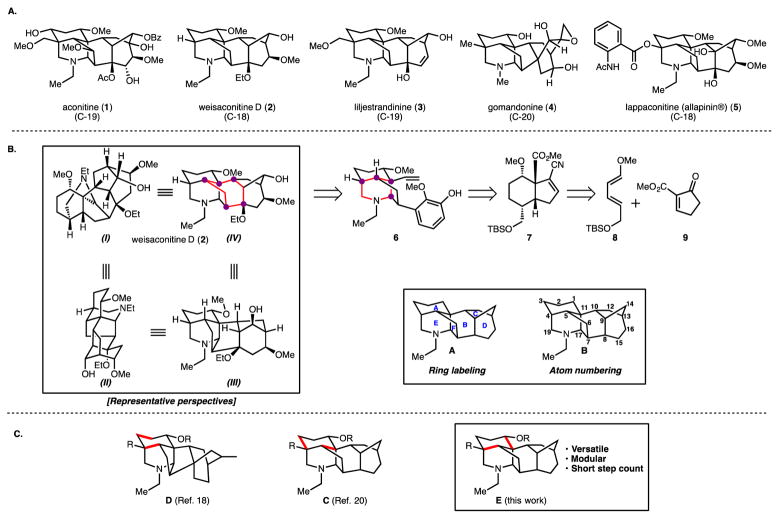
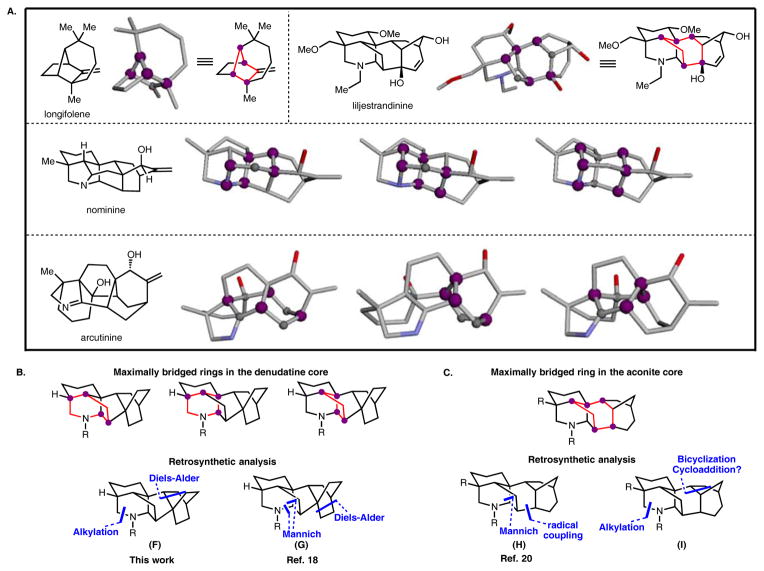
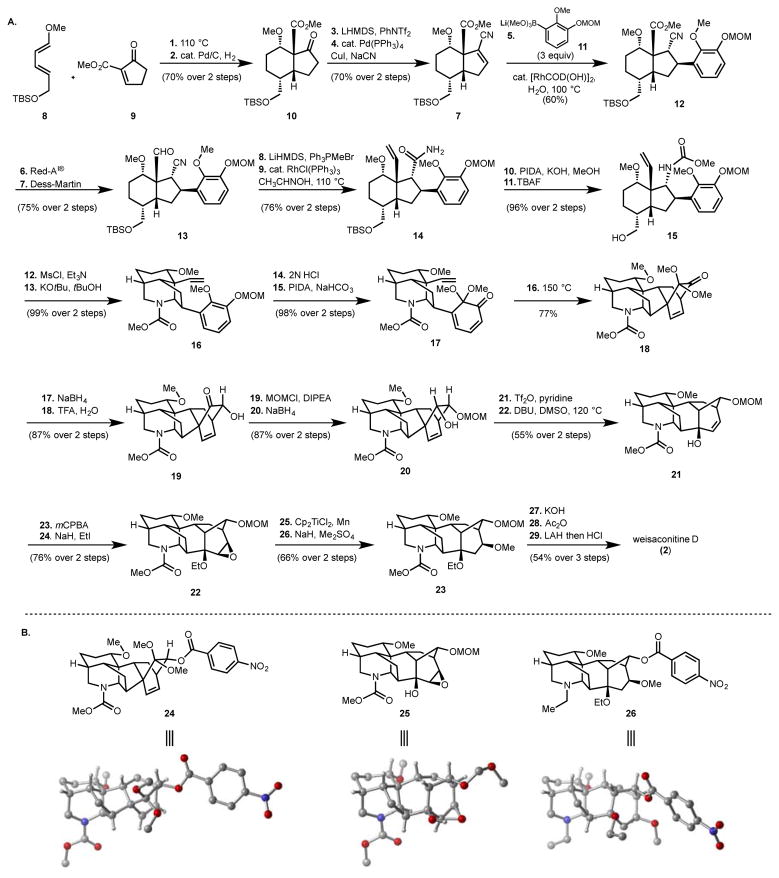
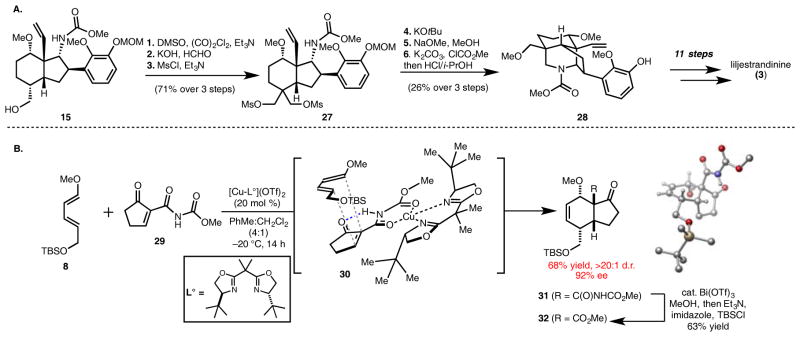
General strategies for the chemical synthesis of organic compounds, especially of architecturally complex natural products, are not easily identified. Here we present a method to establish a strategy for such syntheses, which uses network analysis. This approach has led to the identification of a versatile synthetic intermediate that facilitated syntheses of the diterpenoid alkaloids weisaconitine D and liljestrandinine, and the core of gomandonine. We also developed a web-based graphing program that allows network analysis to be easily performed on molecules with complex frameworks. The diterpenoid alkaloids comprise some of the most architecturally complex and functional-group-dense secondary metabolites isolated. Consequently, they present a substantial challenge for chemical synthesis. The synthesis approach described here is a notable departure from other single-target-focused strategies adopted for the syntheses of related structures. Specifically, it affords not only the targeted natural products, but also intermediates and derivatives in the three families of diterpenoid alkaloids (C-18, C-19 and C-20), and so provides a unified synthetic strategy for these natural products. This work validates the utility of network analysis as a starting point for identifying strategies for the syntheses of architecturally complex secondary metabolites.
有机化合物,尤其是结构复杂的天然产物的化学合成通用策略并不容易确定。在此,我们提出一种利用网络分析来制定此类合成策略的方法。这种方法已导致鉴定出一种通用的合成中间体,该中间体促进了二萜生物碱魏氏乌头碱D和利耶斯特兰定宁以及戈曼多宁核心结构的合成。我们还开发了一个基于网络的绘图程序,该程序能够轻松地对具有复杂骨架的分子进行网络分析。二萜生物碱包含一些已分离出的结构最为复杂且官能团密集的次生代谢产物。因此,它们对化学合成构成了重大挑战。这里描述的合成方法与用于合成相关结构的其他单一目标聚焦策略有显著不同。具体而言,它不仅能得到目标天然产物,还能得到二萜生物碱三个家族(C - 18、C - 19和C - 20)中的中间体和衍生物,从而为这些天然产物提供了一个统一的合成策略。这项工作验证了网络分析作为确定结构复杂的次生代谢产物合成策略起点的实用性。