Zhang Bojie, Rempel Don L, Gross Michael L
Department of Chemistry, Washington University in St. Louis, St. Louis, MO, 63130, USA.
J Am Soc Mass Spectrom. 2016 Mar;27(3):552-5. doi: 10.1007/s13361-015-1313-9. Epub 2015 Dec 17.
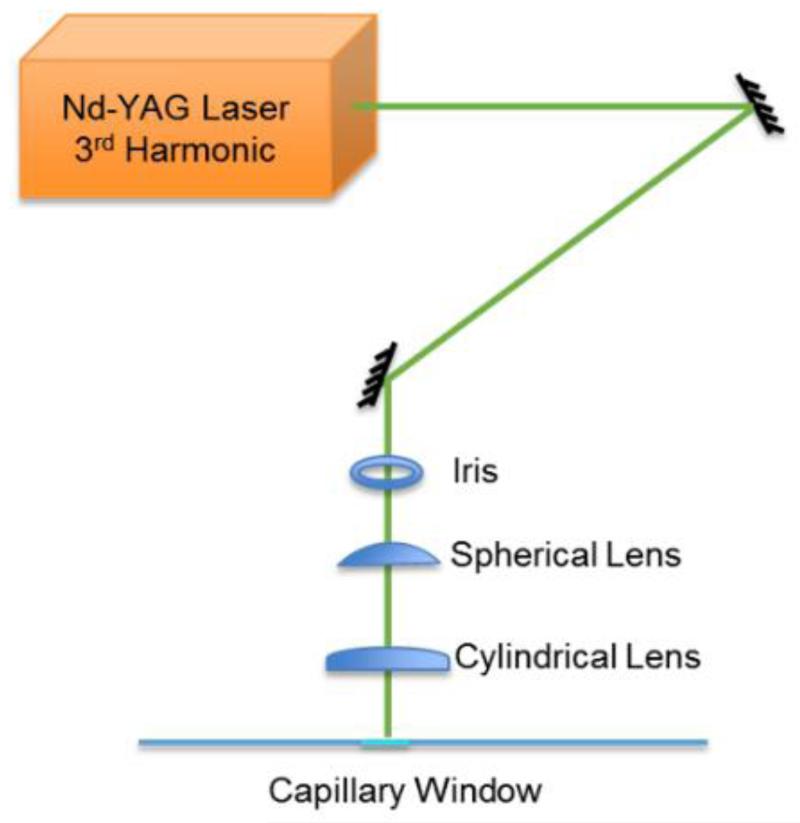
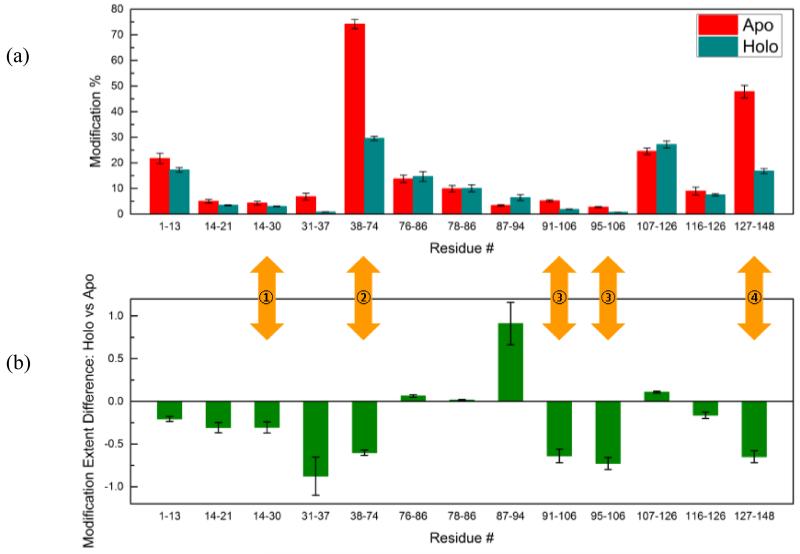
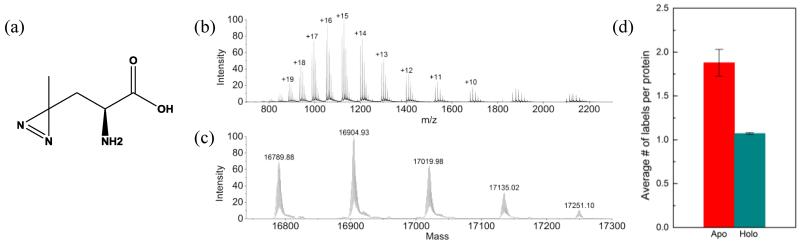
Protein footprinting combined with mass spectrometry provides a method to study protein structures and interactions. To improve further current protein footprinting methods, we adapted the fast photochemical oxidation of proteins (FPOP) platform to utilize carbenes as the footprinting reagent. A Nd-YAG laser provides 355 nm laser for carbene generation in situ from photoleucine as the carbene precursor in a flow system with calmodulin as the test protein. Reversed-phase liquid chromatography coupled with mass spectrometry is appropriate to analyze the modifications produced in this footprinting. By comparing the modification extent of apo and holo calmodulin on the peptide level, we can resolve different structural domains of the protein. Carbene footprinting in a flow system is promising.
蛋白质足迹分析与质谱联用提供了一种研究蛋白质结构和相互作用的方法。为了进一步改进当前的蛋白质足迹分析方法,我们对蛋白质快速光化学氧化(FPOP)平台进行了改进,以利用卡宾作为足迹分析试剂。钕钇铝石榴石激光在流动系统中提供355 nm激光,用于以光亮氨酸作为卡宾前体原位生成卡宾,以钙调蛋白作为测试蛋白。反相液相色谱与质谱联用适合分析这种足迹分析中产生的修饰。通过在肽水平上比较脱辅基钙调蛋白和全血钙调蛋白的修饰程度,我们可以解析该蛋白质的不同结构域。流动系统中的卡宾足迹分析前景广阔。