Passos-Castilho Ana Maria, Carvalho Valdemir Melechco, Cardozo Karina Helena Morais, Kikuchi Luciana, Chagas Aline Lopes, Gomes-Gouvêa Michele Soares, Malta Fernanda, de Seixas-Santos Nastri Ana Catharina, Pinho João Renato Rebello, Carrilho Flair José, Granato Celso Francisco Hernandes
Division of Infectious Diseases, Federal University of Sao Paulo, 781 Pedro de Toledo Street, 15th floor, Sao Paulo, SP, 04039032, Brazil.
Fleury Group, Sao Paulo, SP, Brazil.
BMC Cancer. 2015 Dec 18;15:985. doi: 10.1186/s12885-015-1995-1.
Chronic hepatitis B (CHB) virus infection is a major cause of hepatocellular carcinoma (HCC), as late diagnosis is the main factor for the poor survival of patients. There is an urgent need for accurate biomarkers for early diagnosis of HCC. The aim of the study was to explore the serum lipidome profiles of hepatitis B-related HCC to identify potential diagnostic biomarkers.
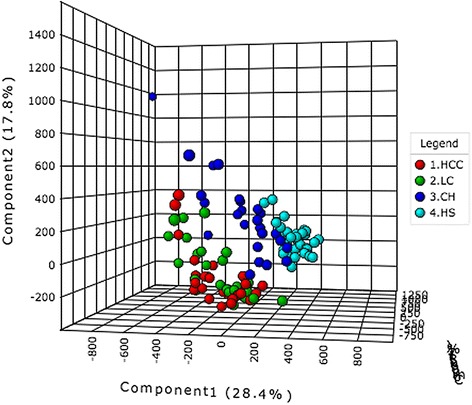
An ultraperformance liquid chromatography mass spectrometry (UPLC-MS) lipidomic method was used to characterize serum profiles from HCC (n = 32), liver cirrhosis (LC) (n = 30), CHB (n = 25), and healthy subjects (n = 34). Patients were diagnosed by clinical laboratory and imaging evidence and all presented with CHB while healthy controls had normal liver function and no infectious diseases.
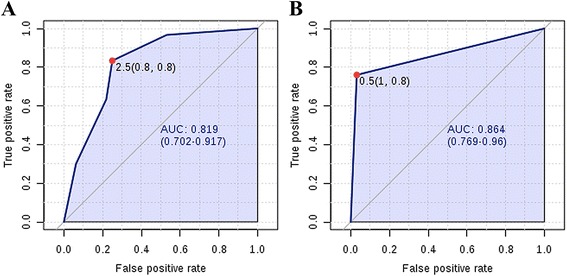
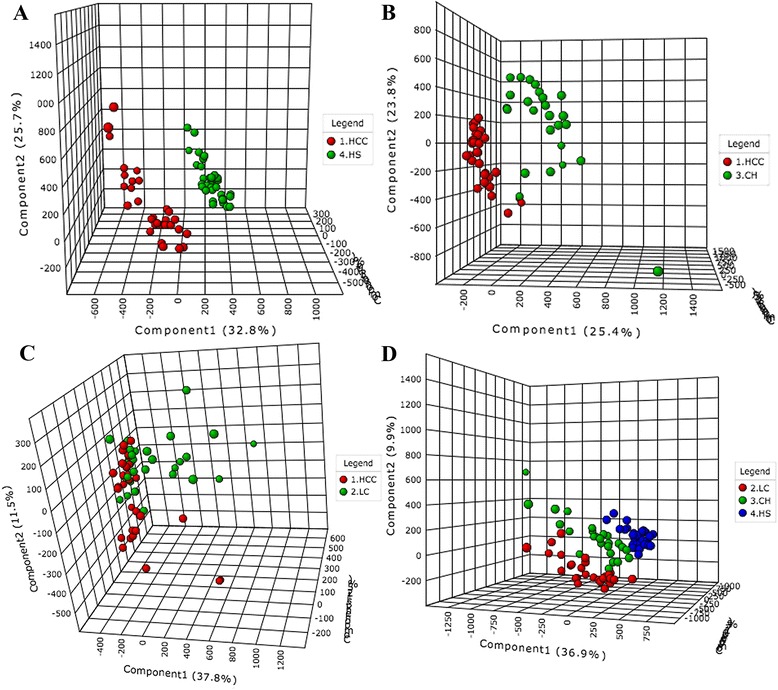
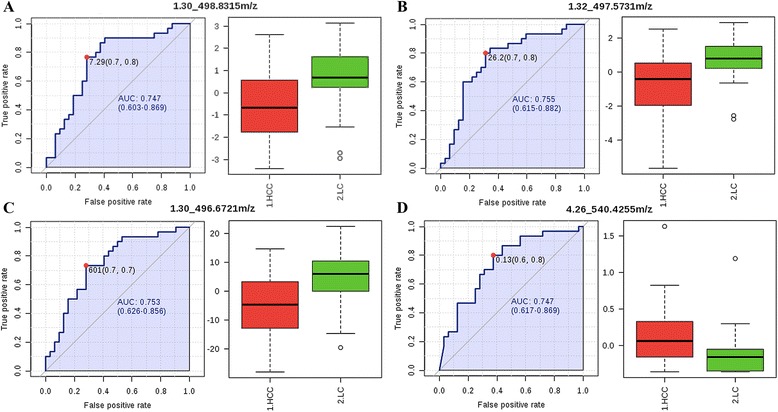
The UPLC-MS-based serum lipidomic profile provided more accurate diagnosis for LC patients than conventional alpha-fetoprotein (AFP) detection. HCC patients were discriminated from LC with 78 % sensitivity and 64 % specificity. In comparison, AFP showed sensitivity and specificity of 38 % and 93 %, respectively. HCC was differentiated from CHB with 100 % sensitivity and specificity using the UPLC-MS approach. Identified lipids comprised glycerophosphocolines, glycerophosphoserines and glycerophosphoinositols.
UPLC-MS lipid profiling proved to be an efficient and convenient tool for diagnosis and screening of HCC in a high-risk population.
慢性乙型肝炎(CHB)病毒感染是肝细胞癌(HCC)的主要病因,因为诊断延迟是患者生存不佳的主要因素。迫切需要用于HCC早期诊断的准确生物标志物。本研究的目的是探索乙型肝炎相关HCC的血清脂质组谱,以识别潜在的诊断生物标志物。
采用超高效液相色谱-质谱联用(UPLC-MS)脂质组学方法对HCC患者(n = 32)、肝硬化(LC)患者(n = 30)、CHB患者(n = 25)和健康受试者(n = 34)的血清谱进行表征。患者通过临床实验室和影像学证据进行诊断,所有患者均患有CHB,而健康对照者肝功能正常且无传染病。
基于UPLC-MS的血清脂质组谱比传统的甲胎蛋白(AFP)检测能为LC患者提供更准确的诊断。HCC患者与LC患者的鉴别敏感性为78%,特异性为64%。相比之下,AFP的敏感性和特异性分别为38%和93%。使用UPLC-MS方法,HCC与CHB的鉴别敏感性和特异性均为100%。鉴定出的脂质包括甘油磷酸胆碱、甘油磷酸丝氨酸和甘油磷酸肌醇。
UPLC-MS脂质分析被证明是在高危人群中诊断和筛查HCC的一种有效且便捷的工具。