Ismail Israa T, Elfert Ashraf, Helal Marwa, Salama Ibrahim, El-Said Hala, Fiehn Oliver
National Liver Institute, Menoufia University, Shebin El-Kom 55955, Egypt.
NIH West Coast Metabolomics Center, University of California Davis, Davis, CA 95616, USA.
Cancers (Basel). 2020 Dec 30;13(1):88. doi: 10.3390/cancers13010088.
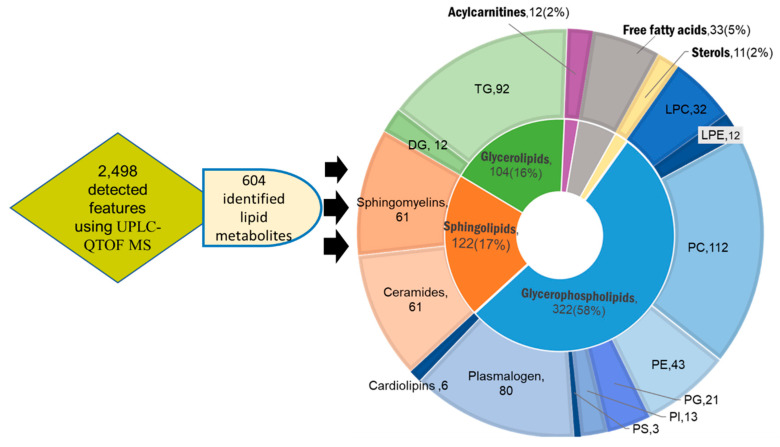
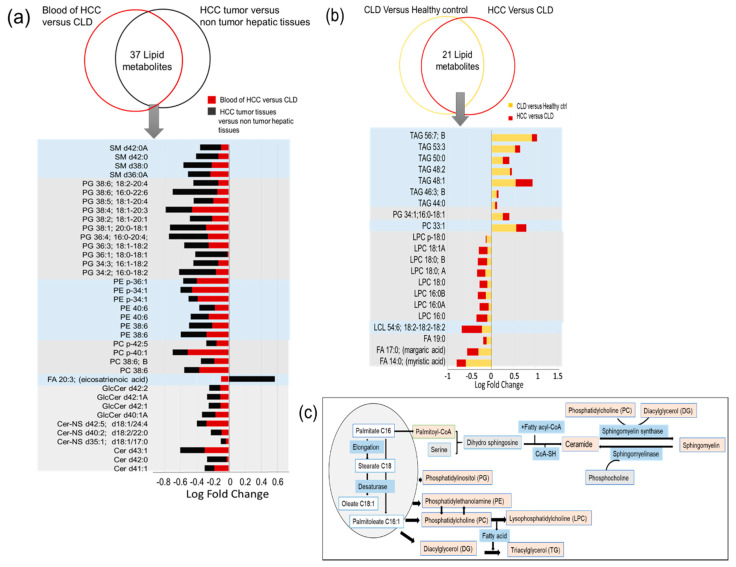
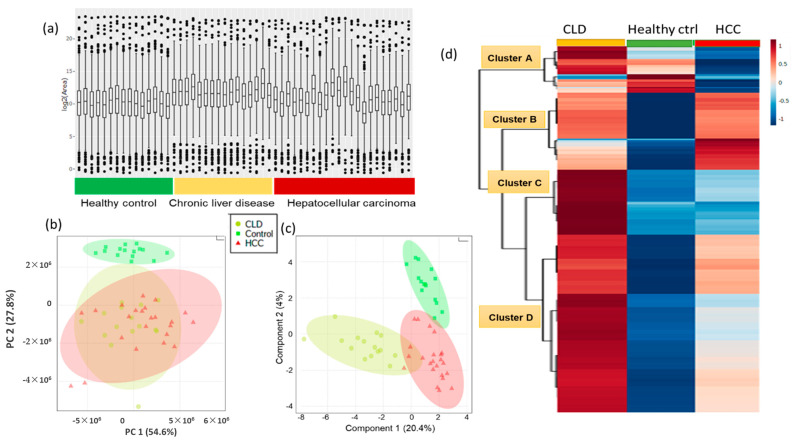
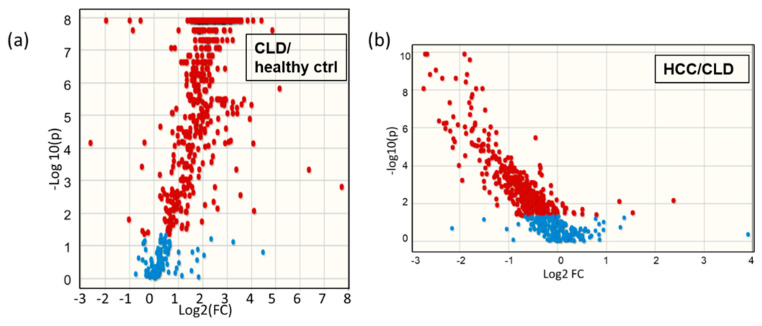
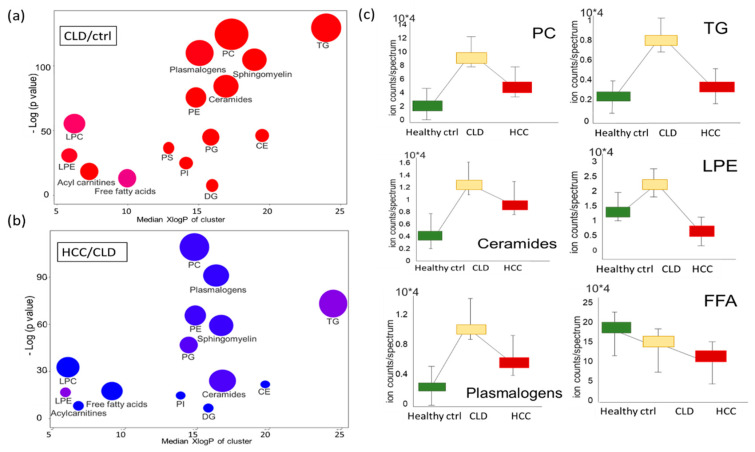
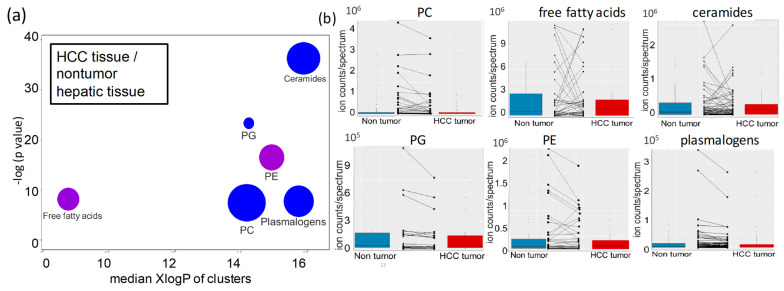
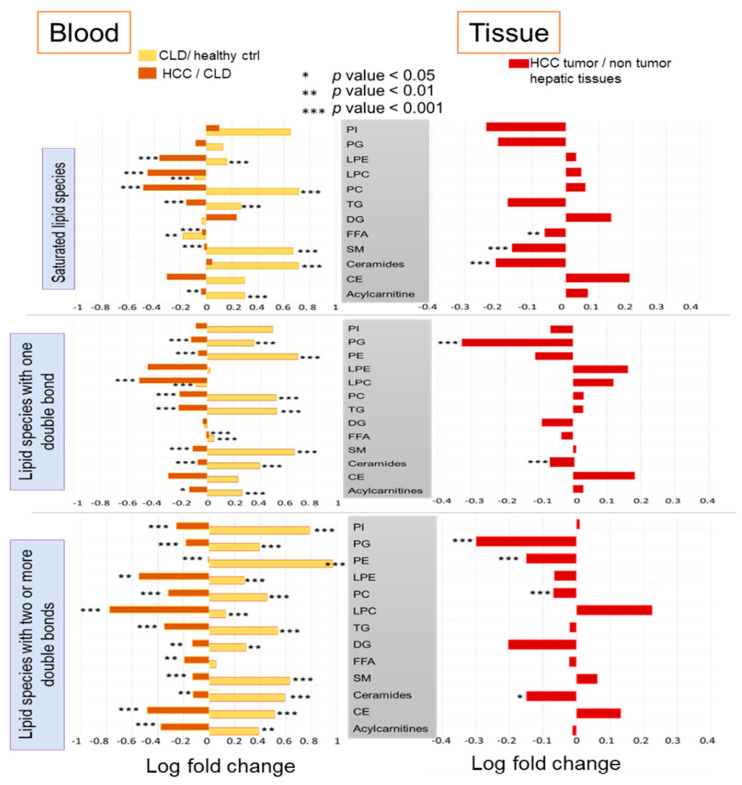
Hepatocellular carcinoma (HCC) is a worldwide health problem. HCC patients show a 50% mortality within two years of diagnosis. To better understand the molecular pathogenesis at the level of lipid metabolism, untargeted UPLC MS-QTOF lipidomics data were acquired from resected human HCC tissues and their paired nontumor hepatic tissues ( = 46). Blood samples of the same HCC subjects ( = 23) were compared to chronic liver disease (CLD) ( = 15) and healthy control ( = 15) blood samples. The participants were recruited from the National Liver Institute in Egypt. The lipidomics data yielded 604 identified lipids that were divided into six super classes. Five-hundred and twenty-four blood lipids were found as significantly differentiated ( < 0.05 and qFDR < 0.1) between the three study groups. In the blood of CLD patients compared to healthy control subjects, almost all lipid classes were significantly upregulated. In CLD patients, triacylglycerides were found as the most significantly upregulated lipid class at qFDR = 1.3 × 10, followed by phosphatidylcholines at qFDR = 3.3 × 10 and plasmalogens at qFDR = 1.8 × 10. In contrast, almost all blood lipids were significantly downregulated in HCC patients compared to CLD patients, and in HCC tissues compared to nontumor hepatic tissues. Ceramides were found as the most significant lipid class (qFDR = 1 × 10) followed by phosphatidylglycerols (qFDR = 3 × 10), phosphatidylcholines and plasmalogens. Despite these major differences, there were also common trends in the transitions between healthy controls, CLD and HCC patients. In blood, several mostly saturated triacylglycerides showed a continued increase in the trajectory towards HCC, accompanied by reduced levels of saturated free fatty acids and saturated lysophospatidylcholines. In contrast, the largest overlaps of lipid alterations that were found in both HCC tissue and blood comparisons were decreased levels of phosphatidylglycerols and sphingolipids. This study highlights the specific impact of HCC tumors on the circulating lipids. Such data may be used to target lipid metabolism for prevention, early detection and treatment of HCC in the background of viral-related CLD etiology.
肝细胞癌(HCC)是一个全球性的健康问题。HCC患者在确诊后两年内的死亡率为50%。为了更好地了解脂质代谢水平上的分子发病机制,我们从46例切除的人类HCC组织及其配对的非肿瘤肝组织中获取了非靶向超高效液相色谱-质谱联用四极杆飞行时间质谱脂质组学数据。将相同HCC受试者(n = 23)的血液样本与慢性肝病(CLD)患者(n = 15)和健康对照者(n = 15)的血液样本进行比较。参与者来自埃及国家肝脏研究所。脂质组学数据产生了604种已鉴定的脂质,分为六个超类。在三个研究组之间发现524种血脂有显著差异(P < 0.05且qFDR < 0.1)。与健康对照受试者相比,CLD患者血液中几乎所有脂质类别均显著上调。在CLD患者中,甘油三酯是qFDR = 1.3×10时上调最显著的脂质类别,其次是qFDR = 3.3×10时的磷脂酰胆碱和qFDR = 1.8×10时的缩醛磷脂。相比之下,与CLD患者相比,HCC患者血液中几乎所有血脂均显著下调,与非肿瘤肝组织相比,HCC组织中的血脂也显著下调。神经酰胺是最显著的脂质类别(qFDR = 1×10),其次是磷脂酰甘油(qFDR = 3×10)、磷脂酰胆碱和缩醛磷脂。尽管存在这些主要差异,但在健康对照者、CLD患者和HCC患者之间的转变中也存在共同趋势。在血液中,几种主要为饱和的甘油三酯在向HCC发展的轨迹中持续增加,同时饱和游离脂肪酸和饱和溶血磷脂酰胆碱水平降低。相比之下,在HCC组织和血液比较中发现的脂质改变的最大重叠部分是磷脂酰甘油和鞘脂水平降低。这项研究突出了HCC肿瘤对循环脂质的特定影响。这些数据可用于在病毒相关CLD病因背景下,针对脂质代谢进行HCC的预防、早期检测和治疗。