Gonella-Diaza Angela María, Andrade Sónia Cristina da Silva, Sponchiado Mariana, Pugliesi Guilherme, Mesquita Fernando Silveira, Van Hoeck Veerle, Strefezzi Ricardo de Francisco, Gasparin Gustavo R, Coutinho Luiz L, Binelli Mario
Faculdade de Medicina Veterinária e Zootecnia, Universidade de São Paulo, Pirassununga, São Paulo, Brazil.
Laboratório de Biotecnologia Animal, Escola Superior de Agricultura Luiz de Queiroz, Universidade de São Paulo, Av Pádua Dias, 11, Piracicaba, SP, Brazil.
PLoS One. 2015 Dec 23;10(12):e0145321. doi: 10.1371/journal.pone.0145321. eCollection 2015.
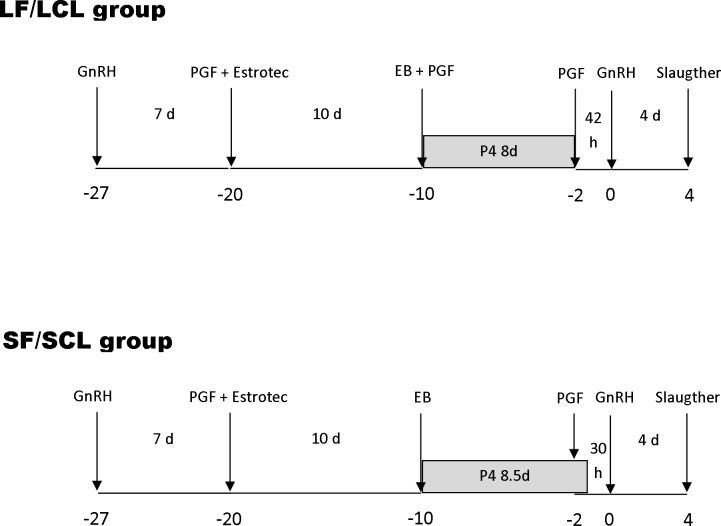
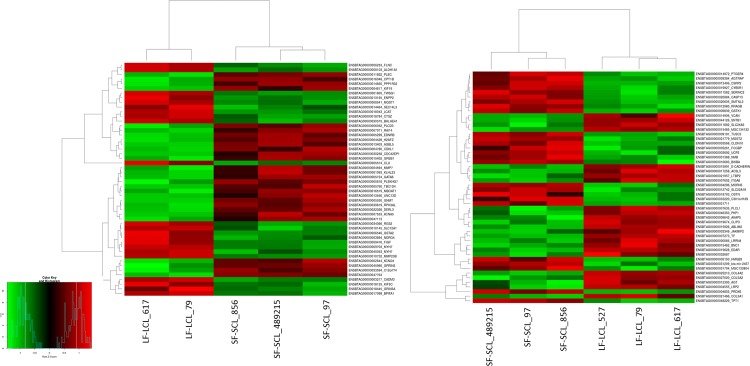
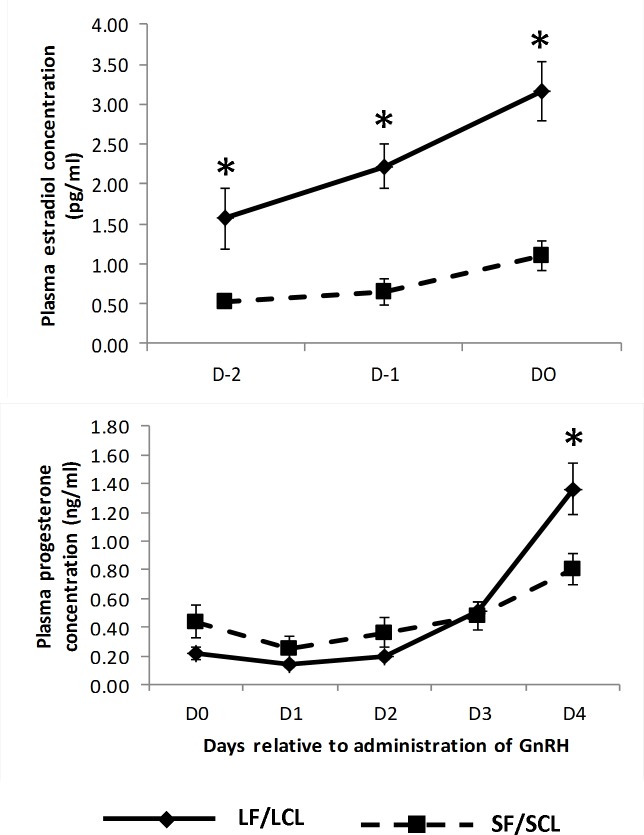
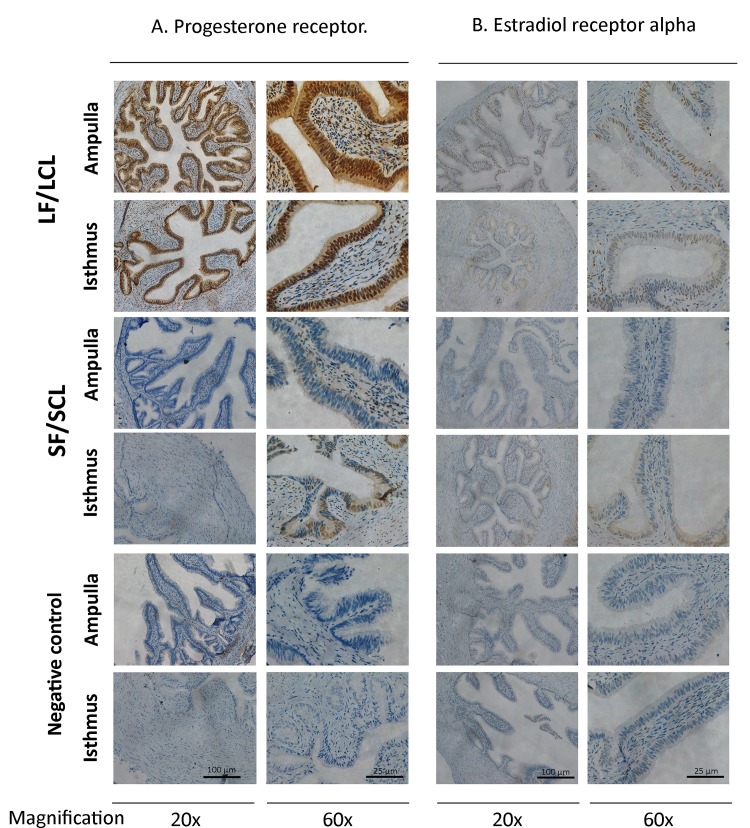
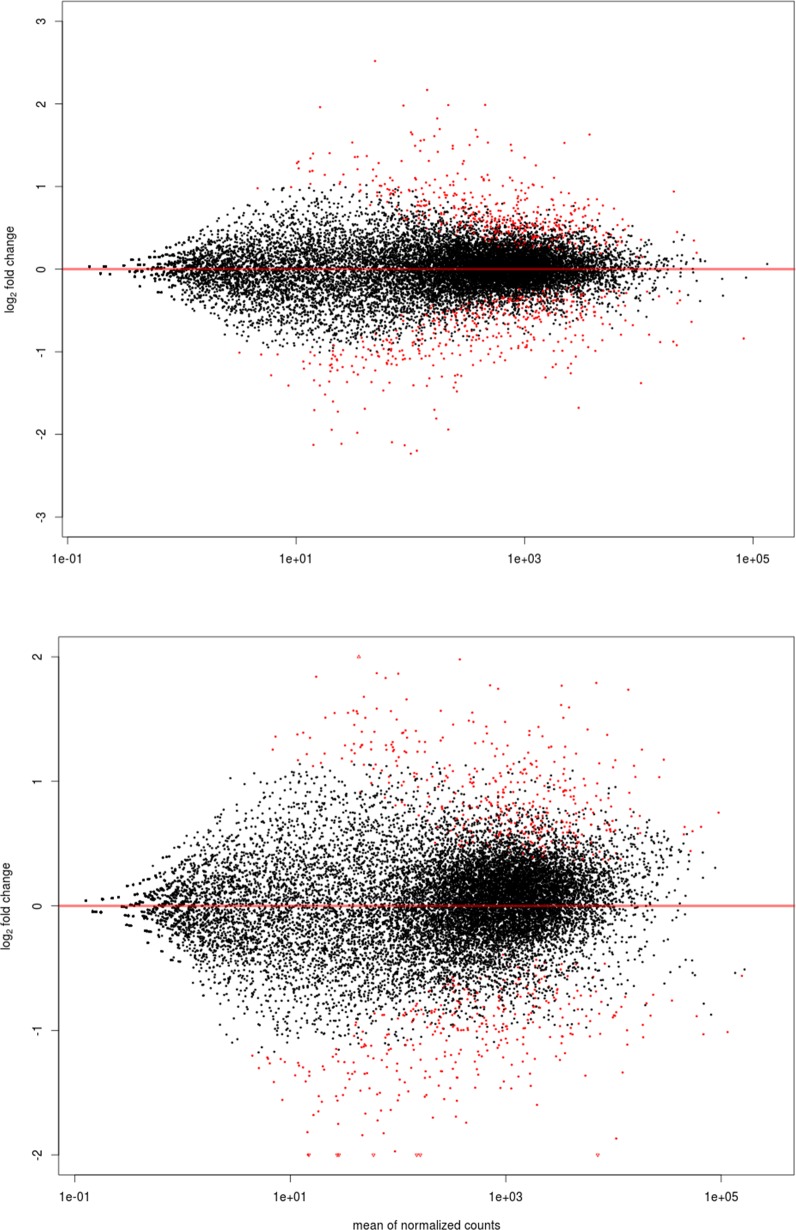
In cattle, molecular control of oviduct receptivity to the embryo is poorly understood. Here, we used a bovine model for receptivity based on size of the pre-ovulatory follicle to compare oviductal global and candidate gene transcript abundance on day 4 of the estrous cycle. Growth of the pre-ovulatory follicle (POF) of Nelore (Bos indicus) cows was manipulated to produce two groups: large POF large corpus luteum (CL) group (LF-LCL; greater receptivity) and small POF-small CL group (SF-SCL). Oviductal samples were collected four days after GnRH-induced ovulation. Ampulla and isthmus transcriptome was obtained by RNA-seq, regional gene expression was assessed by qPCR, and PGR and ERa protein distribution was evaluated by immunohistochemistry. There was a greater abundance of PGR and ERa in the oviduct of LF-LCL animals thus indicating a greater availability of receptors and possibly sex steroids stimulated signaling in both regions. Transcriptomic profiles indicated a series of genes associated with functional characteristics of the oviduct that are regulated by the periovulatory sex steroid milieu and that potentially affect oviductal receptivity and early embryo development. They include tissue morphology changes (extra cellular matrix remodeling), cellular changes (proliferation), and secretion changes (growth factors, ions and metal transporters), and were enriched for the genes with increased expression in the LF-LCL group. In conclusion, differences in the periovulatory sex steroid milieu lead to different oviductal gene expression profiles that could modify the oviductal environment to affect embryo survival and development.
在牛中,输卵管对胚胎接受性的分子调控机制尚不清楚。在此,我们基于排卵前卵泡大小建立了一个牛的接受性模型,以比较发情周期第4天输卵管整体和候选基因的转录本丰度。通过控制内洛尔(瘤牛)母牛排卵前卵泡(POF)的生长,产生了两组:大POF-大黄体(CL)组(LF-LCL;接受性更强)和小POF-小CL组(SF-SCL)。在GnRH诱导排卵4天后收集输卵管样本。通过RNA测序获得壶腹部和峡部的转录组,通过qPCR评估区域基因表达,并通过免疫组织化学评估PGR和ERα蛋白分布。LF-LCL组动物的输卵管中PGR和ERα的丰度更高,这表明两个区域中受体的可用性更高,并且可能存在性类固醇刺激的信号传导。转录组谱表明,一系列与输卵管功能特征相关的基因受排卵前后性类固醇环境调控,并可能影响输卵管的接受性和早期胚胎发育。这些基因包括组织形态变化(细胞外基质重塑)、细胞变化(增殖)和分泌变化(生长因子、离子和金属转运蛋白),并且在LF-LCL组中表达增加的基因显著富集。总之,排卵前后性类固醇环境的差异导致不同的输卵管基因表达谱,这可能会改变输卵管环境,从而影响胚胎的存活和发育。