Zhao Guangyu, Jiang Yuting, Qiu Hongjie, Gao Tongtong, Zeng Yang, Guo Yan, Yu Hong, Li Junfeng, Kou Zhihua, Du Lanying, Tan Wenjie, Jiang Shibo, Sun Shihui, Zhou Yusen
State Key Laboratory of Pathogen and Biosecurity, Beijing Institute of Microbiology and Epidemiology, Beijing, 100071, China.
Lindsley F. Kimball Research Institute, New York Blood Center, New York, New York, 10065, United States of America.
PLoS One. 2015 Dec 23;10(12):e0145561. doi: 10.1371/journal.pone.0145561. eCollection 2015.
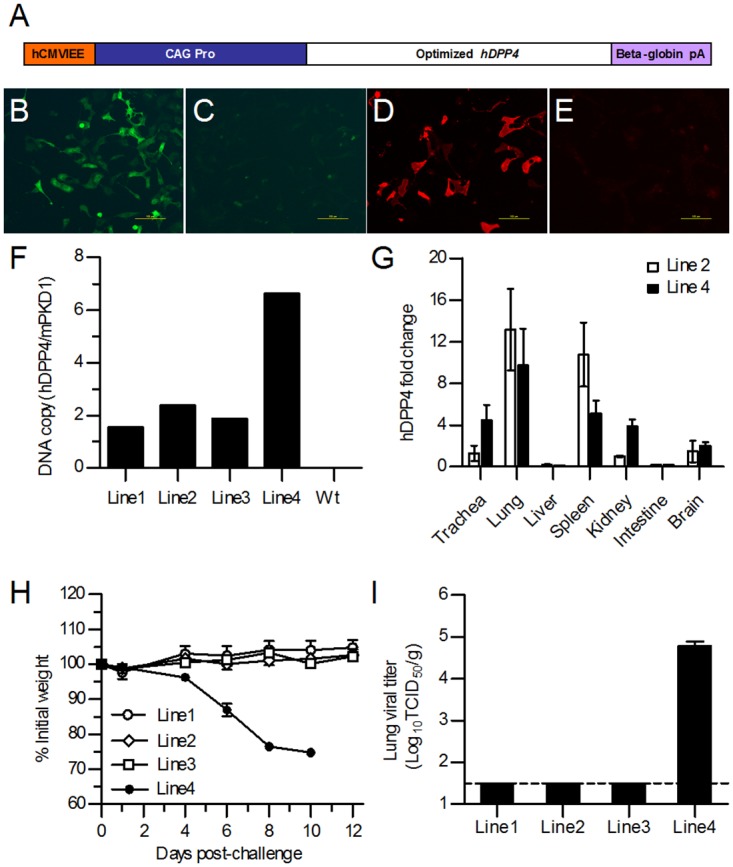
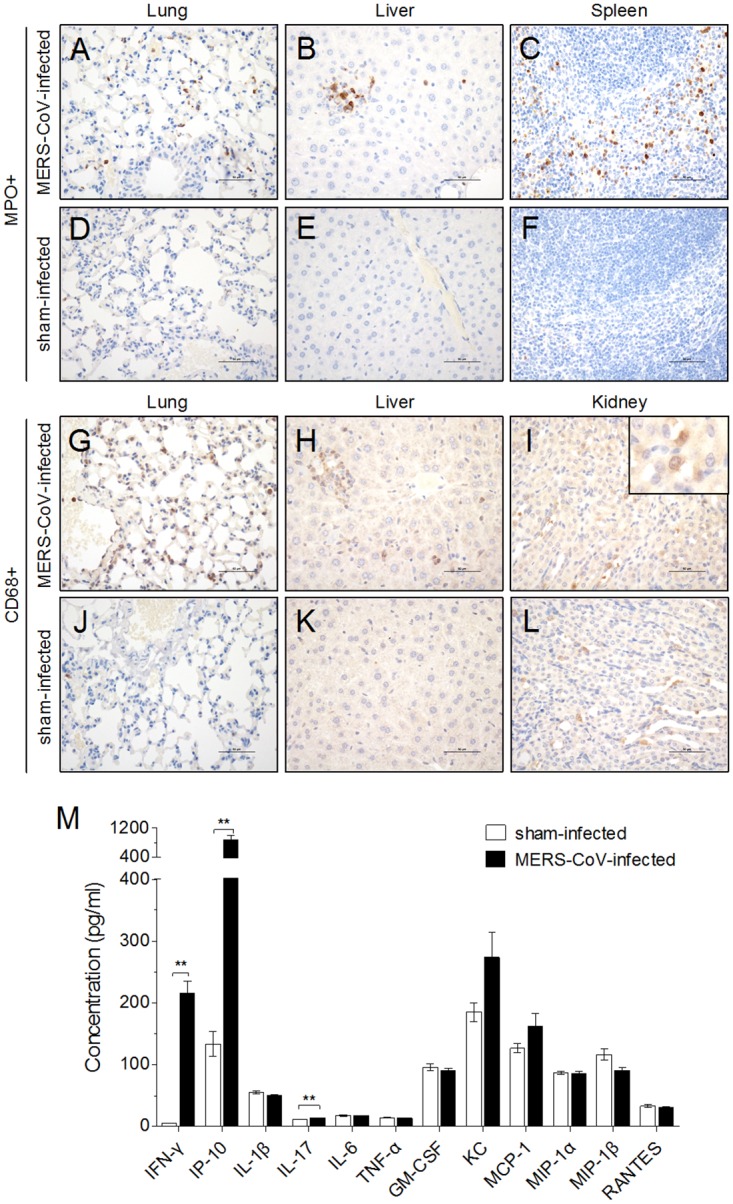
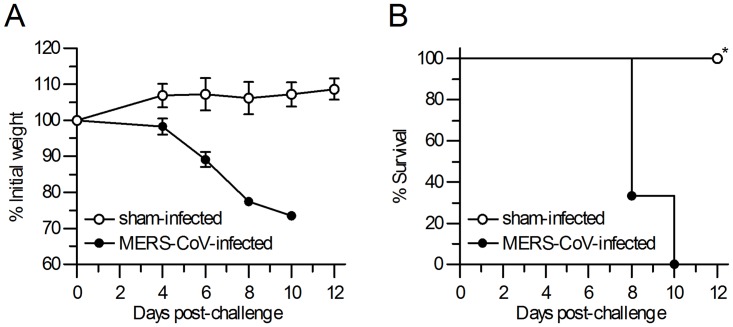
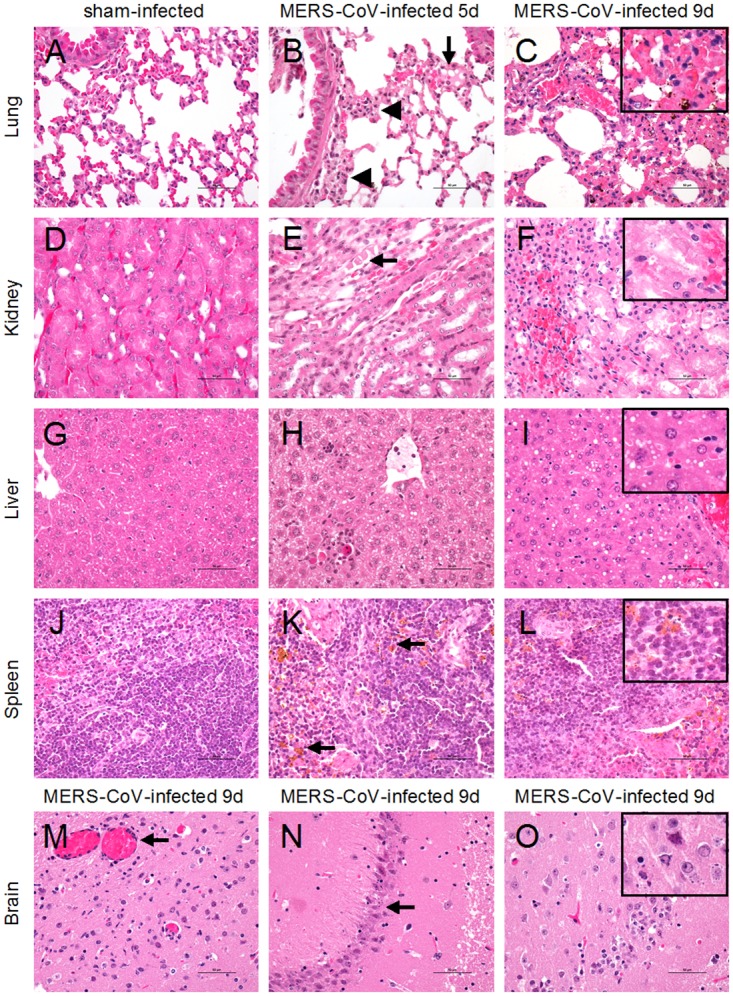
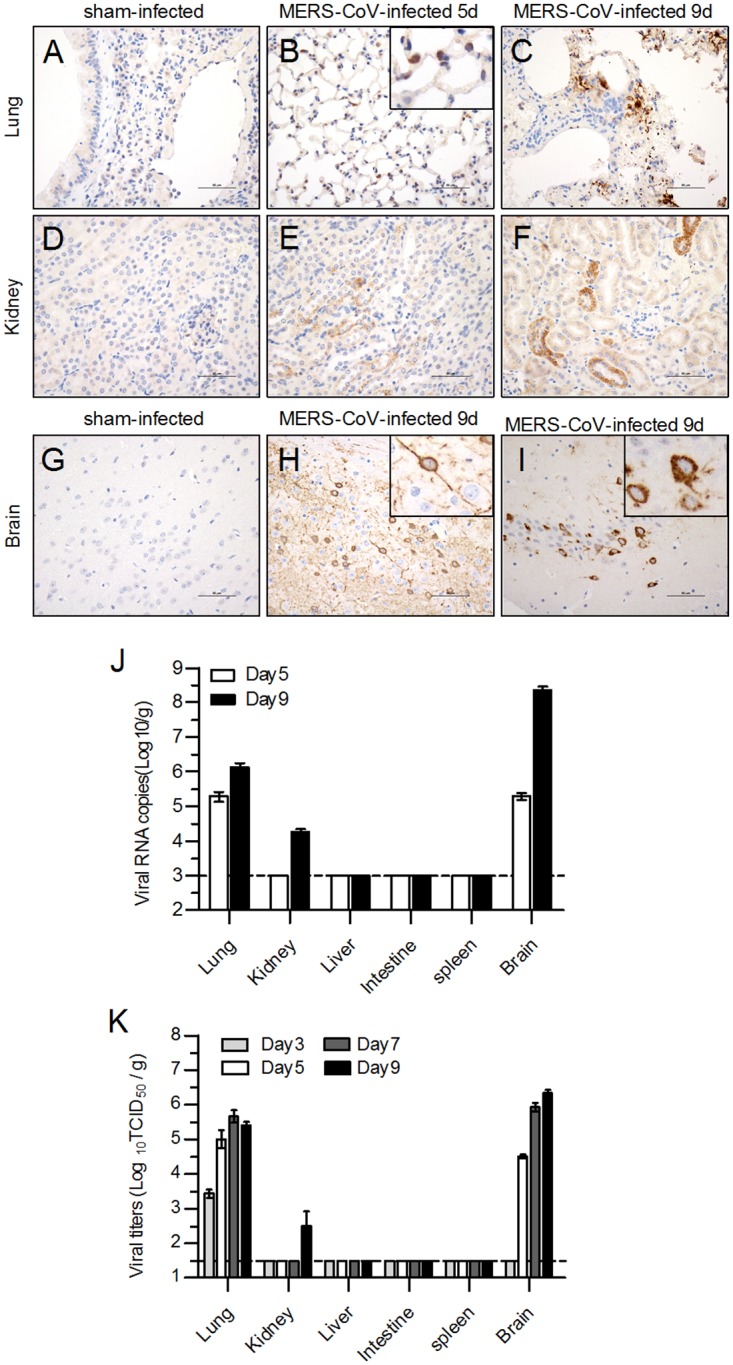
The Middle East Respiratory Syndrome Coronavirus (MERS-CoV) causes severe acute respiratory failure and considerable extrapumonary organ dysfuction with substantial high mortality. For the limited number of autopsy reports, small animal models are urgently needed to study the mechanisms of MERS-CoV infection and pathogenesis of the disease and to evaluate the efficacy of therapeutics against MERS-CoV infection. In this study, we developed a transgenic mouse model globally expressing codon-optimized human dipeptidyl peptidase 4 (hDPP4), the receptor for MERS-CoV. After intranasal inoculation with MERS-CoV, the mice rapidly developed severe pneumonia and multi-organ damage, with viral replication being detected in the lungs on day 5 and in the lungs, kidneys and brains on day 9 post-infection. In addition, the mice exhibited systemic inflammation with mild to severe pneumonia accompanied by the injury of liver, kidney and spleen with neutrophil and macrophage infiltration. Importantly, the mice exhibited symptoms of paralysis with high viral burden and viral positive neurons on day 9. Taken together, this study characterizes the tropism of MERS-CoV upon infection. Importantly, this hDPP4-expressing transgenic mouse model will be applicable for studying the pathogenesis of MERS-CoV infection and investigating the efficacy of vaccines and antiviral agents designed to combat MERS-CoV infection.
中东呼吸综合征冠状病毒(MERS-CoV)可导致严重的急性呼吸衰竭和相当程度的肺外器官功能障碍,死亡率极高。鉴于尸检报告数量有限,迫切需要小动物模型来研究MERS-CoV感染机制和疾病发病机制,并评估针对MERS-CoV感染的治疗方法的疗效。在本研究中,我们构建了一种全球表达密码子优化的人二肽基肽酶4(hDPP4,MERS-CoV的受体)的转基因小鼠模型。经鼻接种MERS-CoV后,小鼠迅速出现严重肺炎和多器官损伤,感染后第5天在肺中检测到病毒复制,第9天在肺、肾和脑中检测到病毒复制。此外,小鼠表现出全身炎症,伴有轻度至重度肺炎,并伴有肝、肾和脾损伤以及中性粒细胞和巨噬细胞浸润。重要的是,在第9天小鼠出现麻痹症状,病毒载量高且神经元呈病毒阳性。综上所述,本研究描述了MERS-CoV感染后的嗜性。重要的是,这种表达hDPP4的转基因小鼠模型将适用于研究MERS-CoV感染的发病机制,并研究旨在对抗MERS-CoV感染的疫苗和抗病毒药物的疗效。