Gain Chandrima, Song Sihyeong, Angtuaco Tyler, Satta Sandro, Kelesidis Theodoros
Department of Medicine, Division of Infectious Diseases, University of California, Los Angeles, Los Angeles, CA, United States.
Front Microbiol. 2023 Jan 13;13:1111930. doi: 10.3389/fmicb.2022.1111930. eCollection 2022.
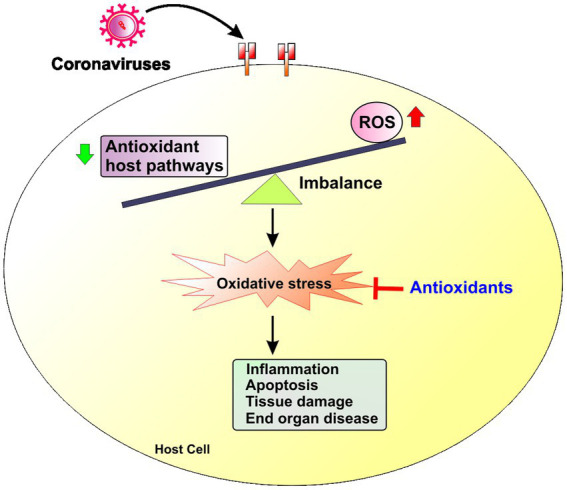
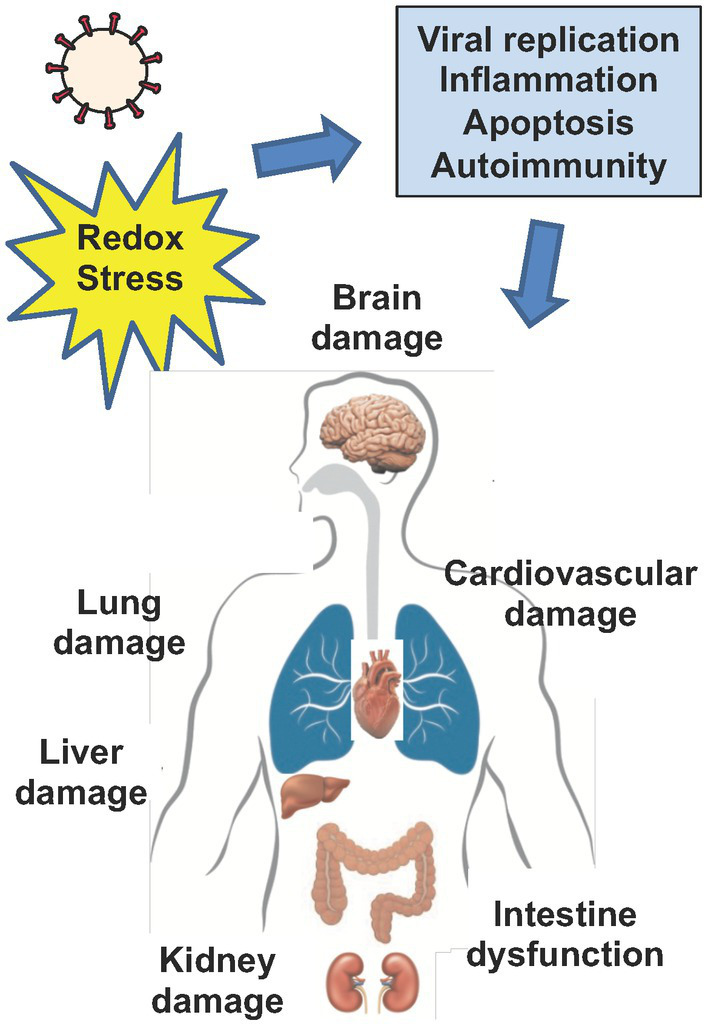
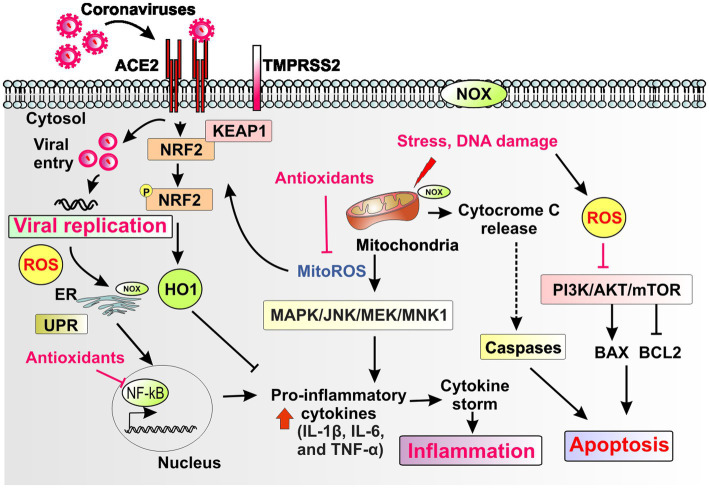
Coronaviruses can cause serious respiratory tract infections and may also impact other end organs such as the central nervous system, the lung and the heart. The coronavirus disease 2019 (COVID-19) has had a devastating impact on humanity. Understanding the mechanisms that contribute to the pathogenesis of coronavirus infections, will set the foundation for development of new treatments to attenuate the impact of infections with coronaviruses on host cells and tissues. During infection of host cells, coronaviruses trigger an imbalance between increased production of reactive oxygen species (ROS) and reduced antioxidant host responses that leads to increased redox stress. Subsequently, increased redox stress contributes to reduced antiviral host responses and increased virus-induced inflammation and apoptosis that ultimately drive cell and tissue damage and end organ disease. However, there is limited understanding how different coronaviruses including SARS-CoV-2, manipulate cellular machinery that drives redox responses. This review aims to elucidate the redox mechanisms involved in the replication of coronaviruses and associated inflammation, apoptotic pathways, autoimmunity, vascular dysfunction and tissue damage that collectively contribute to multiorgan damage.
冠状病毒可引起严重的呼吸道感染,还可能影响其他终末器官,如中枢神经系统、肺和心脏。2019年冠状病毒病(COVID-19)对人类产生了毁灭性影响。了解导致冠状病毒感染发病机制的因素,将为开发新的治疗方法奠定基础,以减轻冠状病毒感染对宿主细胞和组织的影响。在宿主细胞感染期间,冠状病毒会引发活性氧(ROS)产生增加与宿主抗氧化反应降低之间的失衡,从而导致氧化还原应激增加。随后,氧化还原应激增加会导致宿主抗病毒反应降低,病毒诱导的炎症和细胞凋亡增加,最终导致细胞和组织损伤以及终末器官疾病。然而,对于包括严重急性呼吸综合征冠状病毒2(SARS-CoV-2)在内的不同冠状病毒如何操纵驱动氧化还原反应的细胞机制,人们了解有限。本综述旨在阐明冠状病毒复制过程中涉及的氧化还原机制以及相关的炎症、凋亡途径、自身免疫、血管功能障碍和组织损伤,这些共同导致多器官损伤。