Fuchs Elke C, Neitz Angela, Pinna Roberta, Melzer Sarah, Caputi Antonio, Monyer Hannah
Department of Clinical Neurobiology, Medical Faculty of Heidelberg University and German Cancer Research Center (DKFZ), Im Neuenheimer Feld 280, 69120 Heidelberg, Germany.
Department of Clinical Neurobiology, Medical Faculty of Heidelberg University and German Cancer Research Center (DKFZ), Im Neuenheimer Feld 280, 69120 Heidelberg, Germany.
Neuron. 2016 Jan 6;89(1):194-208. doi: 10.1016/j.neuron.2015.11.029. Epub 2015 Dec 17.
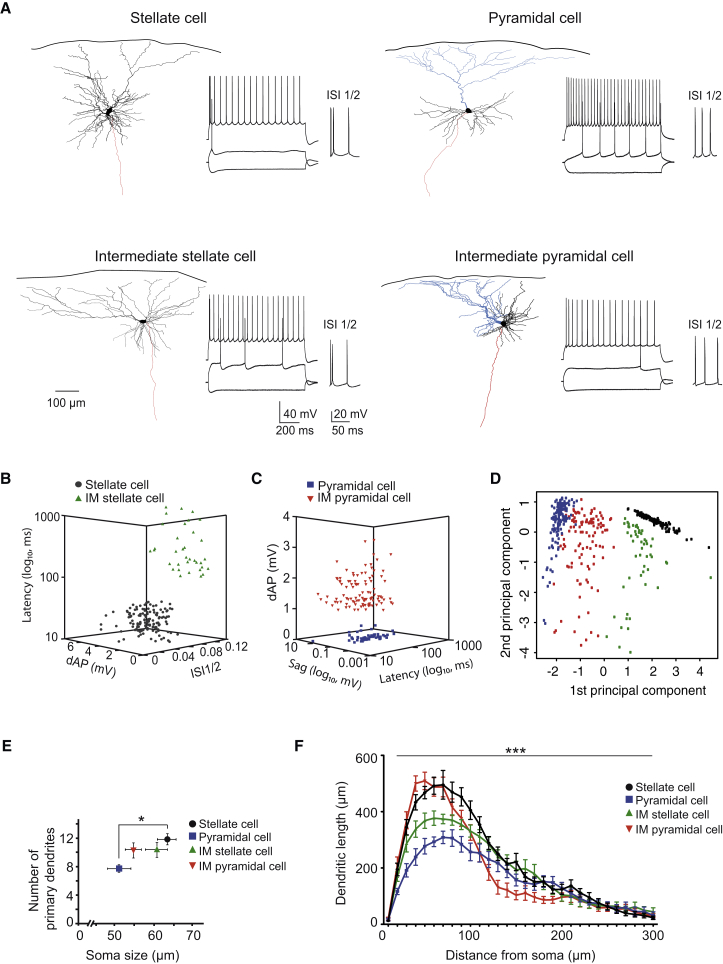
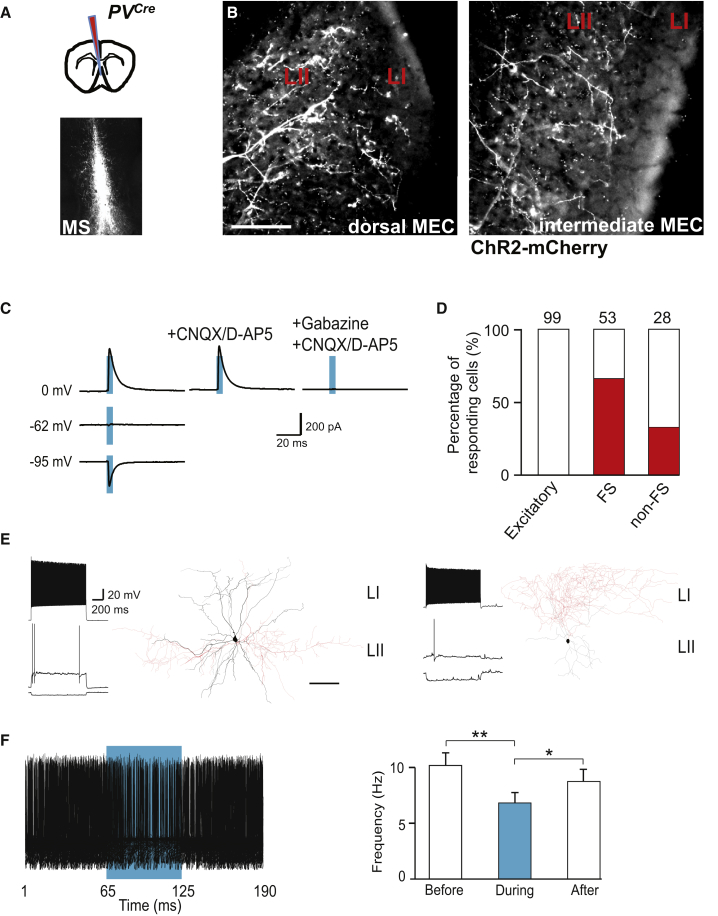
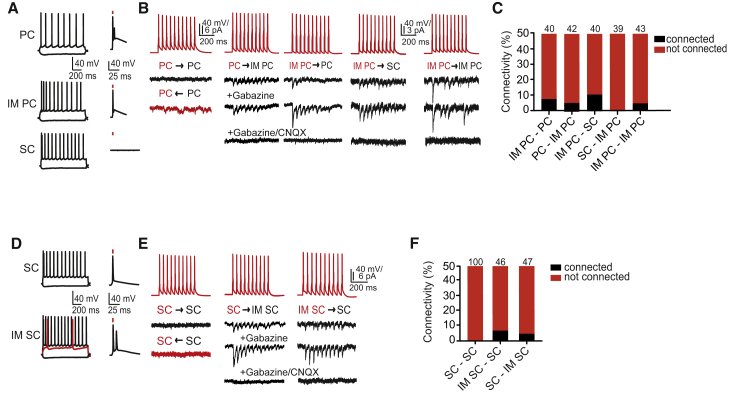
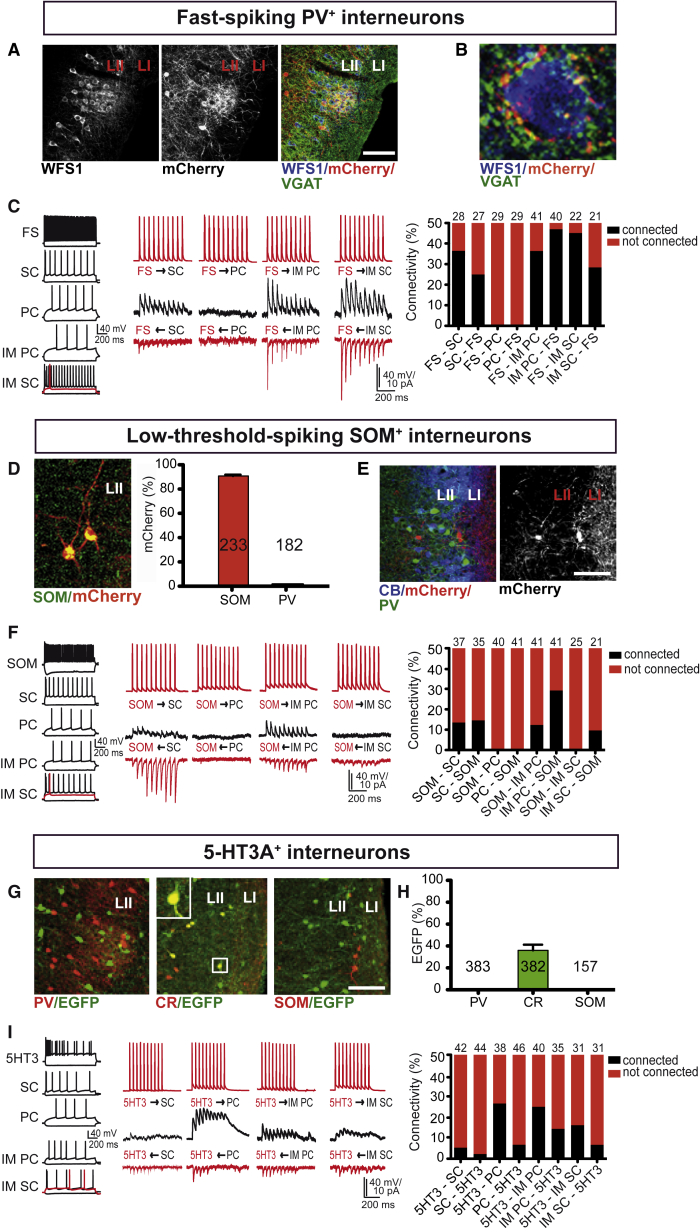
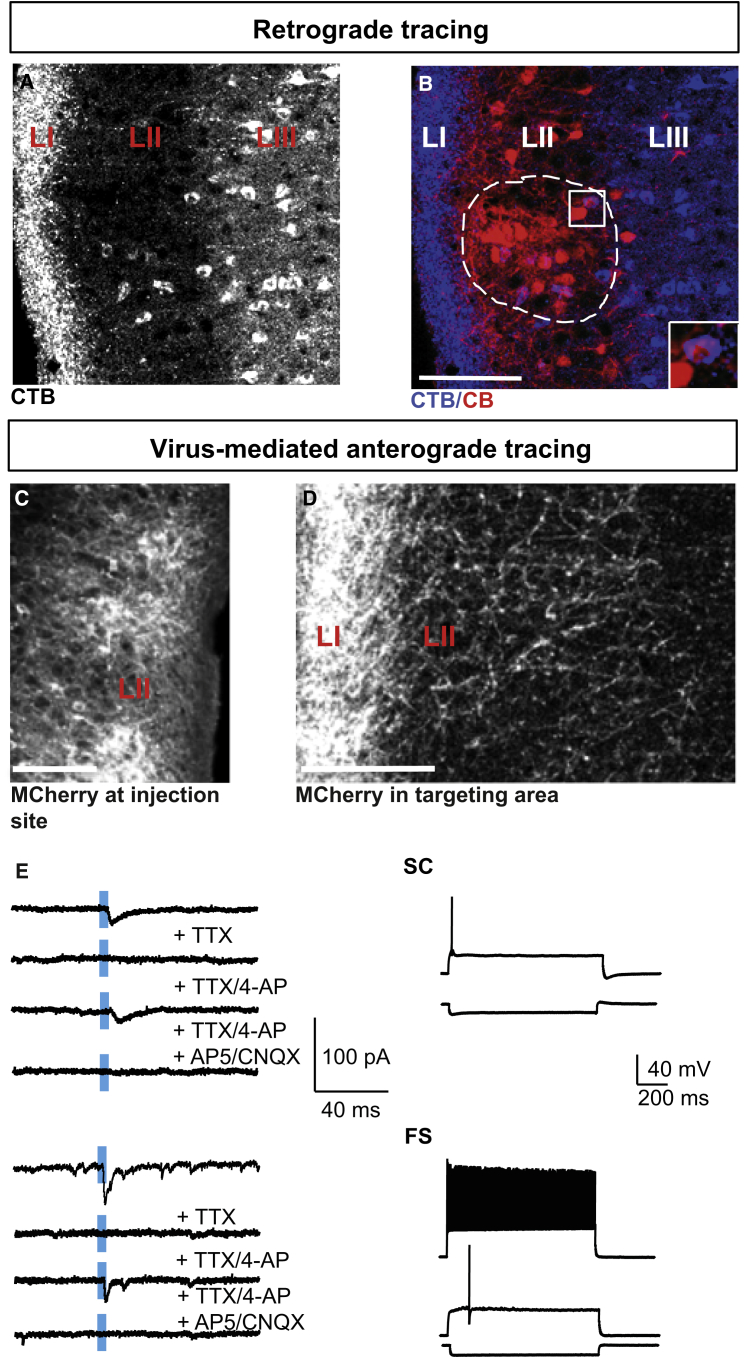
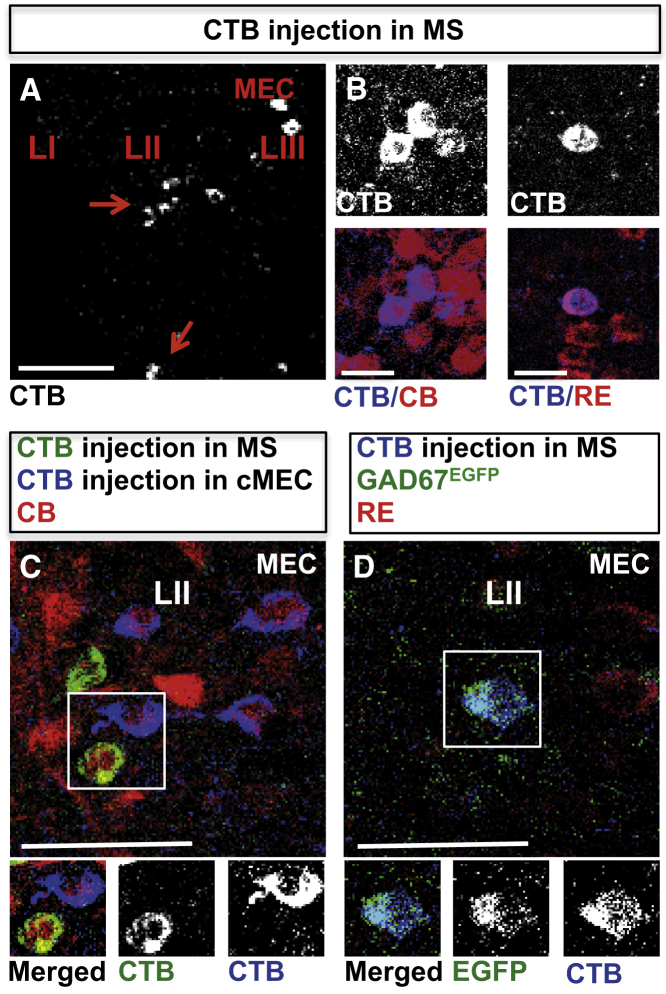
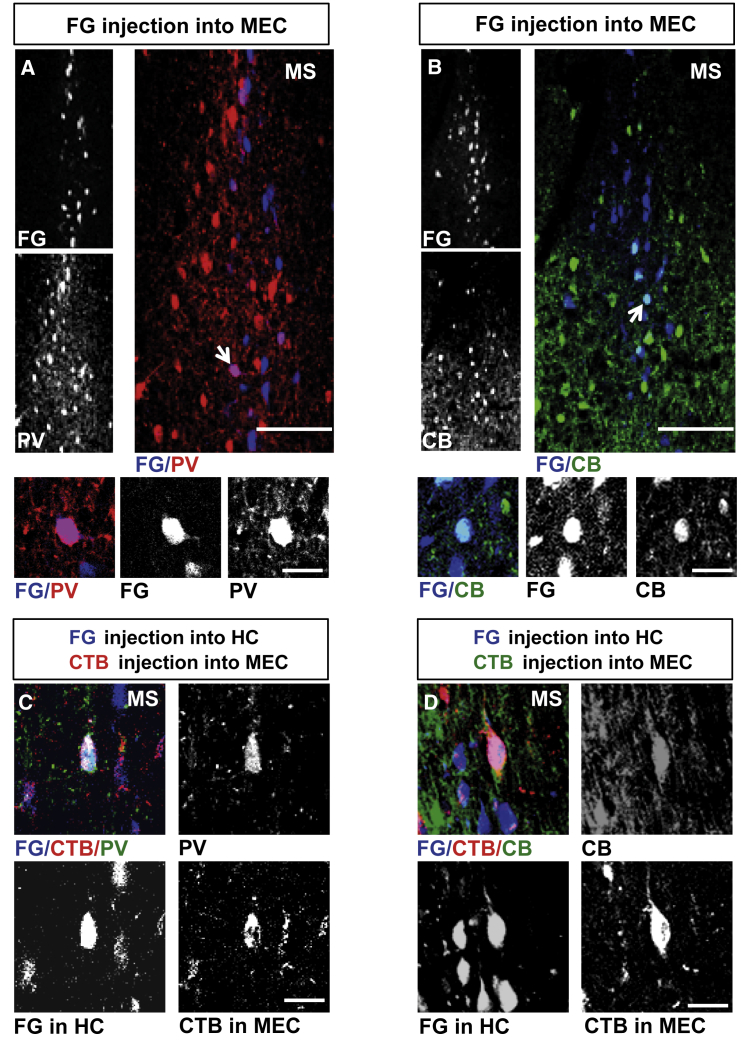
Layer II (LII) of the medial entorhinal cortex (MEC) comprises grid cells that support spatial navigation. The firing pattern of grid cells might be explained by attractor dynamics in a network, which requires either direct excitatory connectivity between phase-specific grid cells or indirect coupling via interneurons. However, knowledge regarding local networks that support in vivo activity is incomplete. Here we identified essential components of LII networks in the MEC. We distinguished four types of excitatory neurons that exhibit cell-type-specific local excitatory and inhibitory connectivity. Furthermore, we found that LII neurons contribute to the excitation of contralateral neurons in the corresponding layer. Finally, we demonstrated that the medial septum controls excitation in the MEC via two subpopulations of long-range GABAergic neurons that target distinct interneurons in LII, thereby disinhibiting local circuits. We thus identified local connections that could support attractor dynamics and external inputs that likely govern excitation in LII.
内侧内嗅皮质(MEC)的第II层(LII)包含支持空间导航的网格细胞。网格细胞的放电模式可能由网络中的吸引子动力学来解释,这需要特定相位的网格细胞之间直接的兴奋性连接或通过中间神经元的间接耦合。然而,关于支持体内活动的局部网络的知识并不完整。在这里,我们确定了MEC中LII网络的基本组成部分。我们区分了四种类型的兴奋性神经元,它们表现出细胞类型特异性的局部兴奋性和抑制性连接。此外,我们发现LII神经元有助于相应层中对侧神经元的兴奋。最后,我们证明内侧隔通过两个远程GABA能神经元亚群控制MEC中的兴奋,这两个亚群靶向LII中不同的中间神经元,从而解除对局部回路的抑制。因此,我们确定了可以支持吸引子动力学的局部连接以及可能控制LII中兴奋的外部输入。