Dallas David C, Sanctuary Megan R, Qu Yunyao, Khajavi Shabnam Haghighat, Van Zandt Alexandria E, Dyandra Melissa, Frese Steven A, Barile Daniela, German J Bruce
a Department of Food Science and Technology , University of California, Davis , Davis , California , USA.
b Foods for Health Institute , University of California, Davis , Davis , California , USA.
Crit Rev Food Sci Nutr. 2017 Oct 13;57(15):3313-3331. doi: 10.1080/10408398.2015.1117412.
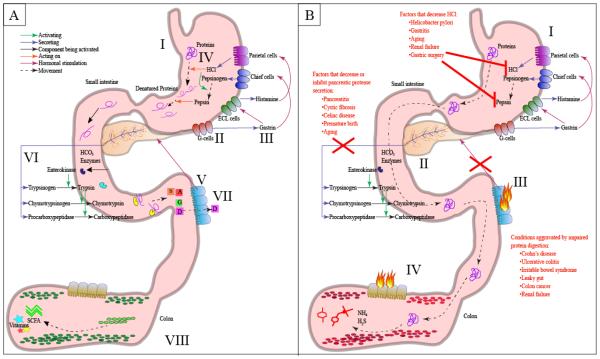
Proteins are not equally digestible-their proteolytic susceptibility varies by their source and processing method. Incomplete digestion increases colonic microbial protein fermentation (putrefaction), which produces toxic metabolites that can induce inflammation in vitro and have been associated with inflammation in vivo. Individual humans differ in protein digestive capacity based on phenotypes, particularly disease states. To avoid putrefaction-induced intestinal inflammation, protein sources, and processing methods must be tailored to the consumer's digestive capacity. This review explores how food processing techniques alter protein digestibility and examines how physiological conditions alter digestive capacity. Possible solutions to improving digestive function or matching low digestive capacity with more digestible protein sources are explored. Beyond the ileal digestibility measurements of protein digestibility, less invasive, quicker and cheaper techniques for monitoring the extent of protein digestion and fermentation are needed to personalize protein nourishment. Biomarkers of protein digestive capacity and efficiency can be identified with the toolsets of peptidomics, metabolomics, microbial sequencing and multiplexed protein analysis of fecal and urine samples. By monitoring individual protein digestive function, the protein component of diets can be tailored via protein source and processing selection to match individual needs to minimize colonic putrefaction and, thus, optimize gut health.
蛋白质的消化率并不相同,其蛋白水解敏感性因来源和加工方法而异。消化不完全会增加结肠微生物蛋白发酵(腐败),产生有毒代谢产物,这些产物在体外可诱发炎症,在体内也与炎症相关。个体的蛋白质消化能力因表型而异,尤其是疾病状态。为避免腐败诱导的肠道炎症,蛋白质来源和加工方法必须根据消费者的消化能力进行调整。本综述探讨了食品加工技术如何改变蛋白质消化率,并研究了生理状况如何改变消化能力。还探讨了改善消化功能或使低消化能力与更易消化的蛋白质来源相匹配的可能解决方案。除了蛋白质消化率的回肠消化率测量外,还需要侵入性更小、更快且更便宜的技术来监测蛋白质消化和发酵程度,以实现蛋白质营养的个性化。通过肽组学、代谢组学、微生物测序以及粪便和尿液样本的多重蛋白质分析等工具集,可以确定蛋白质消化能力和效率的生物标志物。通过监测个体蛋白质消化功能,可以通过选择蛋白质来源和加工方式来调整饮食中的蛋白质成分,以满足个体需求,最大限度地减少结肠腐败,从而优化肠道健康。