Akter Sanjida, Hassan Md Rajib, Shahriar Mohammad, Akter Nahia, Abbas Md Golam, Bhuiyan Mohiuddin Ahmed
Department of Pharmacy, School of Medicine, University of Asia Pacific, House no. 73, Road no. 5A, Dhanmondi, Dhaka, 1209, Bangladesh.
Department of Molecular Neuroscience and Integrative Physiology, Graduate School of Medical Science, Kanazawa University, Kanazawa, Ishikawa, Japan.
Alzheimers Res Ther. 2015 Dec 27;7:79. doi: 10.1186/s13195-015-0164-8.
Studies have shown that proton pump inhibitors (PPIs) increase the brain burden of amyloid-beta (Aβ) and also create vitamin B12 deficiency. However, these two phenomena have deleterious effect on cognition and Alzheimer's disease (AD). Since the use of PPIs has increased tremendously for the last few years, it is of great public health importance to investigate the cognitive impact of PPIs. Hence, the purpose of this study was to investigate the degree of neuropsychological association of each PPI with different cognitive functions.
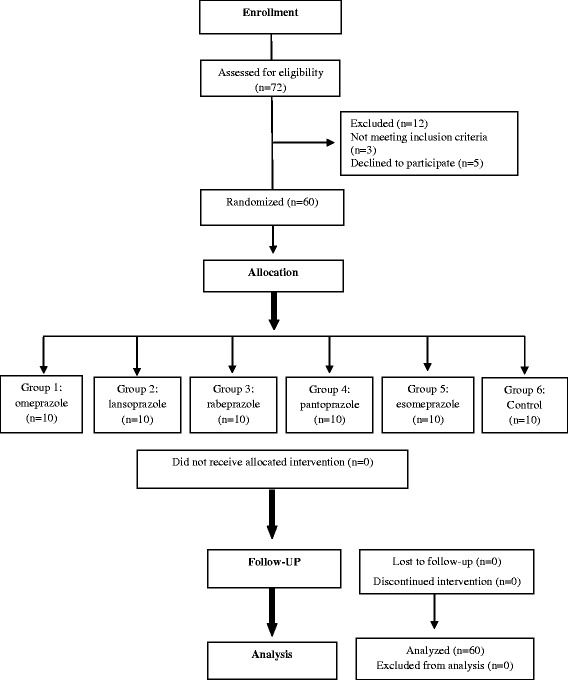
Sixty volunteers of either gender were recruited and divided randomly into six groups: five test groups for five classes of PPIs and one control group. All the groups participated in the five computerized neuropsychological tests (nine subtests) of the Cambridge Neuropsychological Test Automated Battery twice: at the beginning of the study and 7 days thereafter.
We found statistically and clinically significant impairment in visual memory, attention, executive function, and working and planning function. One-way analysis of variance findings showed that all PPIs had a similar negative impact on cognition. However, paired-samples t tests indicated that omeprazole showed significant (p < 0.05) results in seven subtests; lansoprazole and pantoprazole showed significant results in five subtests; and rabeprazole showed significant results in four subtests. Among five classes of PPIs, esomeprazole showed comparatively less impact on cognitive function with significant results in three subtests.
The present study reveals for the first time that different PPIs have varying degrees of influence on different cognitive domains and have associations with AD. These findings should be considered when balancing the risks and benefits of prescribing these medications. A study done for a longer period of time with a larger sample size might yield better results.
研究表明,质子泵抑制剂(PPIs)会增加β-淀粉样蛋白(Aβ)的脑负荷,还会导致维生素B12缺乏。然而,这两种现象对认知和阿尔茨海默病(AD)均有有害影响。由于在过去几年中PPIs的使用量大幅增加,因此研究PPIs对认知的影响具有重大的公共卫生意义。因此,本研究的目的是调查每种PPI与不同认知功能的神经心理学关联程度。
招募了60名志愿者,男女不限,随机分为六组:五个测试组分别对应五类PPIs,一个对照组。所有组在研究开始时和此后7天两次参加剑桥神经心理测试自动成套系统的五项计算机化神经心理测试(九个分测试)。
我们发现视觉记忆、注意力、执行功能以及工作和计划功能在统计学和临床上均有显著损害。单因素方差分析结果表明,所有PPIs对认知均有类似的负面影响。然而,配对样本t检验表明,奥美拉唑在七个分测试中显示出显著(p < 0.05)结果;兰索拉唑和泮托拉唑在五个分测试中显示出显著结果;雷贝拉唑在四个分测试中显示出显著结果。在五类PPIs中,埃索美拉唑对认知功能的影响相对较小,在三个分测试中显示出显著结果。
本研究首次揭示,不同的PPIs对不同的认知领域有不同程度的影响,且与AD有关。在权衡开具这些药物的风险和益处时,应考虑这些发现。进行更长时间、更大样本量的研究可能会产生更好的结果。