Hao Yanwei, Hu Guojian, Breitel Dario, Liu Mingchun, Mila Isabelle, Frasse Pierre, Fu Yongyao, Aharoni Asaph, Bouzayen Mondher, Zouine Mohamed
University of Toulouse, INPT, Laboratory of Genomics and Biotechnology of Fruit, Castanet-Tolosan, France.
INRA, UMR990 Génomique et Biotechnologie des Fruits, Chemin de Borde Rouge, Castanet-Tolosan, France.
PLoS Genet. 2015 Dec 30;11(12):e1005649. doi: 10.1371/journal.pgen.1005649. eCollection 2015 Dec.
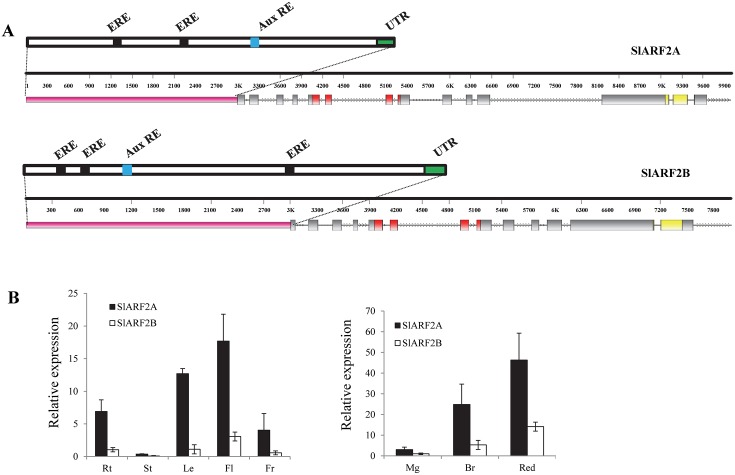
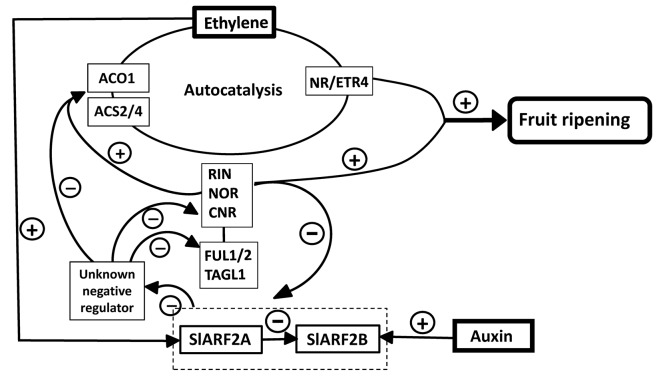
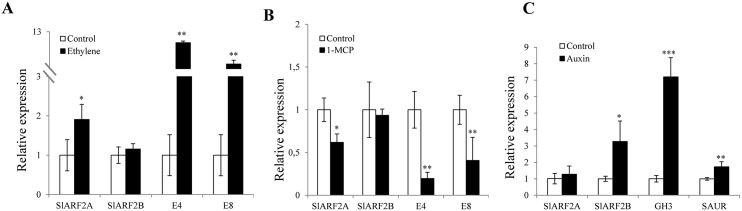
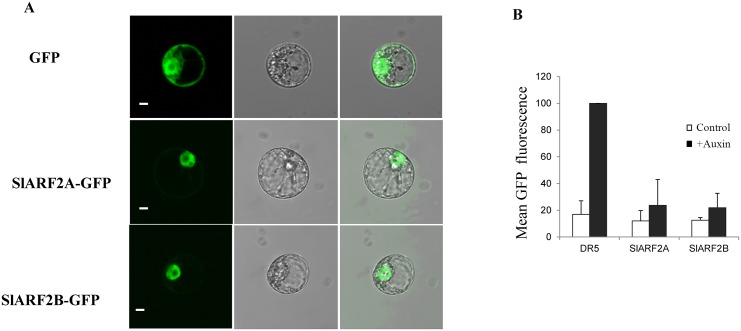
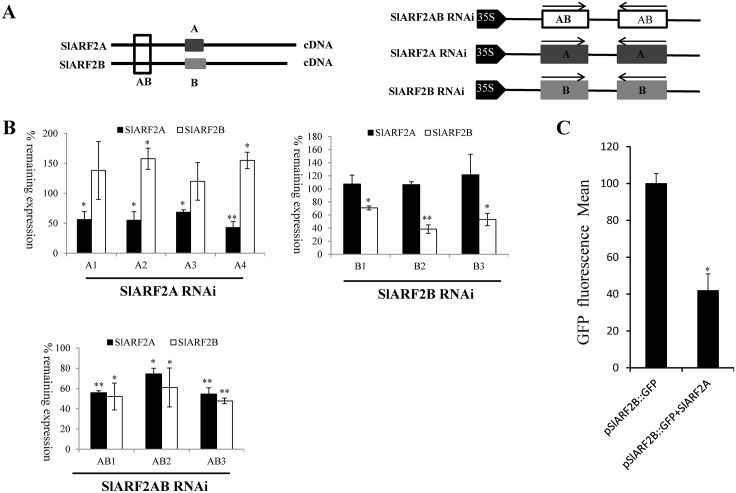
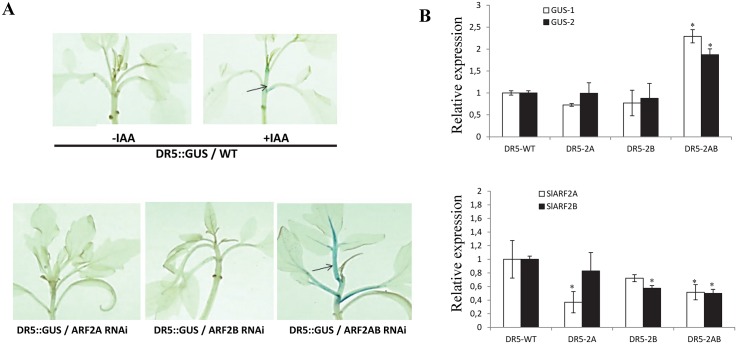
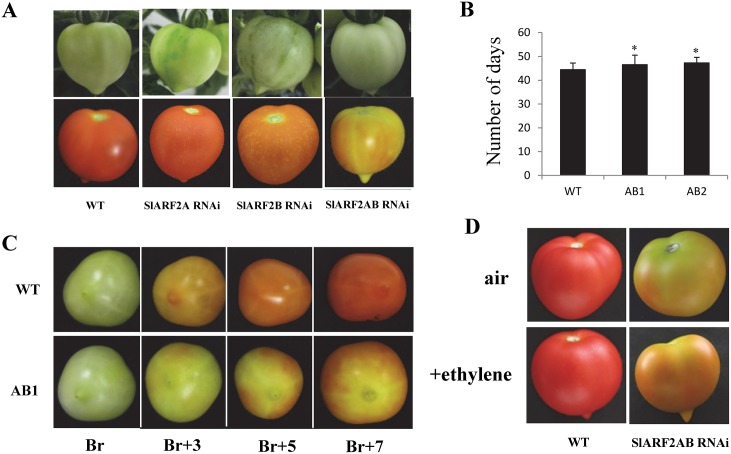
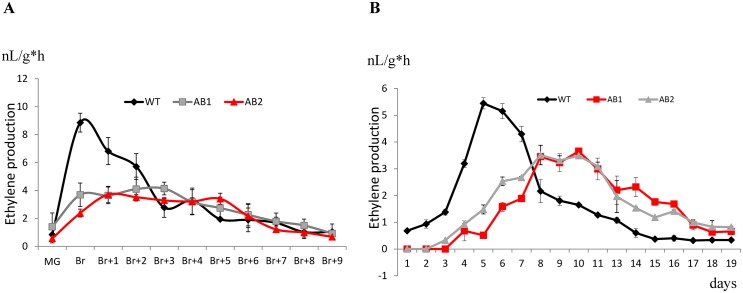
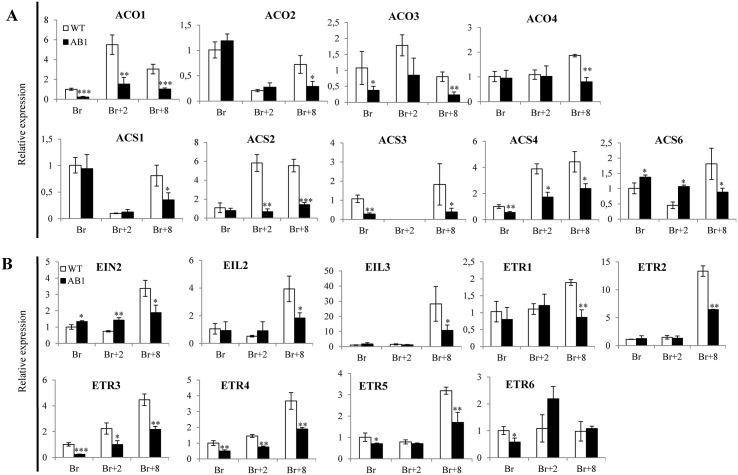
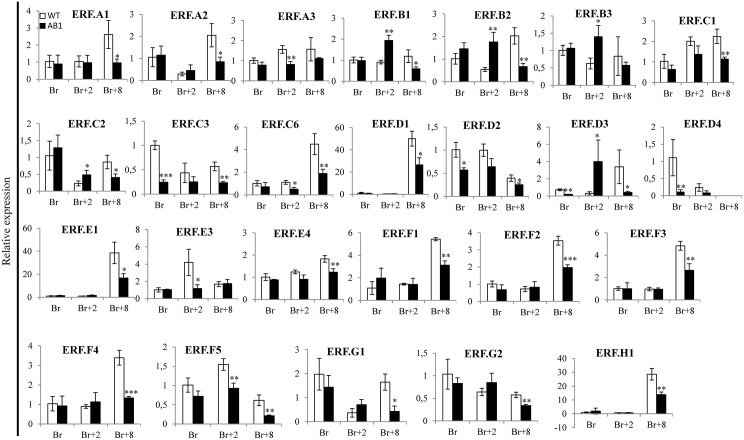
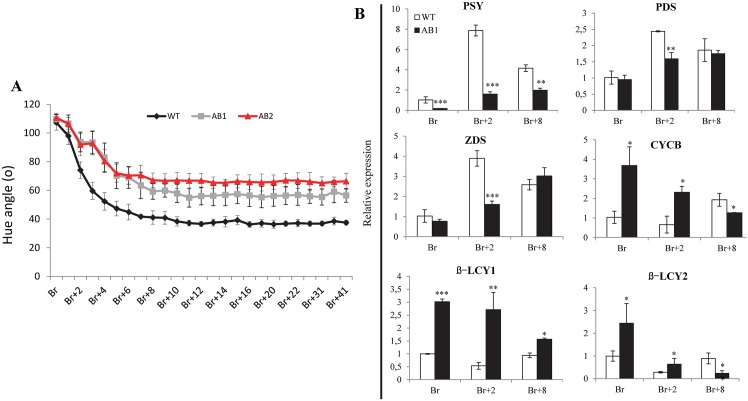
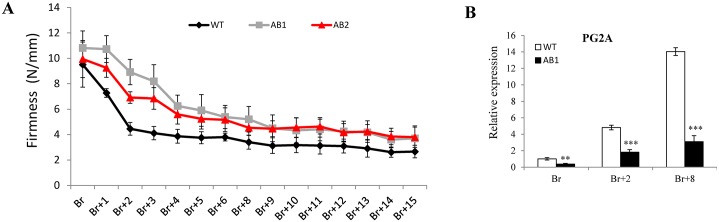
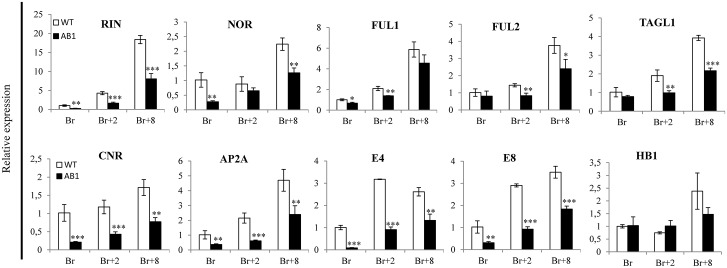
Ethylene is the main regulator of climacteric fruit ripening, by contrast the putative role of other phytohormones in this process remains poorly understood. The present study brings auxin signaling components into the mechanism regulating tomato fruit ripening through the functional characterization of Auxin Response Factor2 (SlARF2) which encodes a downstream component of auxin signaling. Two paralogs, SlARF2A and SlARF2B, are found in the tomato genome, both displaying a marked ripening-associated expression but distinct responsiveness to ethylene and auxin. Down-regulation of either SlARF2A or SlARF2B resulted in ripening defects while simultaneous silencing of both genes led to severe ripening inhibition suggesting a functional redundancy among the two ARFs. Tomato fruits under-expressing SlARF2 produced less climacteric ethylene and exhibited a dramatic down-regulation of the key ripening regulators RIN, CNR, NOR and TAGL1. Ethylene treatment failed to reverse the non-ripening phenotype and the expression of ethylene signaling and biosynthesis genes was strongly altered in SlARF2 down-regulated fruits. Although both SlARF proteins are transcriptional repressors the data indicate they work as positive regulators of tomato fruit ripening. Altogether, the study defines SlARF2 as a new component of the regulatory network controlling the ripening process in tomato.
乙烯是跃变型果实成熟的主要调节因子,相比之下,其他植物激素在此过程中的假定作用仍知之甚少。本研究通过对生长素响应因子2(SlARF2)进行功能表征,将生长素信号成分引入调控番茄果实成熟的机制中,SlARF2编码生长素信号的下游成分。在番茄基因组中发现了两个旁系同源基因SlARF2A和SlARF2B,它们均表现出与成熟相关的显著表达,但对乙烯和生长素的反应不同。下调SlARF2A或SlARF2B均导致成熟缺陷,而同时沉默这两个基因则导致严重的成熟抑制,表明这两个ARF之间存在功能冗余。SlARF2表达不足的番茄果实产生的跃变乙烯较少,并且关键成熟调节因子RIN、CNR、NOR和TAGL1的表达显著下调。乙烯处理未能逆转未成熟表型,并且在SlARF2下调的果实中,乙烯信号和生物合成基因的表达发生了强烈改变。尽管两种SlARF蛋白均为转录抑制因子,但数据表明它们作为番茄果实成熟的正向调节因子发挥作用。总之,该研究将SlARF2定义为控制番茄成熟过程的调控网络的一个新成分。