García-Martínez José, Delgado-Ramos Lidia, Ayala Guillermo, Pelechano Vicent, Medina Daniel A, Carrasco Fany, González Ramón, Andrés-León Eduardo, Steinmetz Lars, Warringer Jonas, Chávez Sebastián, Pérez-Ortín José E
Departamento de Genética, Facultad de Ciencias Biológicas, Universitat de València. C/ Dr. Moliner 50. E46100, Burjassot, Spain ERI Biotecmed, Facultad de Ciencias Biológicas, Universitat de Valencia. C/ Dr. Moliner 50. E46100, Burjassot, Spain.
Instituto de Biomedicina de Sevilla (IBiS), Hospital Virgen del Rocío-CSIC-Universidad de Sevilla, C/ Antonio Maura Montaner, E41013 Sevilla Departamento de Genética, Universidad de Sevilla, Avenida de la Reina Mercedes s/n, E41012, Spain.
Nucleic Acids Res. 2016 May 5;44(8):3643-58. doi: 10.1093/nar/gkv1512. Epub 2015 Dec 29.
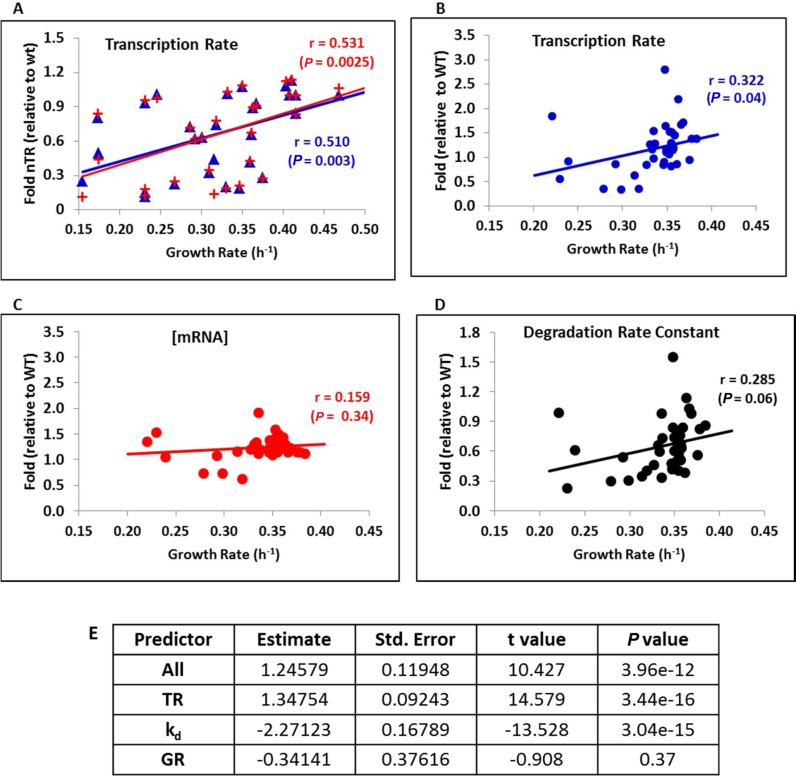
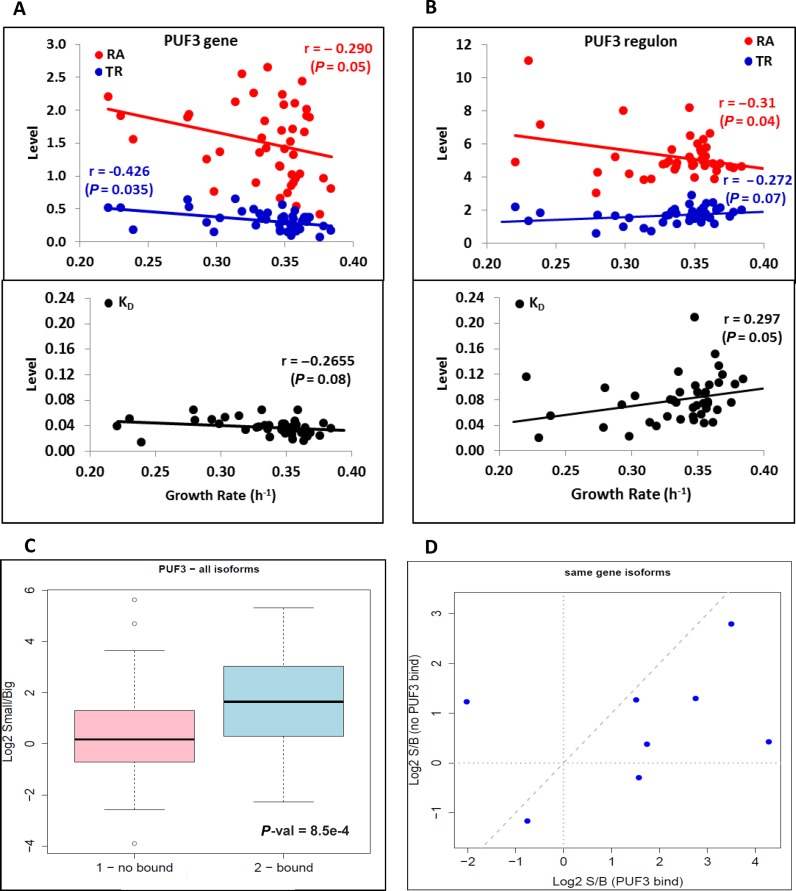
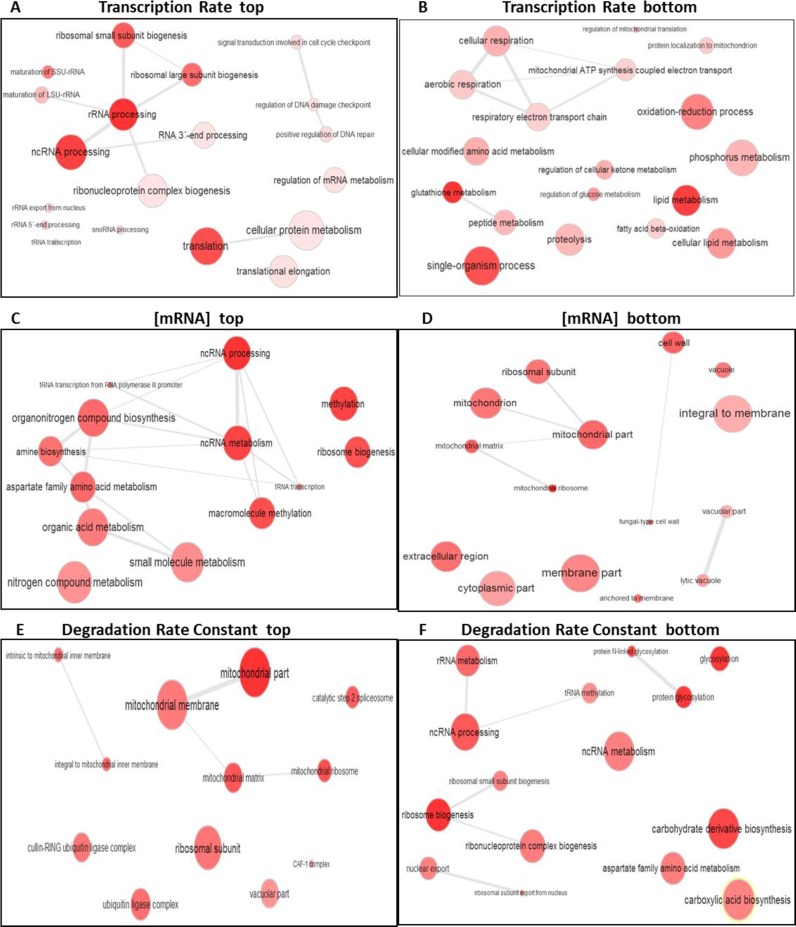
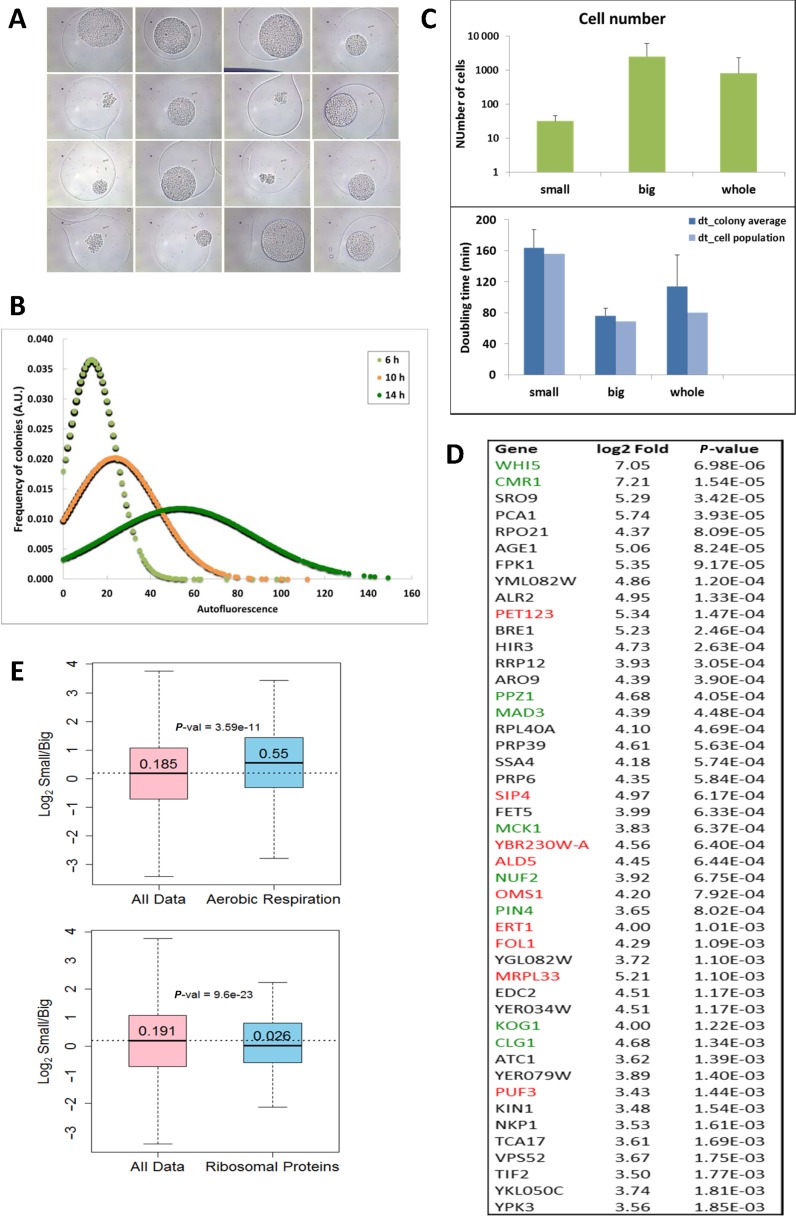
We analyzed 80 different genomic experiments, and found a positive correlation between both RNA polymerase II transcription and mRNA degradation with growth rates in yeast. Thus, in spite of the marked variation in mRNA turnover, the total mRNA concentration remained approximately constant. Some genes, however, regulated their mRNA concentration by uncoupling mRNA stability from the transcription rate. Ribosome-related genes modulated their transcription rates to increase mRNA levels under fast growth. In contrast, mitochondria-related and stress-induced genes lowered mRNA levels by reducing mRNA stability or the transcription rate, respectively. We also detected these regulations within the heterogeneity of a wild-type cell population growing in optimal conditions. The transcriptomic analysis of sorted microcolonies confirmed that the growth rate dictates alternative expression programs by modulating transcription and mRNA decay.The regulation of overall mRNA turnover keeps a constant ratio between mRNA decay and the dilution of [mRNA] caused by cellular growth. This regulation minimizes the indiscriminate transmission of mRNAs from mother to daughter cells, and favors the response capacity of the latter to physiological signals and environmental changes. We also conclude that, by uncoupling mRNA synthesis from decay, cells control the mRNA abundance of those gene regulons that characterize fast and slow growth.
我们分析了80种不同的基因组实验,发现酵母中RNA聚合酶II转录和mRNA降解与生长速率之间均呈正相关。因此,尽管mRNA周转存在显著差异,但总mRNA浓度仍大致保持恒定。然而,一些基因通过使mRNA稳定性与转录速率解偶联来调节其mRNA浓度。核糖体相关基因调节其转录速率,以在快速生长条件下提高mRNA水平。相反,线粒体相关基因和应激诱导基因分别通过降低mRNA稳定性或转录速率来降低mRNA水平。我们还在最佳条件下生长的野生型细胞群体的异质性中检测到了这些调控。对分选的微菌落进行转录组分析证实,生长速率通过调节转录和mRNA衰变来决定交替的表达程序。整体mRNA周转的调控使mRNA衰变与细胞生长导致的[mRNA]稀释之间保持恒定比例。这种调控将mRNA从母细胞向子细胞的无差别传递降至最低,并有利于子细胞对生理信号和环境变化的响应能力。我们还得出结论,通过使mRNA合成与衰变解偶联,细胞控制了那些表征快速和缓慢生长的基因调控子的mRNA丰度。