Shida Yosuke, Yamaguchi Kaori, Nitta Mikiko, Nakamura Ayana, Takahashi Machiko, Kidokoro Shun-Ichi, Mori Kazuki, Tashiro Kosuke, Kuhara Satoru, Matsuzawa Tomohiko, Yaoi Katsuro, Sakamoto Yasumitsu, Tanaka Nobutada, Morikawa Yasushi, Ogasawara Wataru
Department of Bioengineering, Nagaoka University of Technology, 1603-1 Kamitomioka, Nagaoka, Niigata 940-2188 Japan.
Department of Bioengineering, Nagaoka University of Technology, 1603-1 Kamitomioka, Nagaoka, Niigata 940-2188 Japan ; Japan Science and Technology Agency (JST), 4-1-8 Honcho, Kawaguchi, Saitama 332-0012 Japan.
Biotechnol Biofuels. 2015 Dec 30;8:230. doi: 10.1186/s13068-015-0420-y. eCollection 2015.
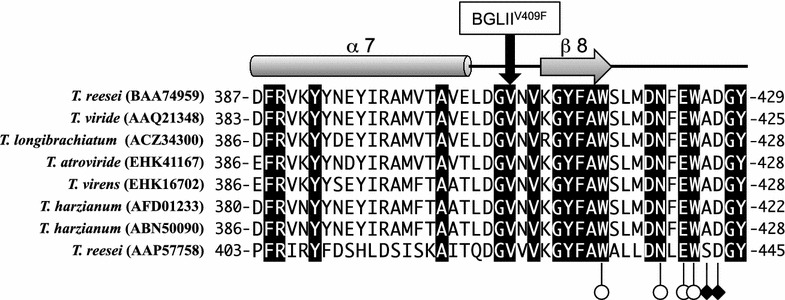
The filamentous fungus Trichoderma reesei (anamorph of Hypocrea jecorina) produces increased cellulase expression when grown on cellulose or its derivatives as a sole carbon source. It has been believed that β-glucosidases of T. reesei not only metabolize cellobiose but also contribute in the production of inducers of cellulase gene expression by their transglycosylation activity. The cellulase hyper-producing mutant PC-3-7 developed in Japan has enhanced cellulase production ability when cellobiose is used as the inducer. The comparative genomics analysis of PC-3-7 and its parent revealed a single-nucleotide mutation within the bgl2 gene encoding intracellular β-glucosidase II (BGLII/Cel1a), giving rise to an amino acid substitution in PC-3-7, which could potentially account for the enhanced cellulase expression when these strains are cultivated on cellulose and cellobiose.
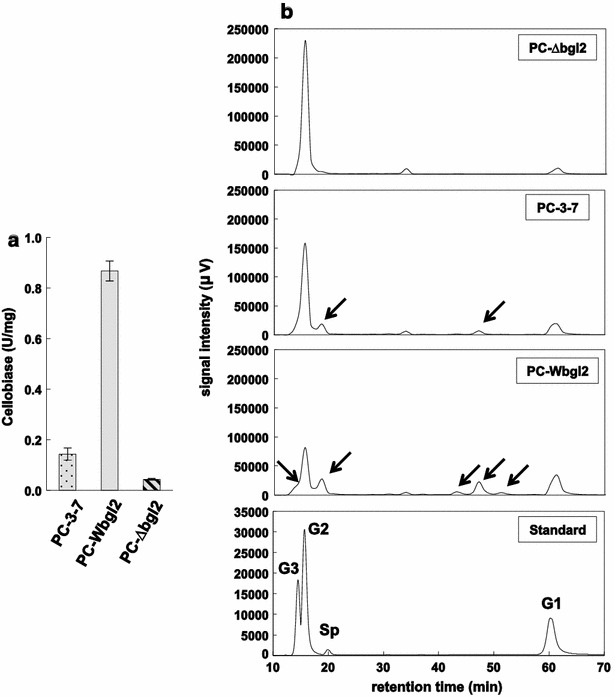
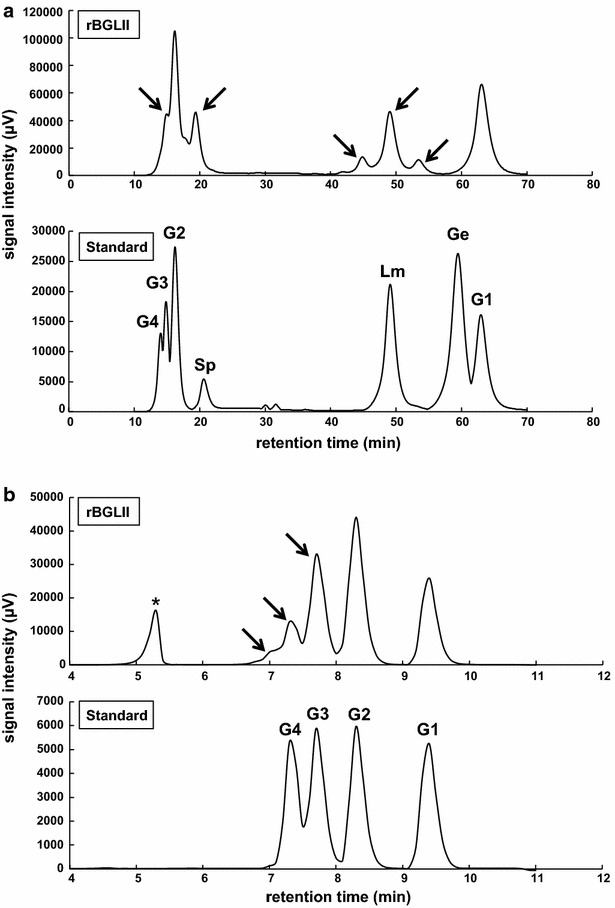
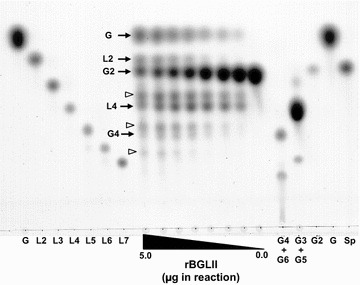
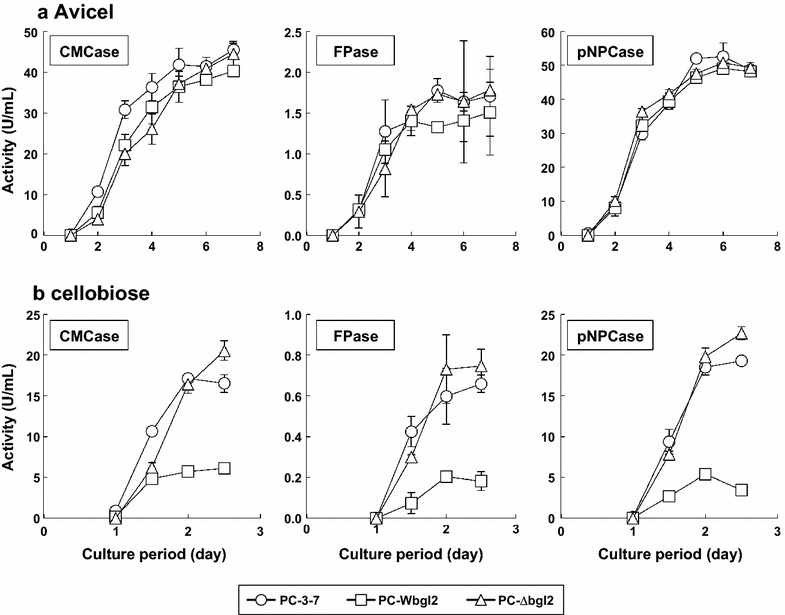
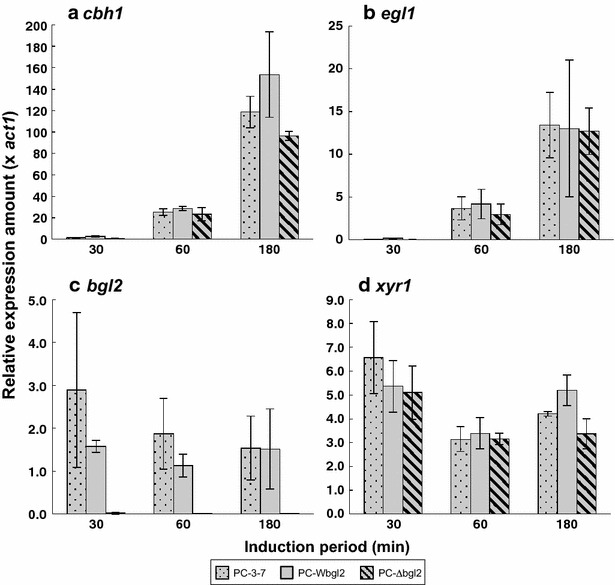
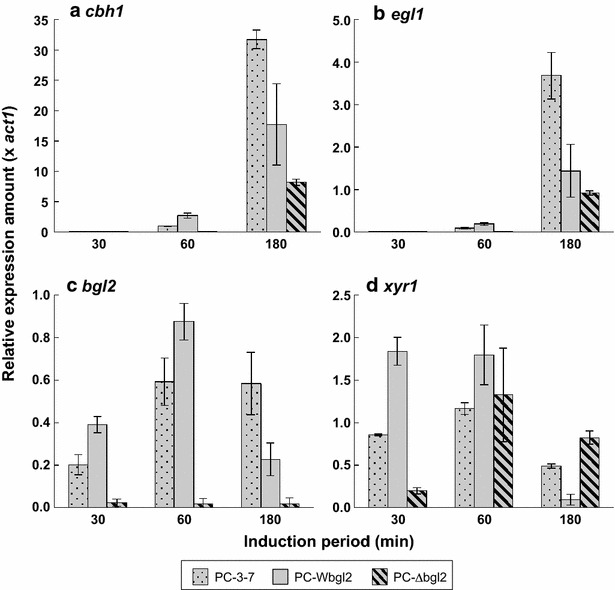
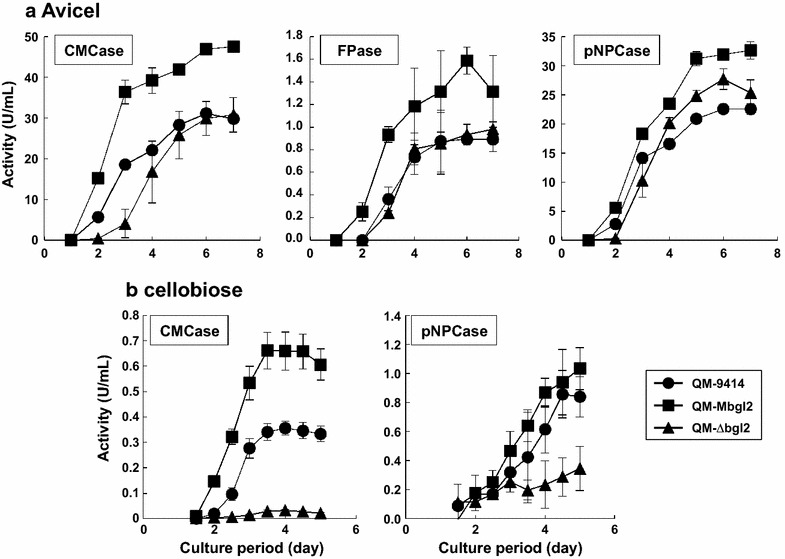
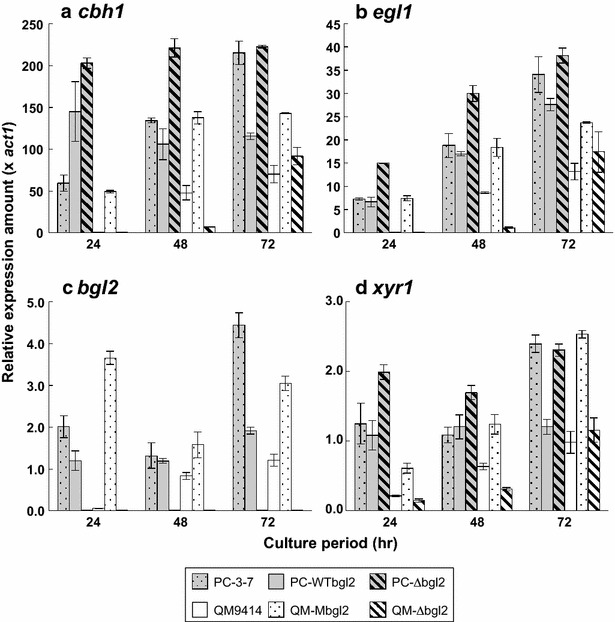
To analyze the effects of the BGLII mutation in cellulase induction, we constructed both a bgl2 revertant and a disruptant. Enzymatic analysis of the transformant lysates showed that the strain expressing mutant BGLII exhibited weakened cellobiose hydrolytic activity, but produced some transglycosylation products, suggesting that the SNP in bgl2 strongly diminished cellobiase activity, but did not result in complete loss of function of BGLII. The analysis of the recombinant BGLII revealed that transglycosylation products might be oligosaccharides, composed probably of glucose linked β-1,4, β-1,3, or a mixture of both. PC-3-7 revertants of bgl2 exhibited reduced expression and inducibility of cellulase during growth on cellulose and cellobiose substrates. Furthermore, the effect of this bgl2 mutation was reproduced in the common strain QM9414 in which the transformants showed cellulase production comparable to that of PC-3-7.
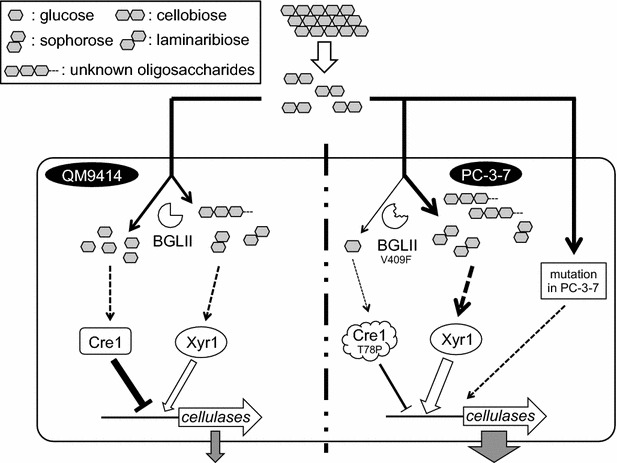
We conclude that BGLII plays an important role in cellulase induction in T. reesei and that the bgl2 mutation in PC-3-7 brought about enhanced cellulase expression on cellobiose. The results of the investigation using PC-3-7 suggested that other mutation(s) in PC-3-7 could also contribute to cellulase induction. Further investigation is essential to unravel the mechanism responsible for cellulase induction in T. reesei.
丝状真菌里氏木霉(枝顶孢霉的无性型)在以纤维素或其衍生物作为唯一碳源生长时,纤维素酶表达量会增加。一直以来人们认为,里氏木霉的β-葡萄糖苷酶不仅能代谢纤维二糖,还通过其转糖基化活性参与纤维素酶基因表达诱导物的产生。日本培育的纤维素酶高产突变体PC-3-7在以纤维二糖作为诱导物时,其纤维素酶产生能力增强。对PC-3-7及其亲本进行的比较基因组学分析显示,编码细胞内β-葡萄糖苷酶II(BGLII/Cel1a)的bgl2基因内存在单核苷酸突变,导致PC-3-7中出现氨基酸替换,这可能是这些菌株在纤维素和纤维二糖上培养时纤维素酶表达增强的原因。
为分析BGLII突变对纤维素酶诱导的影响,我们构建了bgl2回复突变体和缺失突变体。对转化体裂解物的酶学分析表明,表达突变型BGLII的菌株纤维二糖水解活性减弱,但产生了一些转糖基化产物,这表明bgl2中的单核苷酸多态性极大地降低了纤维二糖酶活性,但并未导致BGLII功能完全丧失。对重组BGLII的分析表明,转糖基化产物可能是寡糖,可能由β-1,4连接的葡萄糖、β-1,3连接的葡萄糖或两者的混合物组成。bgl2的PC-3-7回复突变体在纤维素和纤维二糖底物上生长期间,纤维素酶的表达和诱导性降低。此外,在普通菌株QM9414中重现了这种bgl2突变的效应,其中转化体的纤维素酶产量与PC-3-7相当。
我们得出结论,BGLII在里氏木霉的纤维素酶诱导中起重要作用,且PC-3-7中的bgl2突变导致在纤维二糖上纤维素酶表达增强。使用PC-3-7进行的研究结果表明,PC-3-7中的其他突变也可能有助于纤维素酶诱导。进一步研究对于阐明里氏木霉中纤维素酶诱导的机制至关重要。