Maria Zahra, Campolo Allison R, Lacombe Veronique A
Department of Physiological Sciences, Oklahoma State University, Stillwater, United States of America.
Department of Mechanical and Aerospace Engineering, Oklahoma State University, Stillwater, Oklahoma, United States of America.
PLoS One. 2015 Dec 31;10(12):e0146033. doi: 10.1371/journal.pone.0146033. eCollection 2015.
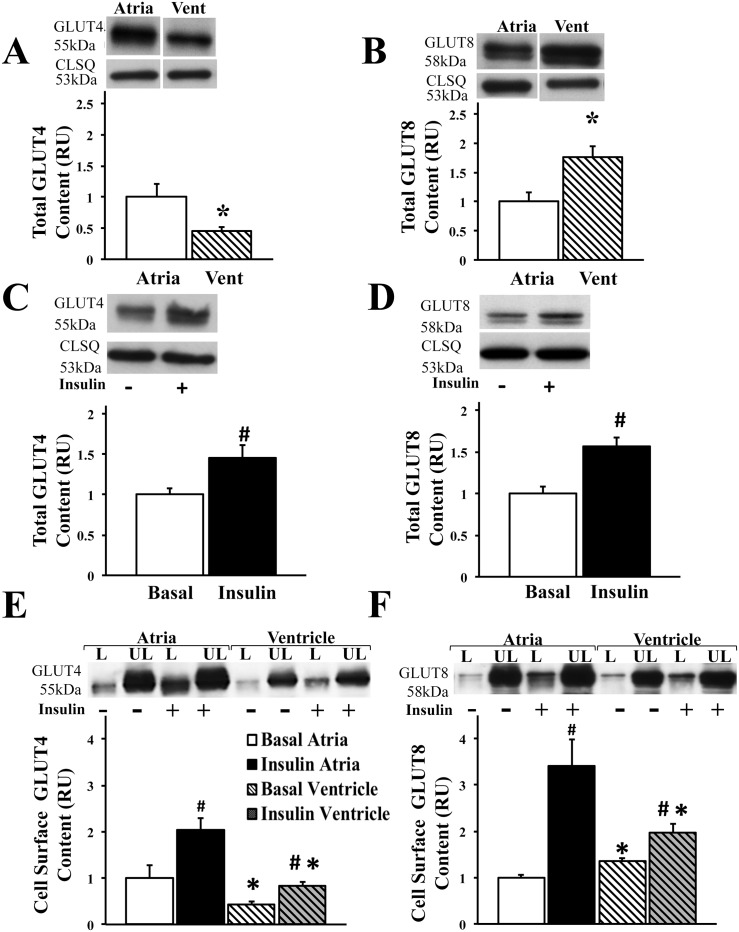
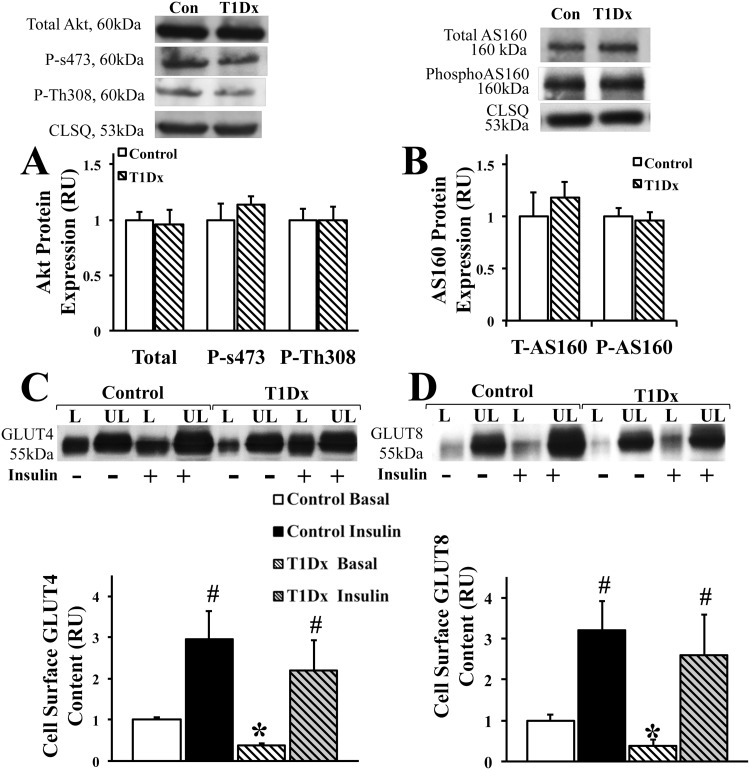
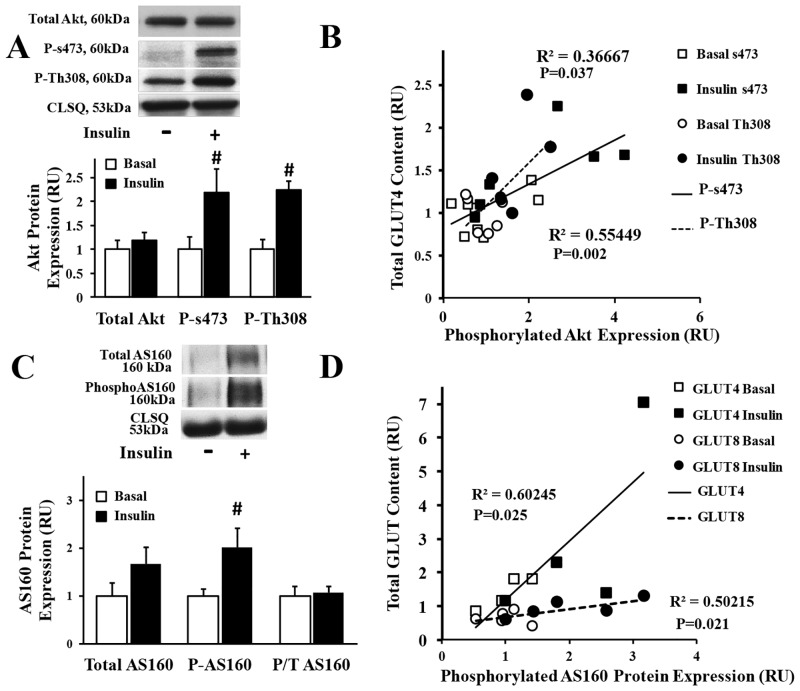
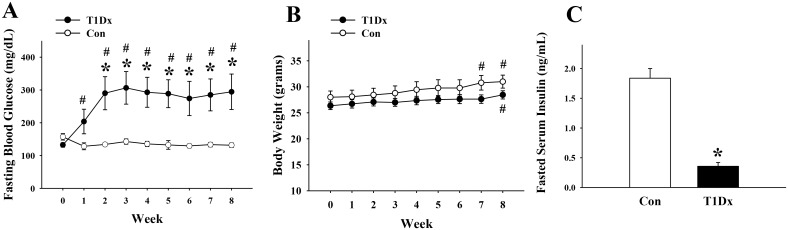
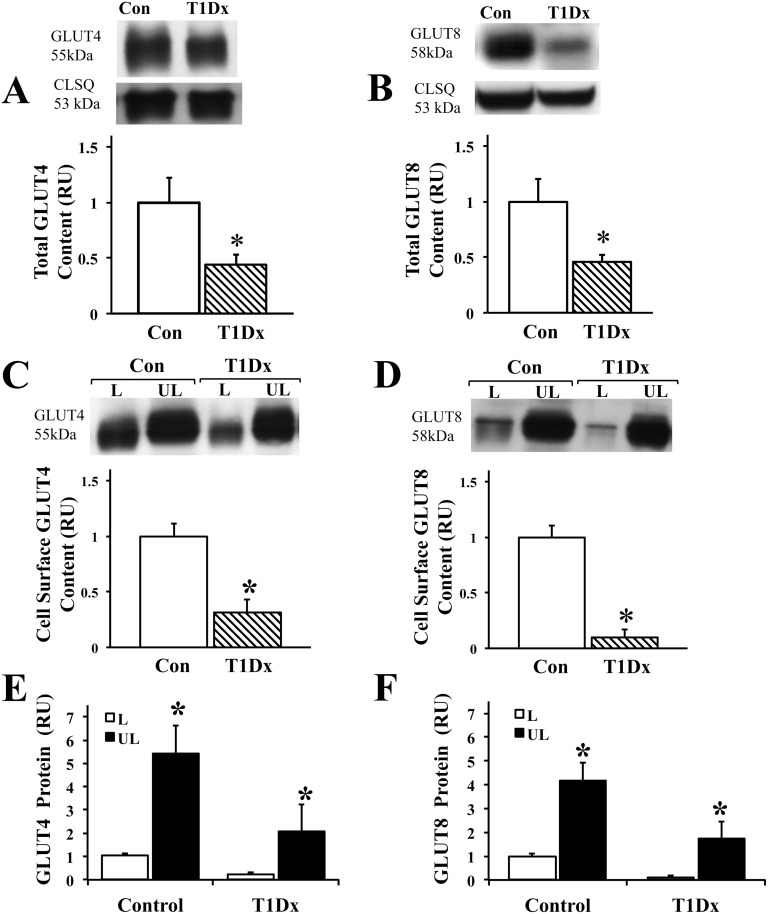
Although diabetes has been identified as a major risk factor for atrial fibrillation, little is known about glucose metabolism in the healthy and diabetic atria. Glucose transport into the cell, the rate-limiting step of glucose utilization, is regulated by the Glucose Transporters (GLUTs). Although GLUT4 is the major isoform in the heart, GLUT8 has recently emerged as a novel cardiac isoform. We hypothesized that GLUT-4 and -8 translocation to the atrial cell surface will be regulated by insulin and impaired during insulin-dependent diabetes. GLUT protein content was measured by Western blotting in healthy cardiac myocytes and type 1 (streptozotocin-induced, T1Dx) diabetic rodents. Active cell surface GLUT content was measured using a biotinylated photolabeled assay in the perfused heart. In the healthy atria, insulin stimulation increased both GLUT-4 and -8 translocation to the cell surface (by 100% and 240%, respectively, P<0.05). Upon insulin stimulation, we reported an increase in Akt (Th308 and s473 sites) and AS160 phosphorylation, which was positively (P<0.05) correlated with GLUT4 protein content in the healthy atria. During diabetes, active cell surface GLUT-4 and -8 content was downregulated in the atria (by 70% and 90%, respectively, P<0.05). Akt and AS160 phosphorylation was not impaired in the diabetic atria, suggesting the presence of an intact insulin signaling pathway. This was confirmed by the rescued translocation of GLUT-4 and -8 to the atrial cell surface upon insulin stimulation in the atria of type 1 diabetic subjects. In conclusion, our data suggest that: 1) both GLUT-4 and -8 are insulin-sensitive in the healthy atria through an Akt/AS160 dependent pathway; 2) GLUT-4 and -8 trafficking is impaired in the diabetic atria and rescued by insulin treatment. Alterations in atrial glucose transport may induce perturbations in energy production, which may provide a metabolic substrate for atrial fibrillation during diabetes.
尽管糖尿病已被确认为心房颤动的主要危险因素,但对于健康和糖尿病心房中的葡萄糖代谢情况却知之甚少。葡萄糖转运进入细胞是葡萄糖利用的限速步骤,由葡萄糖转运蛋白(GLUTs)调节。虽然GLUT4是心脏中的主要异构体,但GLUT8最近已成为一种新的心脏异构体。我们假设GLUT-4和-8向心房细胞表面的转位将受胰岛素调节,且在胰岛素依赖型糖尿病期间受损。通过蛋白质免疫印迹法在健康心肌细胞和1型(链脲佐菌素诱导,T1Dx)糖尿病啮齿动物中测量GLUT蛋白含量。在灌注心脏中使用生物素化光标记测定法测量活性细胞表面GLUT含量。在健康心房中,胰岛素刺激增加了GLUT-4和-8向细胞表面的转位(分别增加了100%和240%,P<0.05)。在胰岛素刺激后,我们发现Akt(Th308和s473位点)和AS160磷酸化增加,这与健康心房中的GLUT4蛋白含量呈正相关(P<0.05)。在糖尿病期间,心房中活性细胞表面GLUT-4和-8的含量下调(分别下调70%和90%,P<0.05)。糖尿病心房中的Akt和AS160磷酸化未受损,表明存在完整的胰岛素信号通路。1型糖尿病受试者心房在胰岛素刺激后GLUT-4和-8向细胞表面的转位得以恢复,证实了这一点。总之,我们的数据表明:1)在健康心房中,GLUT-4和-8均通过Akt/AS160依赖途径对胰岛素敏感;2)糖尿病心房中GLUT-4和-8的转运受损,胰岛素治疗可使其恢复。心房葡萄糖转运的改变可能会引起能量产生的紊乱,这可能为糖尿病期间的心房颤动提供代谢底物。