Hospenthal Manuela K, Redzej Adam, Dodson Karen, Ukleja Marta, Frenz Brandon, Rodrigues Catarina, Hultgren Scott J, DiMaio Frank, Egelman Edward H, Waksman Gabriel
Institute of Structural and Molecular Biology, University College London and Birkbeck, Malet Street, London, WC1E 7HX, UK.
Center for Women's Infectious Disease Research and Department of Molecular Microbiology, Washington University School of Medicine, St. Louis, MO 63011, USA.
Cell. 2016 Jan 14;164(1-2):269-278. doi: 10.1016/j.cell.2015.11.049. Epub 2015 Dec 24.
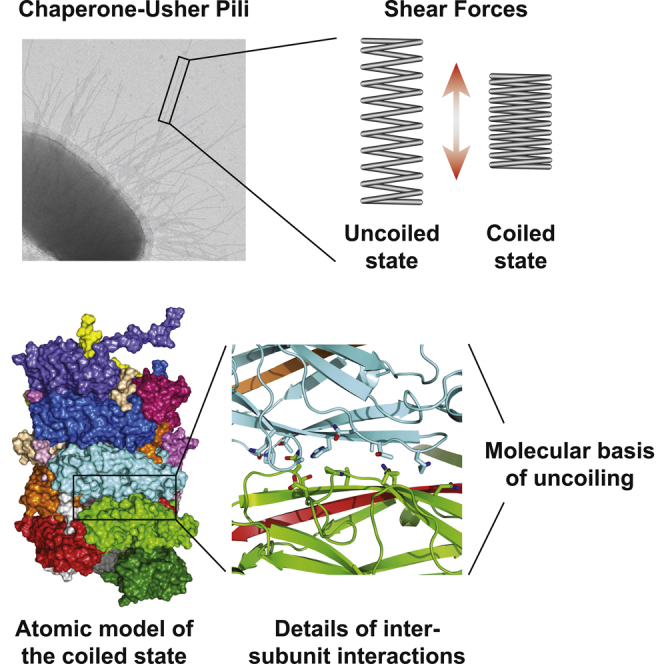
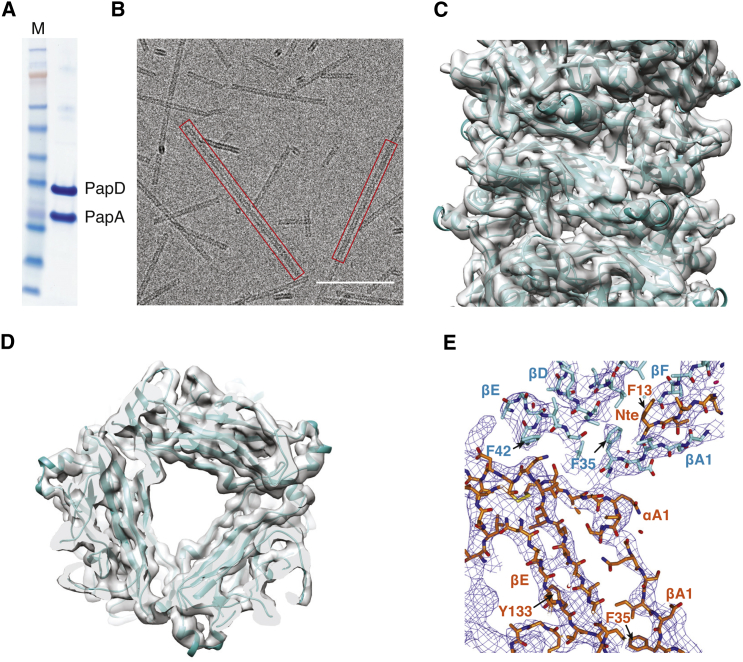
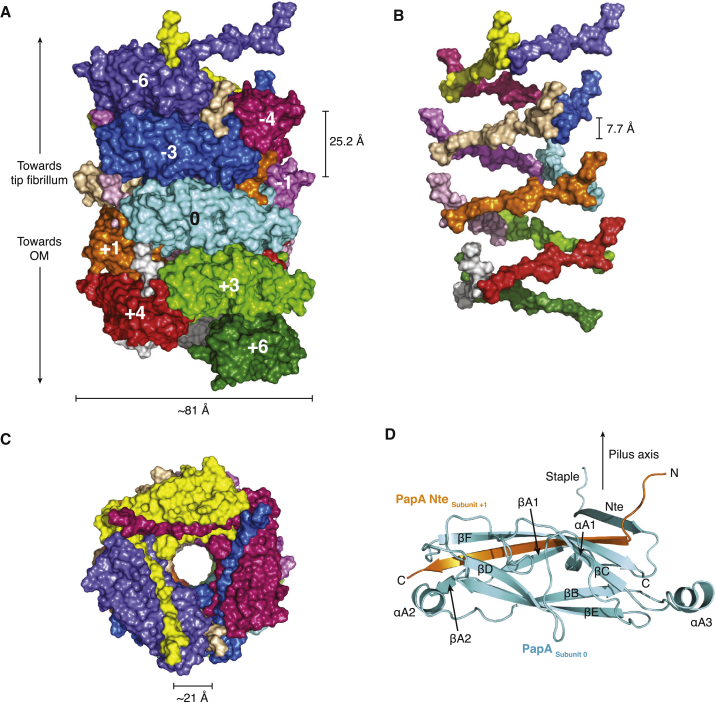
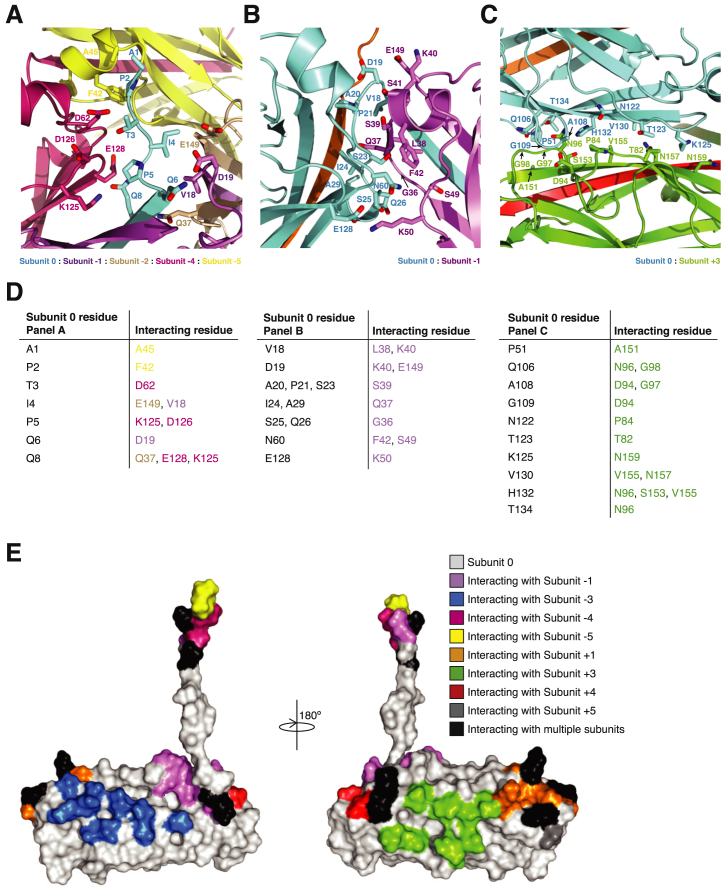
Types 1 and P pili are prototypical bacterial cell-surface appendages playing essential roles in mediating adhesion of bacteria to the urinary tract. These pili, assembled by the chaperone-usher pathway, are polymers of pilus subunits assembling into two parts: a thin, short tip fibrillum at the top, mounted on a long pilus rod. The rod adopts a helical quaternary structure and is thought to play essential roles: its formation may drive pilus extrusion by preventing backsliding of the nascent growing pilus within the secretion pore; the rod also has striking spring-like properties, being able to uncoil and recoil depending on the intensity of shear forces generated by urine flow. Here, we present an atomic model of the P pilus generated from a 3.8 Å resolution cryo-electron microscopy reconstruction. This structure provides the molecular basis for the rod's remarkable mechanical properties and illuminates its role in pilus secretion.
1型菌毛和P菌毛是典型的细菌细胞表面附属物,在介导细菌与尿路的黏附中起重要作用。这些菌毛通过伴侣-usher途径组装而成,是菌毛亚基的聚合物,组装成两部分:顶部是细短的尖端纤毛,安装在长菌毛杆上。菌毛杆采用螺旋四级结构,被认为起着重要作用:它的形成可能通过防止新生生长菌毛在分泌孔内回滑来驱动菌毛挤出;菌毛杆还具有显著的弹簧状特性,能够根据尿液流动产生的剪切力强度展开和回弹。在这里,我们展示了一个由3.8 Å分辨率的冷冻电子显微镜重建生成的P菌毛原子模型。该结构为菌毛杆显著的机械性能提供了分子基础,并阐明了其在菌毛分泌中的作用。