Department of Otorhinolaryngology, Gangnam Severance Hospital, Yonsei University College of Medicine, 211 Eonju-ro, Gangnam-gu, Seoul, 06273, Republic of Korea.
Department of Chemical and Biomolecular Engineering, Yonsei University, Seoul, Republic of Korea.
Stem Cell Res Ther. 2018 Mar 22;9(1):74. doi: 10.1186/s13287-018-0829-x.
Three-dimensional (3D) cultures recapitulate the microenvironment of tissue-resident stem cells and enable them to modulate their properties. We determined whether salivary gland-resident stem cells (SGSCs) are primed by a 3D spheroid culture prior to treating irradiation-induced salivary hypofunction using in-vitro coculture and in-vivo transplant models.
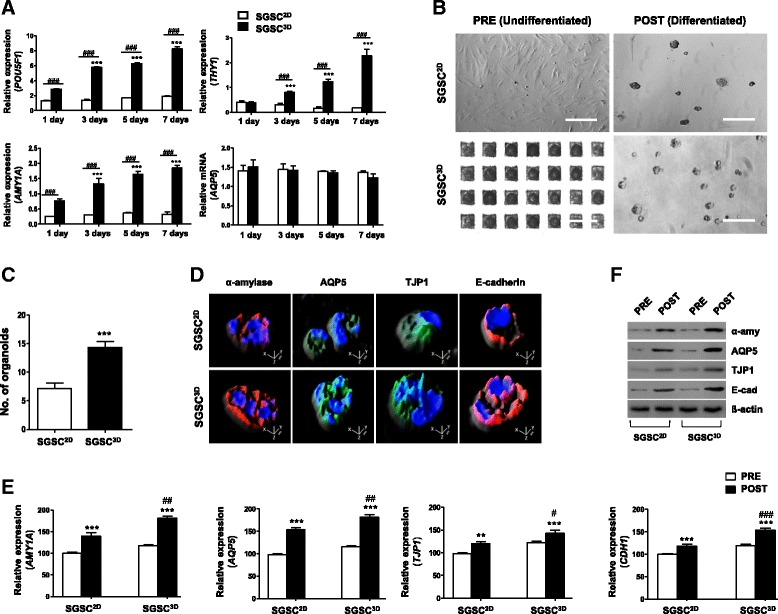
3D spheroid-derived SGSCs (SGSCs) were obtained from 3D culture in microwells consisting of a nanofiber bottom and cell-repellent hydrogel walls, and were examined for salivary stem or epithelial gene/protein expression, differentiation potential, and paracrine secretory function compared with monolayer-cultured SGSCs (SGSCs) in vitro and in vivo.
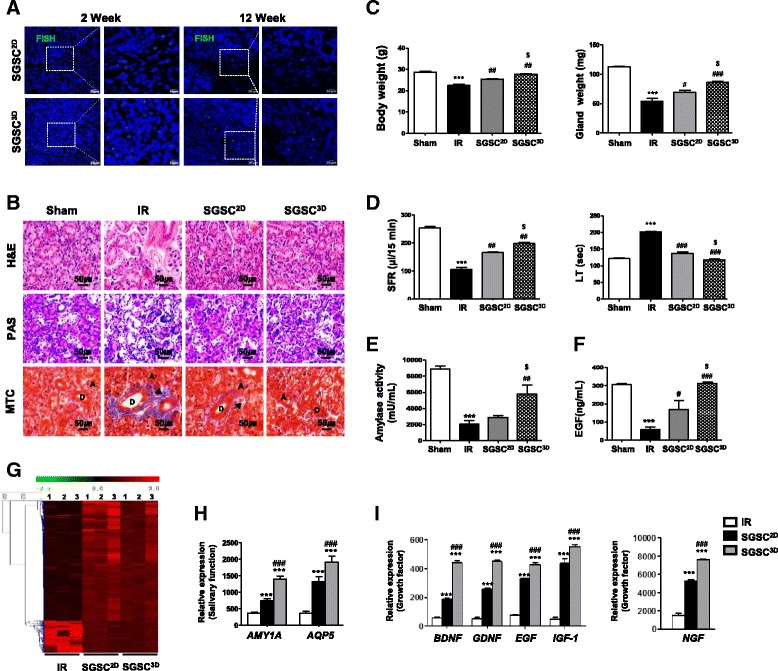
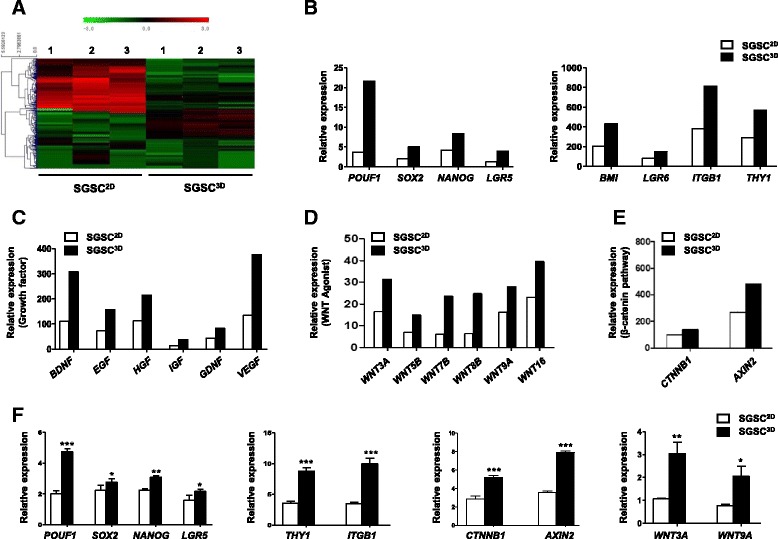
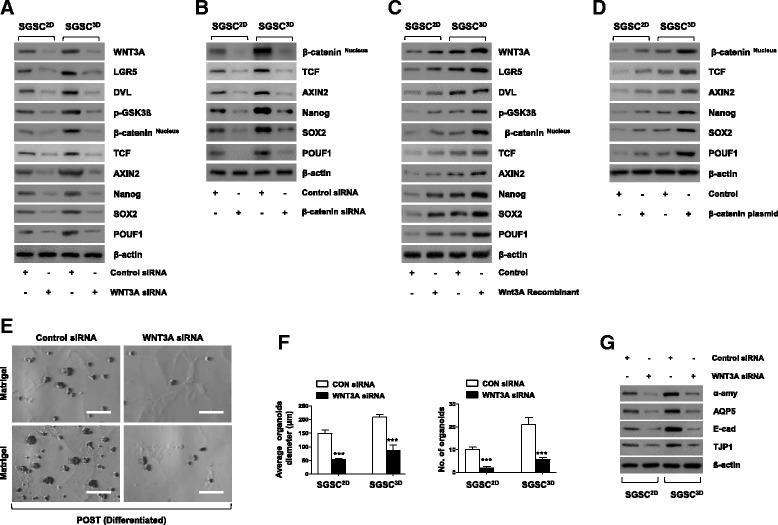
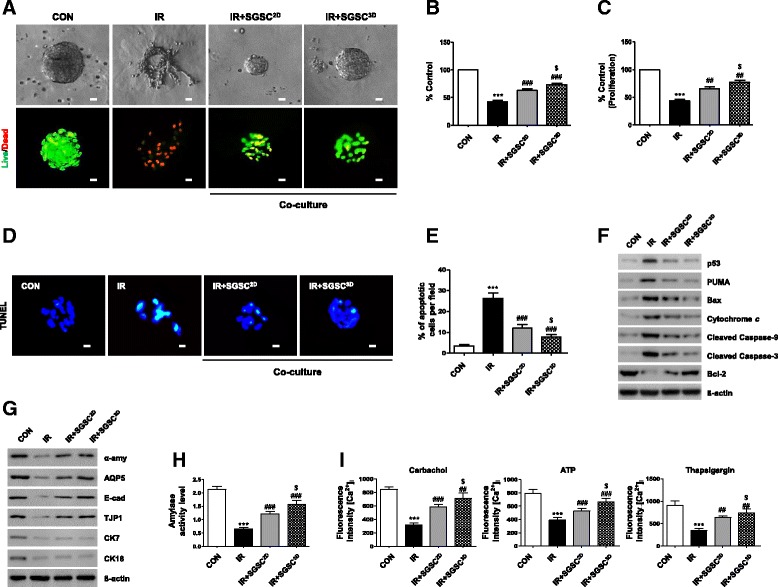
SGSCs expressed increased salivary stem cell markers (LGR5 and THY1) and pluripotency markers (POU5F1 and NANOG) compared with SGSCs. Also, SGSCs exhibited enhanced potential to differentiate into salivary epithelial cells upon differentiation induction and increased paracrine secretion as compared to SGSCs. Wnt signaling was activated by 3D spheroid formation in the microwells and suppression of the Wnt/β-catenin pathway led to reduced stemness of SGSCs. Enhanced radioprotective properties of SGSCs against radiation-induced salivary hypofunction was confirmed by an organotypic 3D coculture and in-vivo transplantation experiments.
The 3D spheroid culture of SGSCs in nanofibrous microwells promotes stem cell properties via activation of Wnt signaling. This may contribute to SGSC priming prior to regenerative therapy to restore salivary hypofunction after radiotherapy.
三维(3D)培养物再现了组织驻留干细胞的微环境,使它们能够调节自身特性。我们通过体外共培养和体内移植模型,确定唾液腺驻留干细胞(SGSCs)在接受辐射诱导的唾液腺功能减退治疗之前,是否通过 3D 球体培养得到了预先刺激。
从微井中的 3D 球体获得 3D 球体衍生的 SGSCs(SGSCs),该微井由纳米纤维底部和细胞排斥水凝胶壁组成,并与单层培养的 SGSCs 进行比较体外和体内研究唾液干细胞或上皮细胞基因/蛋白表达、分化潜能和旁分泌分泌功能。
与 SGSCs 相比,SGSCs 表达了更高水平的唾液干细胞标志物(LGR5 和 THY1)和多能性标志物(POU5F1 和 NANOG)。此外,与 SGSCs 相比,SGSCs 在分化诱导下表现出更强的分化为唾液上皮细胞的潜能,并且旁分泌分泌增加。Wnt 信号在微井中的 3D 球体形成中被激活,而 Wnt/β-catenin 通路的抑制导致 SGSCs 的干性降低。通过器官型 3D 共培养和体内移植实验证实了 SGSCs 对辐射诱导的唾液腺功能减退的增强放射保护作用。
纳米纤维微井中的 SGSCs 3D 球体培养通过激活 Wnt 信号促进了干细胞特性。这可能有助于 SGSC 在再生治疗之前得到预先刺激,以恢复放射治疗后的唾液腺功能减退。