Wan Ning, Lu Xia, Wang Yuesheng, Zhang Weifeng, Bai Ying, Hu Yong-Sheng, Dai Sheng
Key Laboratory of Photovoltaic Materials of Henan Province and School of Physics &Electronics, Henan University, Kaifeng 475004, PR China.
Materials Engineering, McGill University, Montréal (Québec) H3A 0C5, Canada.
Sci Rep. 2016 Jan 6;6:18978. doi: 10.1038/srep18978.
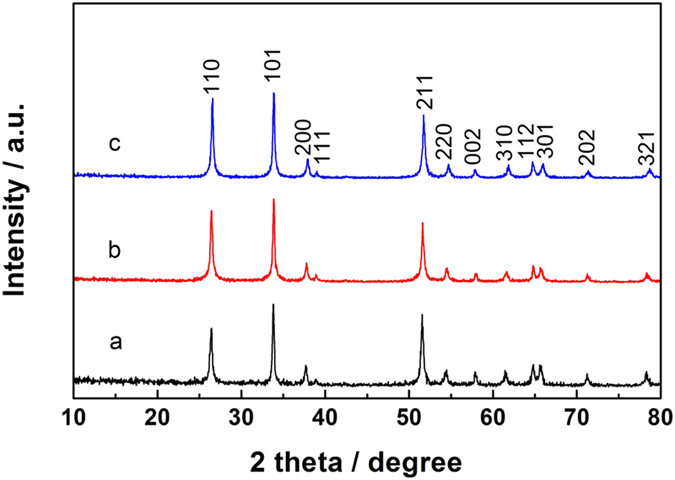
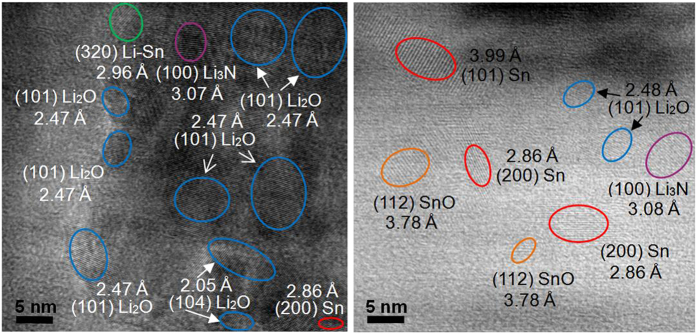
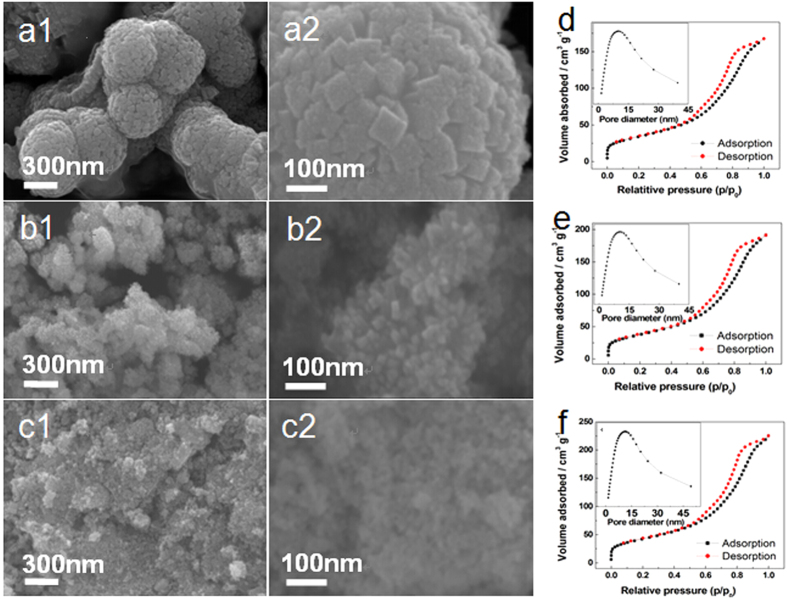
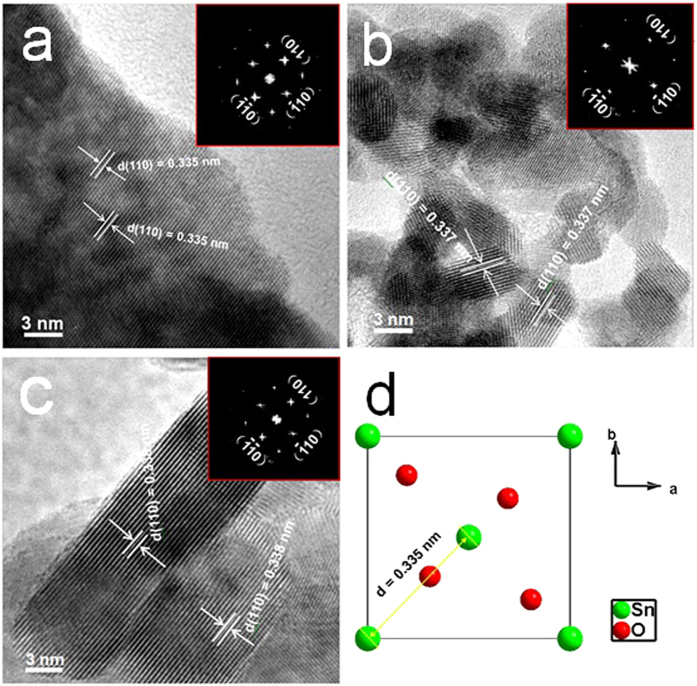
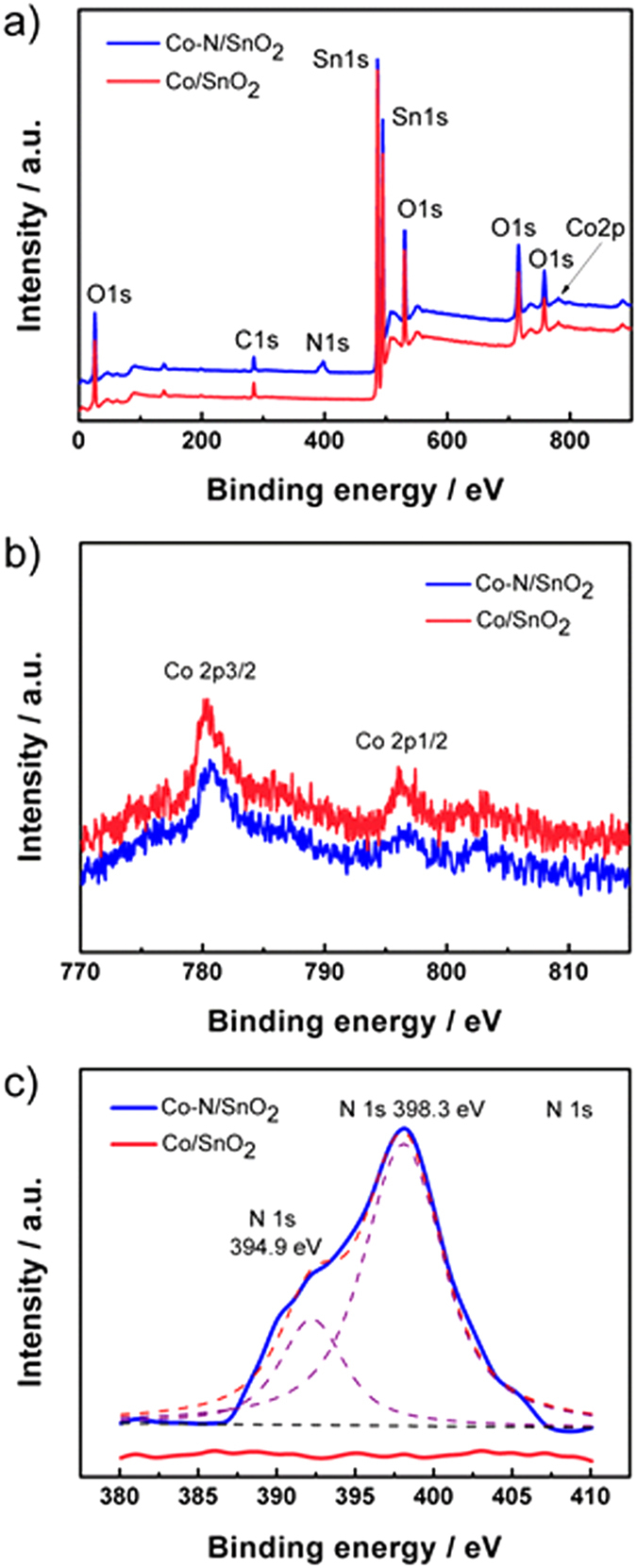
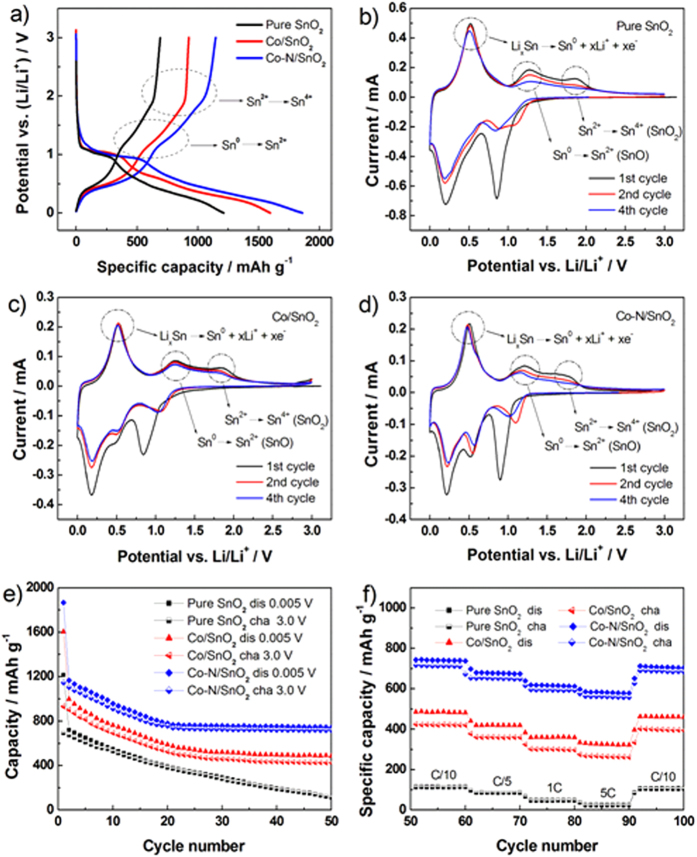
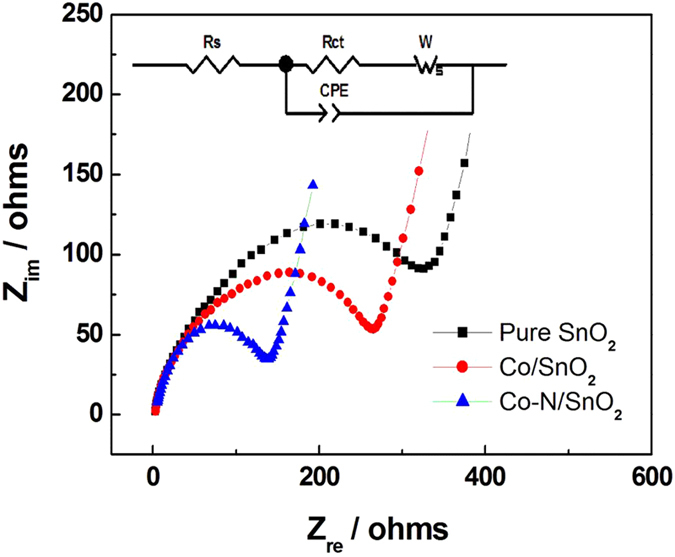
Tin dioxide (SnO2) is a widely investigated lithium (Li) storage material because of its easy preparation, two-step storage mechanism and high specific capacity for lithium-ion batteries (LIBs). In this contribution, a phase-pure cobalt-doped SnO2 (Co/SnO2) and a cobalt and nitrogen co-doped SnO2 (Co-N/SnO2) nanocrystals are prepared to explore their Li storage behaviors. It is found that the morphology, specific surface area, and electrochemical properties could be largely modulated in the doped and co-doped SnO2 nanocrystals. Gavalnostatic cycling results indicate that the Co-N/SnO2 electrode delivers a specific capacity as high as 716 mAh g(-1) after 50 cycles, and the same outstanding rate performance can be observed in subsequent cycles due to the ionic/electronic conductivity enhancement by co-doping effect. Further, microstructure observation indicates the existence of intermediate phase of Li3N with high ionic conductivity upon cycling, which probably accounts for the improvements of Co-N/SnO2 electrodes. The method of synergetic doping into SnO2 with Co and N, with which the electrochemical performances is enhanced remarkably, undoubtedly, will have an important influence on the material itself and community of LIBs as well.
二氧化锡(SnO₂)因其易于制备、两步存储机制以及对锂离子电池(LIBs)具有高比容量,而成为一种被广泛研究的锂存储材料。在本研究中,制备了纯相钴掺杂的SnO₂(Co/SnO₂)和钴氮共掺杂的SnO₂(Co-N/SnO₂)纳米晶体,以探究它们的锂存储行为。研究发现,掺杂和共掺杂的SnO₂纳米晶体的形貌、比表面积和电化学性能会受到很大调控。恒电流循环结果表明,Co-N/SnO₂电极在50次循环后具有高达716 mAh g⁻¹的比容量,并且由于共掺杂效应提高了离子/电子传导率,在随后的循环中也能观察到同样出色的倍率性能。此外,微观结构观察表明,循环时存在具有高离子传导率的Li₃N中间相,这可能是Co-N/SnO₂电极性能改善的原因。将Co和N协同掺杂到SnO₂中的方法显著提高了电化学性能,无疑将对材料本身以及锂离子电池领域产生重要影响。