Ali Syed A, Teow Sin-Yeang, Omar Tasyriq Che, Khoo Alan Soo-Beng, Choon Tan Soo, Yusoff Narazah Mohd
Oncological and Radiological Sciences, Advanced Medical and Dental Institute, Universiti Sains Malaysia, 13200, Kepala Batas, Pulau Pinang, Malaysia.
Institute for Medical Research, Jalan Pahang, 50588, Kuala Lumpur, Malaysia.
PLoS One. 2016 Jan 7;11(1):e0145986. doi: 10.1371/journal.pone.0145986. eCollection 2016.
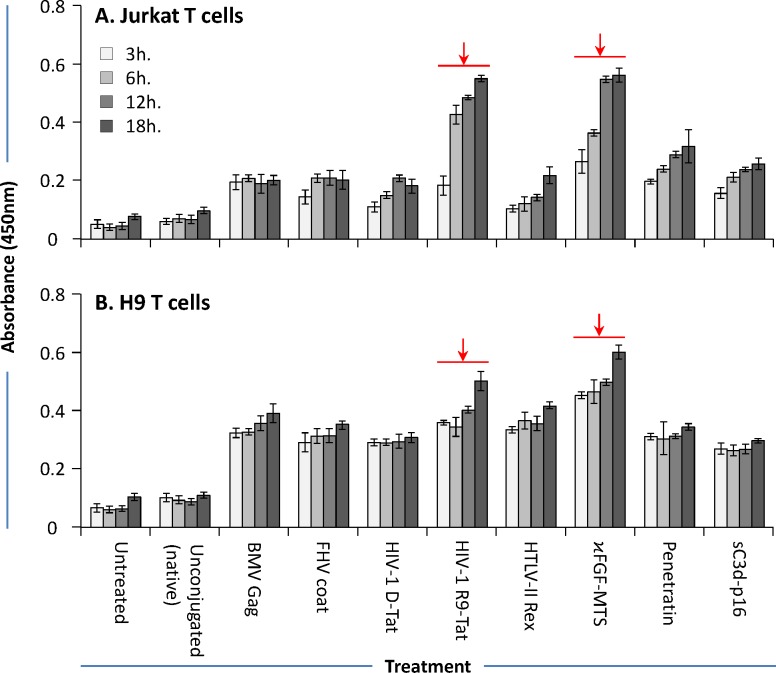
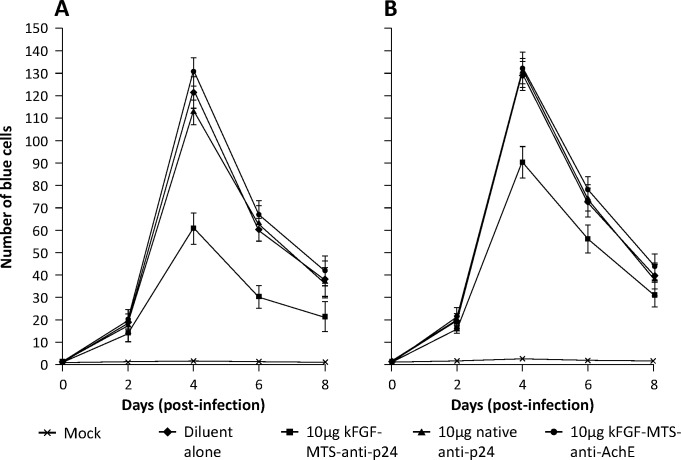
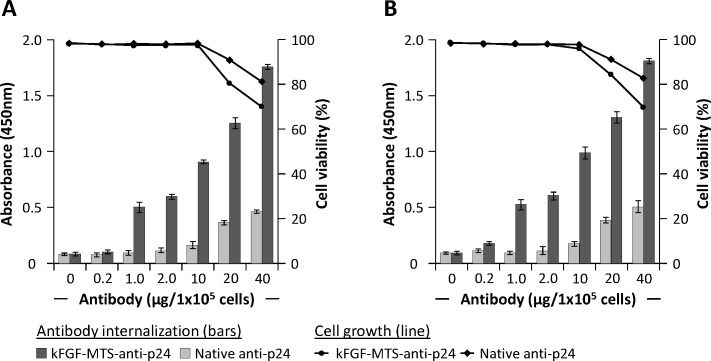
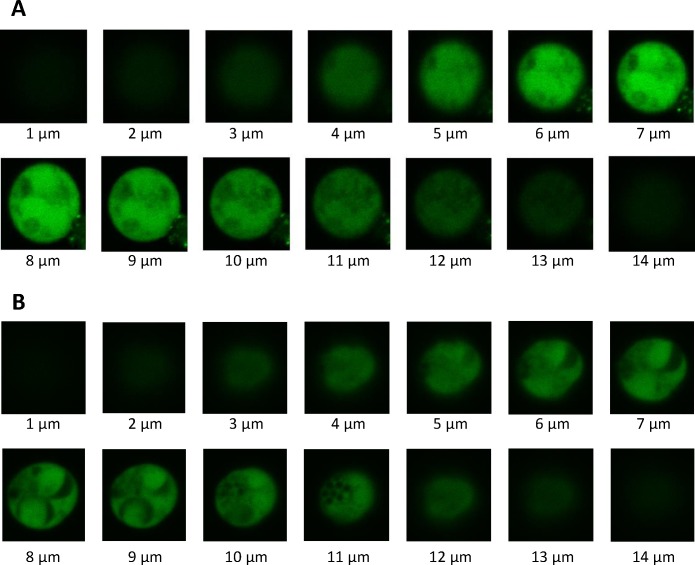
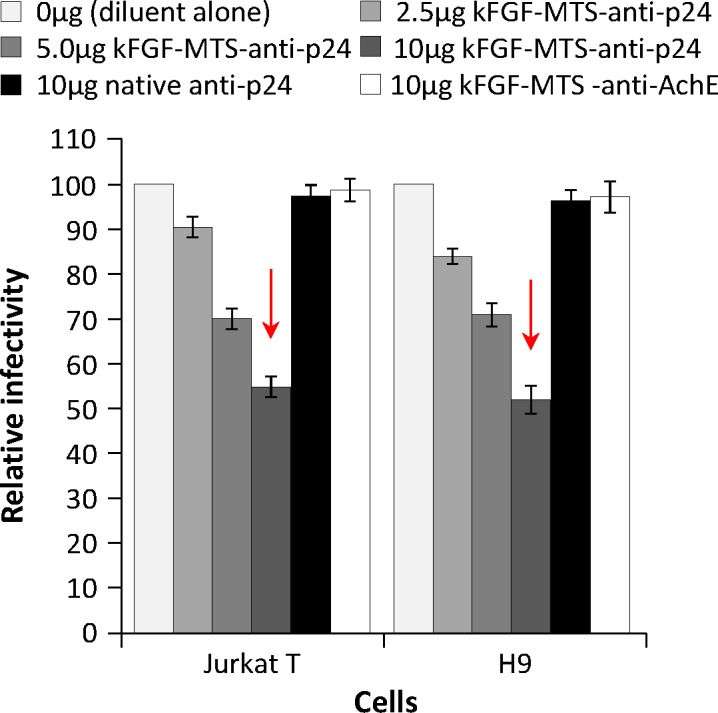
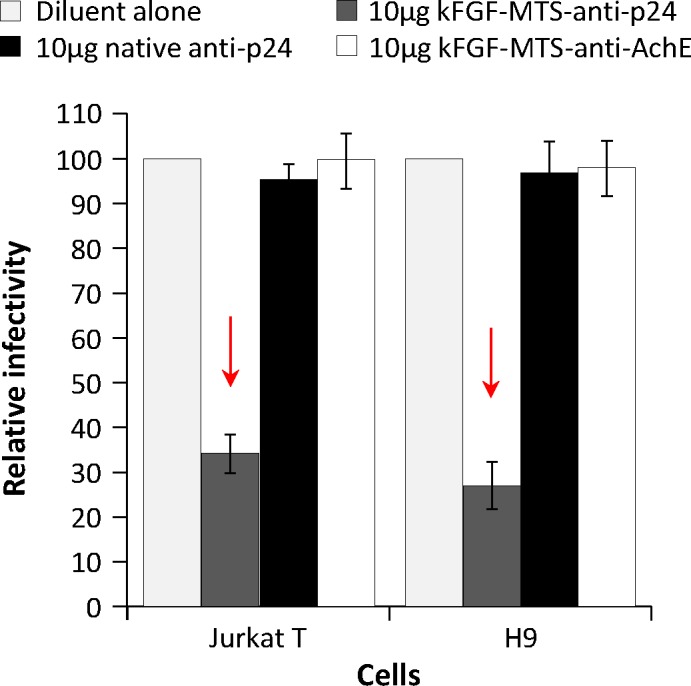
There remains a need for newer therapeutic approaches to combat HIV/AIDS. Viral capsid protein p24 plays important roles in HIV pathogenesis. Peptides and small molecule inhibitors targeting p24 have shown to inhibit virus replication in treated cell. High specificity and biological stability of monoclonal antibodies (mAbs) make them an attractive contender for in vivo treatments. However, mAbs do not enter into cells, thus are restricted to target surface molecules. This also makes targeting intracellular HIV-1 p24 a challenge. A mAb specific to p24 that can internalize into the HIV-infected cells is hypothesized to inhibit the virus replication. We selected a mAb that has previously shown to inhibit p24 polymerization in an in vitro assay and chemically conjugated it with cell penetrating peptides (CPP) to generate cell internalizing anti-p24 mAbs. Out of 8 CPPs tested, κFGF-MTS -conjugated mAbs internalized T cells most efficiently. At nontoxic concentration, the κFGF-MTS-anti-p24-mAbs reduced the HIV-1 replication up to 73 and 49% in T-lymphocyte and PBMCs respectively. Marked inhibition of HIV-1 replication in relevant cells by κFGF-MTS-anti-p24-mAbs represents a viable strategy to target HIV proteins present inside the cells.
对抗艾滋病毒/艾滋病仍需要更新的治疗方法。病毒衣壳蛋白p24在艾滋病毒发病机制中发挥重要作用。靶向p24的肽和小分子抑制剂已显示可抑制经处理细胞中的病毒复制。单克隆抗体(mAb)的高特异性和生物学稳定性使其成为体内治疗的有吸引力的竞争者。然而,单克隆抗体不会进入细胞,因此仅限于靶向表面分子。这也使得靶向细胞内的HIV-1 p24成为一项挑战。据推测,一种对p24特异且能内化到艾滋病毒感染细胞中的单克隆抗体可抑制病毒复制。我们选择了一种先前在体外试验中已显示可抑制p24聚合的单克隆抗体,并将其与细胞穿透肽(CPP)进行化学偶联,以生成可细胞内化的抗p24单克隆抗体。在测试的8种细胞穿透肽中,κFGF-MTS偶联的单克隆抗体最有效地内化了T细胞。在无毒浓度下,κFGF-MTS-抗p24单克隆抗体在T淋巴细胞和外周血单个核细胞中分别将艾滋病毒-1复制降低了73%和49%。κFGF-MTS-抗p24单克隆抗体对相关细胞中艾滋病毒-1复制的显著抑制代表了一种针对细胞内存在的艾滋病毒蛋白的可行策略。