Schenk A, Porter A L, Alenciks E, Frazier K, Best A A, Fraley S M, Fraley G S
Biology Department, Hope College, Holland, MI USA.
Biology Department, Hope College, Holland, MI USA South Crossing Veterinary Center, Caledonia, MI USA.
Poult Sci. 2016 Apr;95(4):736-48. doi: 10.3382/ps/pev381. Epub 2016 Jan 14.
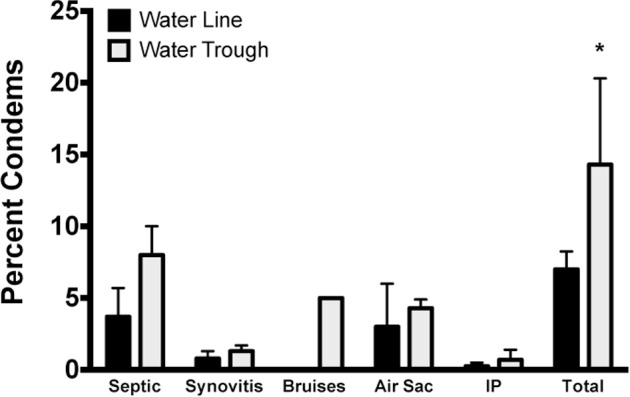
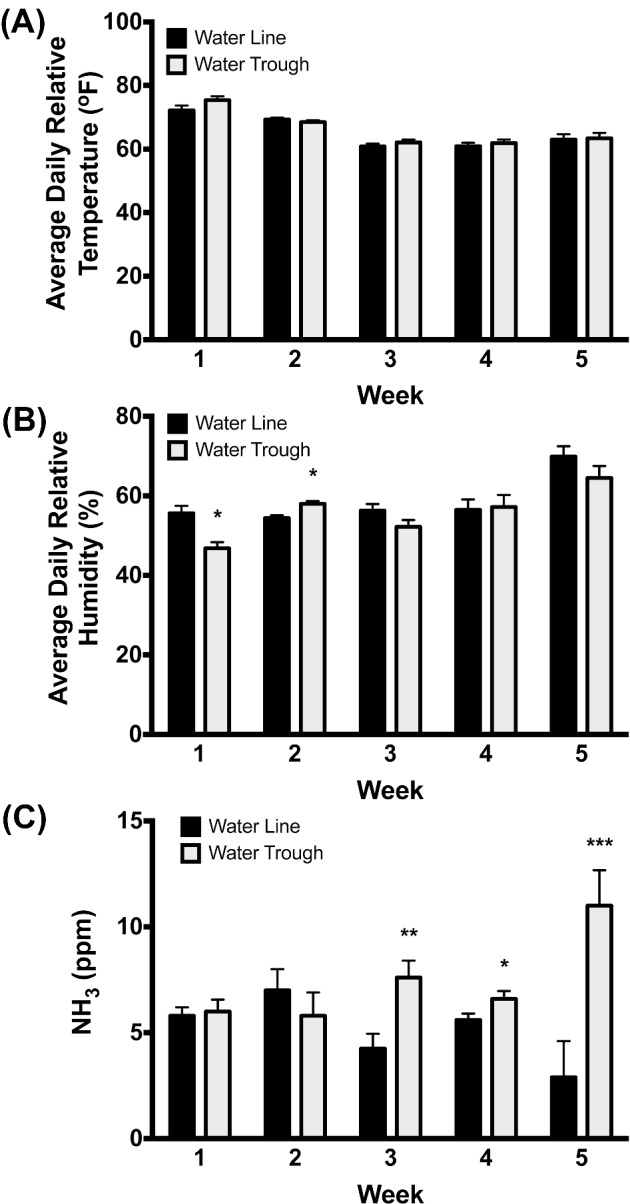
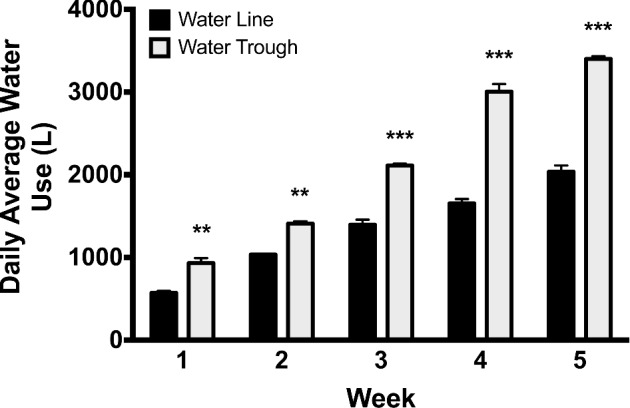
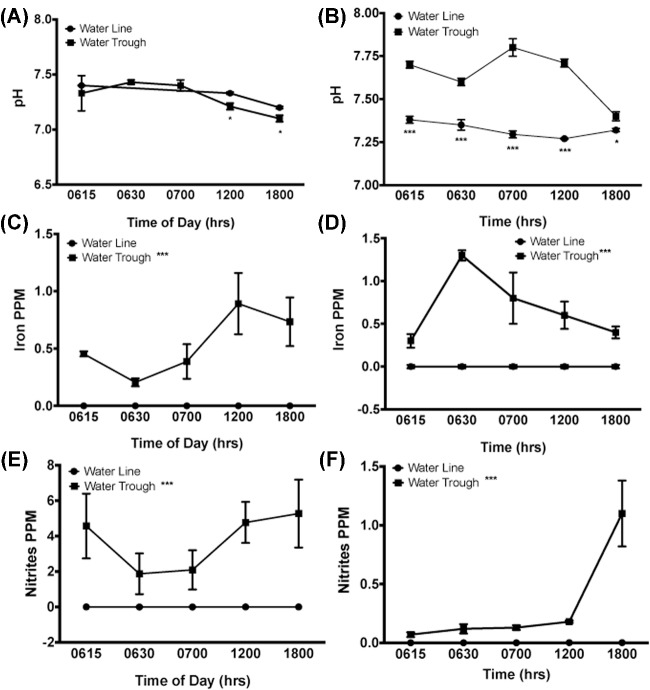
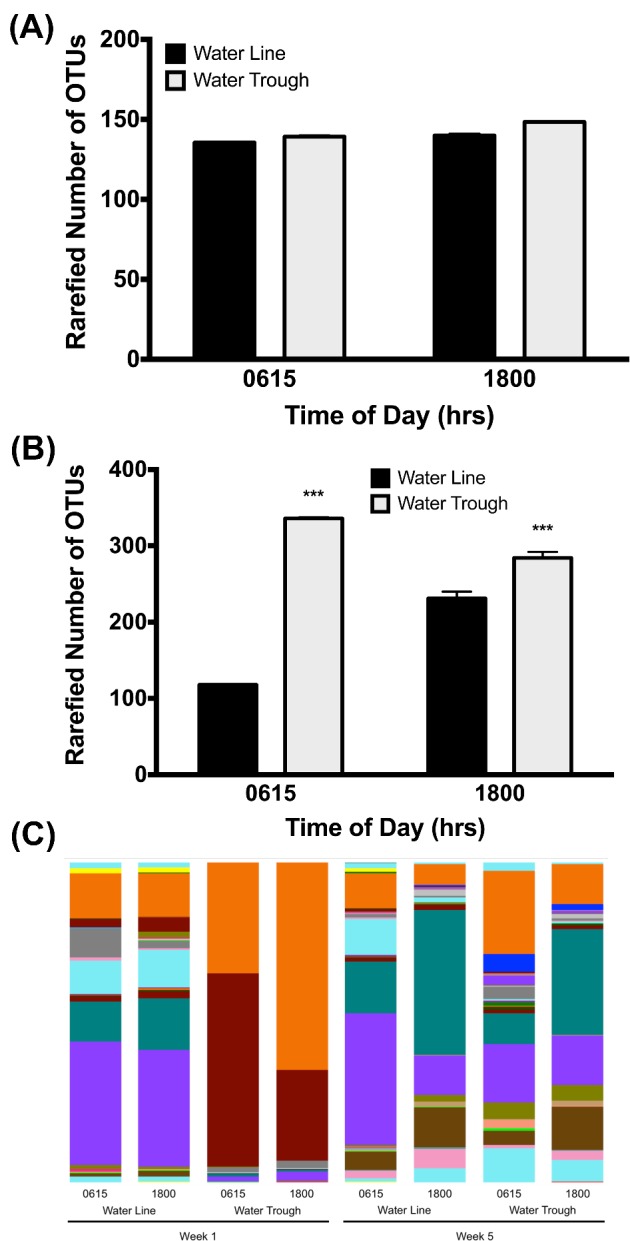
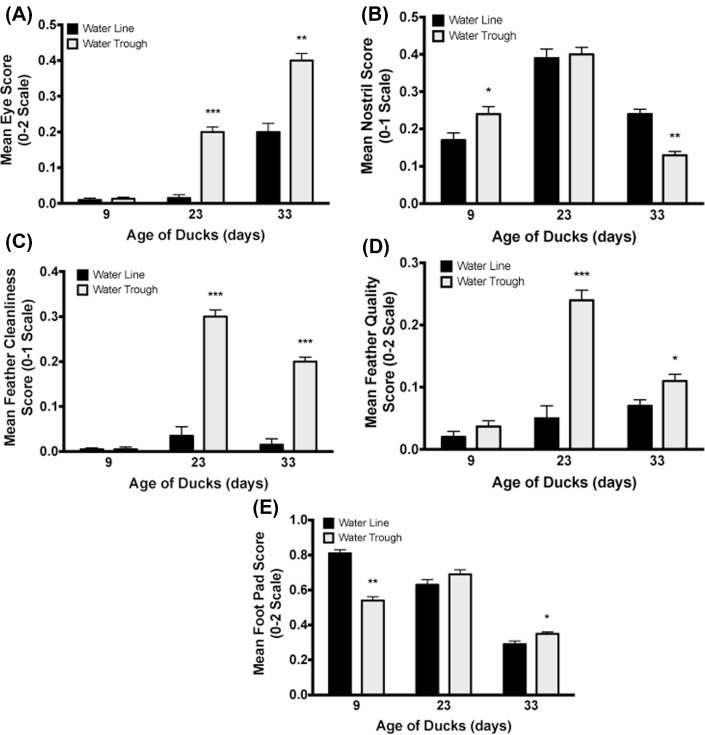
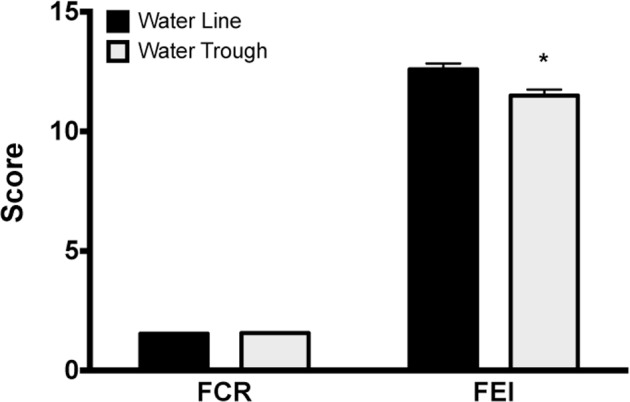
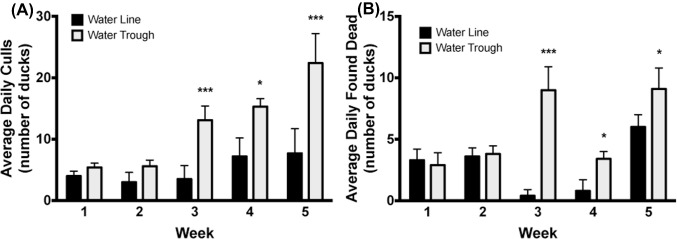
Controversy has developed as to whether or not pin-metered water lines or water troughs are more appropriate for Pekin ducks. We hypothesized that water troughs would show improved duck body conditions and environmental quality compared to pin-metered water lines. To test this hypothesis, we housed ducks in 2 barns, one with water lines and one with water troughs. Water troughs were constructed to meet RSPCA guidelines for number and density of ducks and with recently described verandas. Ducks were divided into 4 pens per barn (n=1,000 ducks/pen). The study was then repeated (n=8 pens per water source) in a cross-over design so the barns each contained the opposite water source to the first experiment. We scored the ducks' body condition using an established scoring rubric and analyzed using SAS Proc GLM-Mix as binomial data. Ducks housed with water troughs showed higher (thus worse condition; P<0.001) scores for eyes, nostrils, feather quality, feather cleanliness, and foot pads. We also compared water condition, water quality, and duck mortality using a Student t test for both water sources each week. We found that the water troughs showed higher iron (P<0.001), nitrites (P<0.001), pH (P<0.01), and bacterial growth (P<0.001). The bacterial growth was shown to have higher (P<0.001)E. coli, coliforms, and Staphylococcusin the water troughs. Water lines typically showed no bacterial growth in culture-based assays. Ducks housed with water troughs used greater (P=0.001) volumes of water compared to ducks housed with water lines. Ducks with water troughs also showed a greater percent (P=0.008) mortality at all ages compared to ducks with water lines. These data suggest that water troughs may not be beneficial for duck welfare and could adversely impact both environment and duck or human health.
关于针式计量水管或水槽是否更适合北京鸭,已经出现了争议。我们假设,与针式计量水管相比,水槽能改善鸭的身体状况和环境质量。为了验证这一假设,我们将鸭子饲养在两个禽舍中,一个有水管,另一个有水槽。水槽的建造符合皇家防止虐待动物协会关于鸭子数量和密度的指导方针,并带有最近描述的游廊。每个禽舍的鸭子被分成4栏(每栏n = 1000只鸭子)。然后在交叉设计中重复该研究(每个水源n = 8栏),这样每个禽舍包含与第一个实验相反的水源。我们使用既定的评分标准对鸭子的身体状况进行评分,并使用SAS Proc GLM - Mix作为二项式数据进行分析。饲养在水槽中的鸭子在眼睛、鼻孔、羽毛质量、羽毛清洁度和脚垫方面得分更高(因此状况更差;P < 0.001)。我们还每周使用学生t检验比较两种水源的水质状况、水质和鸭子死亡率。我们发现水槽中的铁含量(P < 0.001)、亚硝酸盐含量(P < 0.001)、pH值(P < 0.01)和细菌生长量(P < 0.001)更高。结果显示水槽中的细菌生长量中大肠杆菌、大肠菌群和葡萄球菌含量更高(P < 0.001)。在基于培养的检测中,水管中的水通常没有细菌生长。与饲养在水管中的鸭子相比,饲养在水槽中的鸭子用水量更大(P = 0.001)。与饲养在水管中的鸭子相比,使用水槽的鸭子在所有年龄段的死亡率也更高(P = 0.008)。这些数据表明,水槽可能对鸭子的福利没有益处,并且可能对环境以及鸭子或人类健康产生不利影响。